
IN THIS ARTICLE:
- Understanding the Two Primary Logistics Models
- Comparative Analysis: Door-to-Door vs. Terminal-to-Terminal
- The Financial and Temporal Mechanics of Shipping Models
- Geographical Impact: Urban vs. Rural Accessibility
- The Final Decision Matrix and Avoiding Logistics Traps
- Red Flags and Scams: How to Stay Protected
- FAQ
The choice between door-to-door and terminal-to-terminal shipping depends on your priority: convenience or cost. Door-to-door offers direct pickup and delivery at your specified addresses, minimizing vehicle handling and saving time. Terminal-to-terminal requires you to drop off and pick up the vehicle at designated hubs, often reducing the base price but requiring more personal coordination and potentially incurring daily storage fees.
In the current 2026 market, the “Total Cost of Transport” is the most critical metric for shippers. While terminal shipping may offer a lower upfront quote, the hidden expenses of secondary transportation, fuel, and potential storage penalties often narrow the price gap with door-to-door service to less than 15%. Understanding how these models interact with your specific route, vehicle type, and schedule is essential for a stress-free interstate move.
Understanding the Two Primary Logistics Models
In the auto transport industry, “model” refers to the method of pickup and delivery. Once you have selected a carrier type (open or enclosed), you must decide how the vehicle will be handed over to the driver and where you will pick it up. While the vehicle remains on a trailer for the majority of the journey in both scenarios, the “last mile” logistics vary significantly.
What is Door-to-Door Car Shipping?
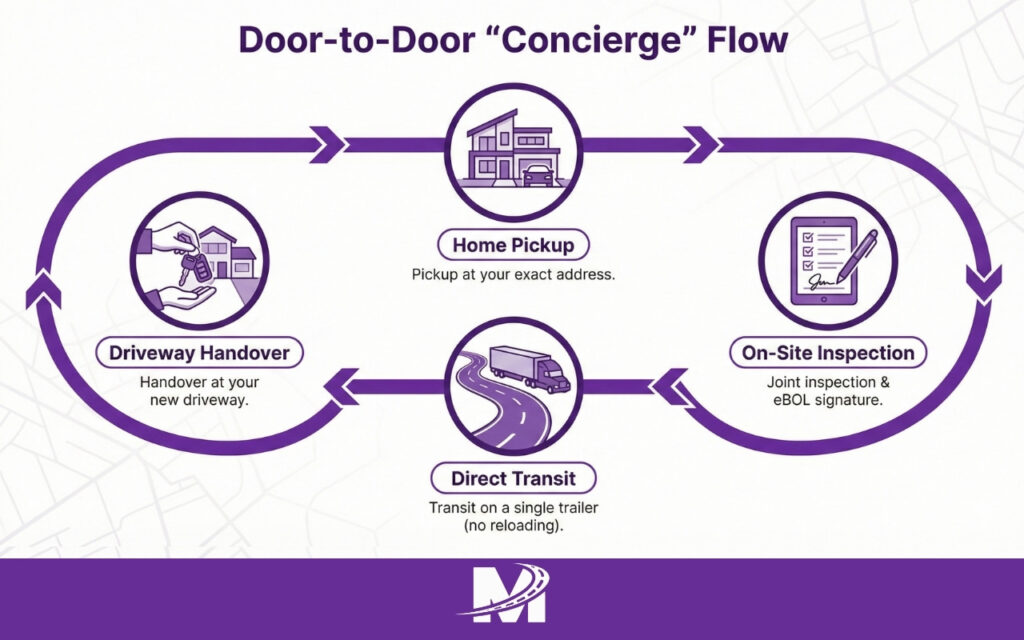
Door-to-door (D2D) delivery is the standard service for most residential accounts, moves, and online car purchases. Your carrier will come to your home under this model, getting as close to your physical address as the law and safety allow.
How it Works:
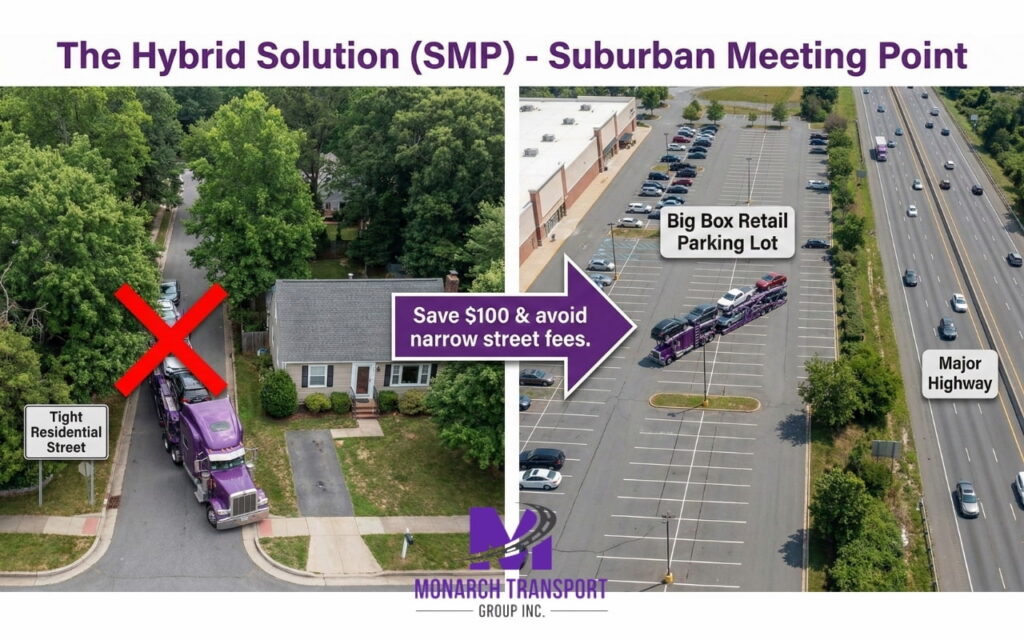
Expert Note on Accessibility: Large multi-car carriers (up to 75 feet long) will not be able to navigate narrow residential streets, cul-de-sacs, or areas with low-hanging trees. At that point, “door-to-door” service is to meet the driver at a convenient, wide-access point, such as a grocery store parking lot or a town plaza.
How Does Terminal-to-Terminal Car Shipping Work?
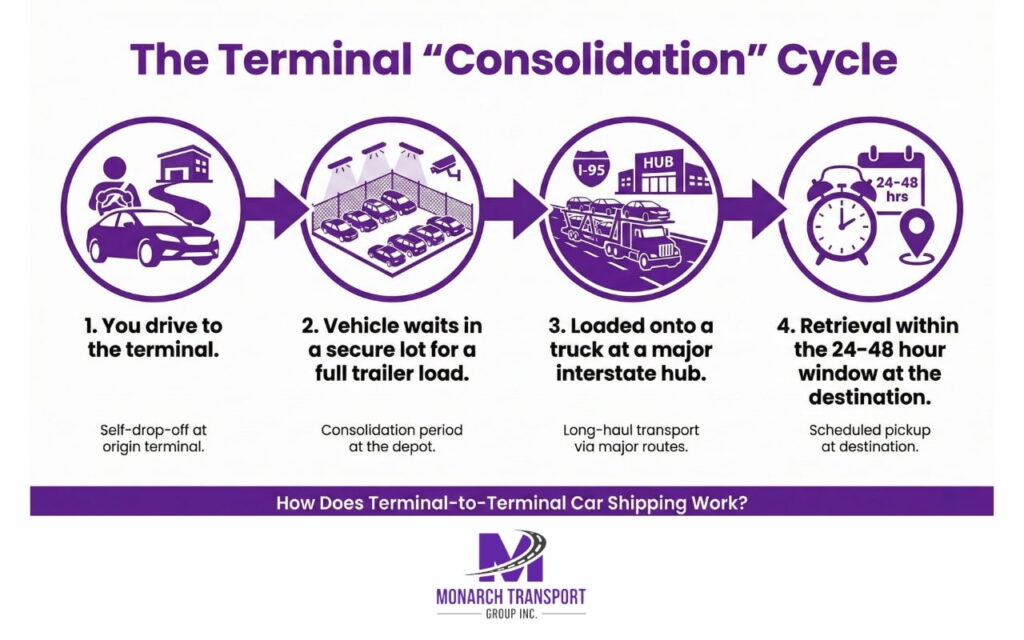
Terminal-to-terminal (T2T) deliveries are when you drop off your vehicle at one terminal/warehouse and pick it up at another terminal/warehouse on the other end.
How it Works:
Comparative Analysis: Door-to-Door vs. Terminal-to-Terminal
To determine which model fits your specific move, you must evaluate factors such as vehicle handling, speed, and total expenditure.
| Feature | Door-to-Door Shipping | Terminal-to-Terminal Shipping |
| Convenience | High; no additional driving required. | Low; requires drop-off/pickup coordination. |
| Transit Speed | Faster; direct route with fewer stops. | Slower; dependent on consolidation cycles. |
| Vehicle Handling | Minimal; usually loaded/unloaded once. | Higher; potential for multiple handlings. |
| Base Cost | Higher (covers fuel/time for detours). | Lower (carrier stays on major routes). |
| Hidden Costs | None; price is typically all-inclusive. | Storage fees ($25–$50/day after grace period). |
| Accessibility | Limited by street width and ordinances. | Limited to major metropolitan hubs. |
Deep Dive: The Benefits and Risks of Door-to-Door Service
Door-to-door shipping accounts for over 90% of the private vehicle transport market. Its popularity stems from its efficiency and the reduced physical risk to the vehicle.
Deep Dive: When Terminal-to-Terminal Makes Sense
Though not as convenient, the terminal model caters to specific niches within the logistics sector.
The Financial and Temporal Mechanics of Shipping Models
Choosing between these models is a question of scheduling urgency and financial/business sense. Door-to-door (D2D) removes the “hidden” costs of fuel, time, and rideshares to terminals, while terminal-to-terminal (T2T) leverages bulk logistics for upfront savings. In 2026, the price difference between these options has shrunk to $150–$250, which often makes D2D the more efficient option overall for relocations.
Initial Estimates vs. Total Spending
When you get a state-to-state moving estimate, the number you see on the screen is rarely the ‘final’ price for the move if you use a terminal-based service. To know which one is right for you, you’ll need to calculate the Total Cost of Transport, which includes the base rate, accessibility charges, and possible storage fees.
1. Door-to-Door Costs: Upfront, Clear All-Inclusive Cost
The price you pay in a D2D service is usually “what you see is what you get.” The additional fuel and time required to leave the main interstate and head to your particular neighborhood are included in the carrier fee. You pay a premium for this “concierge” service, but it runs your entire trip. There are no additional fees for transport or storage.
2. Terminal-to-Terminal Costs: The “Hidden” Expenses
While the base rate for terminal shipping is lower, secondary costs can accumulate quickly, often negating the initial savings:
The Scheduling Reality: Consolidation and Dispatch
There are some misconceptions when it comes to terminals being “faster.” In fact, the Reverse Logistics involved in the Consolidation Cycle often takes more time than the Regular Logistics.
Geographical Impact: Urban vs. Rural Accessibility
The “fit” of a logistics model is often decided by your zip code.
Comparison of Timeframes and Coordination
| Aspect | Door-to-Door | Terminal-to-Terminal |
| Pickup Window | 1–5 Days (Average) | 3–7 Days (Wait for consolidation) |
| Transit Speed | Direct; no hub stops. | Stops at multiple hubs possible. |
| User Labor | Low; car stays at your home. | High; requires two trips to terminals. |
| Inspection Quality | High; joint walkaround with driver. | Moderate; terminal staff may inspect. |
| Risk of Delays | Traffic and weather only. | Dependent on terminal hours and staff. |
The Final Decision Matrix and Avoiding Logistics Traps
The best logistics option will be determined by the intersection of your budget, location access, and vehicle value. Match the shipping profile to your current situation using the matrix below.
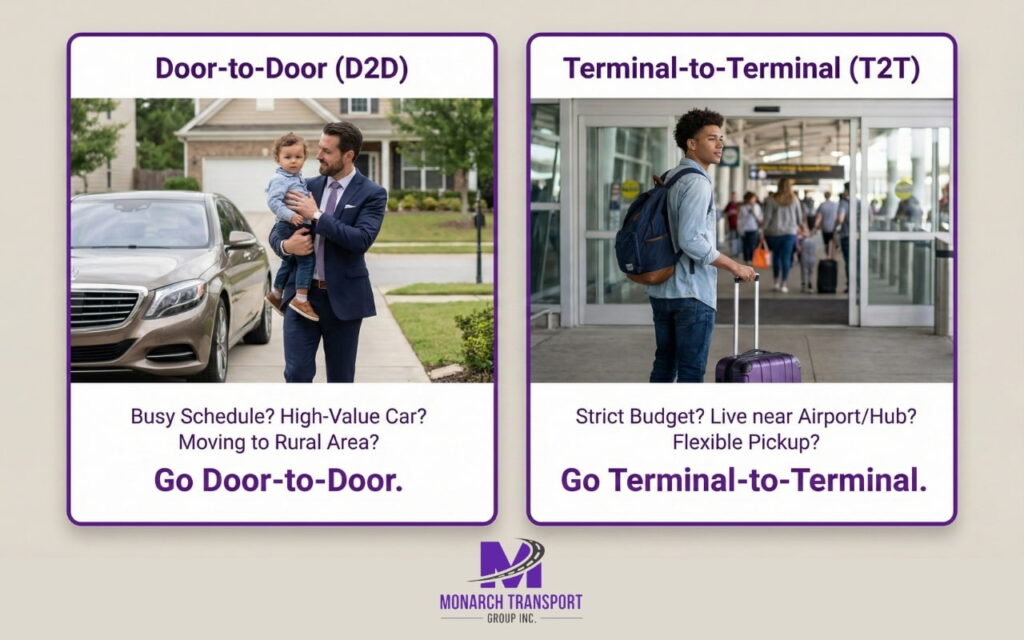
Which Model Fits Your Profile?
Choose Door-to-Door (D2D) if:
Choose Terminal-to-Terminal (T2T) if:
Red Flags and Scams: How to Stay Protected
Leading companies in the 2026 market can now be identified for their transparency about terminal locations, insurance limits, and storage fee schedules.
The 2026 Hybrid Solution: The Suburban Meeting Point (SMP)
If you live in a busy place or on a narrow street, arrange to meet the door-to-door carrier at a large parking lot (e.g., Home Depot, Walmart) no more than 5 miles from your home.
FAQ
Statistically, door-to-door shipping is safer because the vehicle is typically loaded onto the trailer once and remains there until the final destination. Terminal shipping involves significantly more handling and “touchpoints,” as vehicles are frequently moved around the storage lot to accommodate incoming trailers, increasing the statistical risk of minor cosmetic damage, undercarriage scrapes, or lot-related accidents.
Terminal shipping is cost-effective because it allows carriers to bypass time-consuming “last-mile” navigation through residential streets. By consolidating multiple pickups at a single hub, carriers save on fuel and labor costs, passing the savings to the customer. However, these savings are often eroded by secondary transport costs, fuel for personal travel, and potential daily storage fees.
Door-to-door service is the superior choice for luxury, exotic, or classic vehicles. It minimizes physical handling and eliminates the risks associated with sitting in an outdoor, high-traffic terminal lot. When combined with enclosed transport, door-to-door delivery provides the highest level of security and direct delivery to the owner.
In 2026, the standard grace period for terminal pickups is typically 24 to 48 hours after the vehicle is checked into the destination facility. Once this window expires, terminals charge daily storage fees ranging from $30 to $60. To avoid these penalties, door-to-door shipping is recommended for travelers, as it allows for flexible third-party delivery to a neighbor.
While carrier cargo insurance covers the vehicle during active transit in both models, the liability during storage varies. In door-to-door shipping, the vehicle remains on the trailer under the carrier’s primary policy. In terminal shipping, the facility’s “Garagekeepers Insurance” must cover the car while it is parked. Always verify that the terminal partner has active coverage.
Door-to-door shipping is available in most areas, but geographical or legal restrictions may apply. Narrow residential streets, low-hanging branches, or local “no-truck” ordinances can prevent large carriers from reaching certain addresses. In these cases, the carrier will arrange a meeting point at a nearby accessible location, usually within 1 to 5 miles.
Most terminals refuse inoperable vehicles because they lack the specialized equipment, such as heavy-duty forklifts or winches, required to move non-running cars safely within the storage lot. If your vehicle does not start, steer, or brake, door-to-door shipping is generally the only viable option, allowing a winch-equipped carrier to pick up and offload the car directly.
Related articles

Best Places to Buy a Motorcycle Online in the USA
IN THIS ARTICLE: The Digital Shift: Geography No Longer Constrains the Ride Where to Buy: Top 2026 Platforms Analysis Comparison Table: Platform Overview The Facet of Finance: Not Just the

Complete Guide to Car Shipping in 2026
The landscape of American mobility has shifted, making vehicle logistics more accessible and seamless than ever before. Understanding this new norm is the first step toward a stress-free relocation that

Complete Guide to RV Shipping in 2026
IN THIS ARTICLE: Introduction: The Freedom of the Road, Delivered by Professionals Understanding the Fleet: Classes and Types of RVs Methods of Transport: How We Get Your RV Home Measuring

How State-to-State Car Transport Works: From Pickup to Delivery
IN THIS ARTICLE: Understanding the Auto Transport Ecosystem Choose Your Transport Type The Process of Shipping Calculating the Cost and Timeline of State-to-State Car Transport The 2026 EV Transport Protocol

How to Prepare Your Car for Shipping: Step-by-Step Checklist
IN THIS ARTICLE: Why Preparation is not just a Chore Step 1: Selecting Your Logistics Partner Step 2: The Evidence Phase – Cleaning and Documentation Step 3: Protecting the Extravagant

How to Ship a Motorcycle Safely: The 2026 Guide
IN THIS ARTICLE: The “Why” Behind the Shipping Method Option 1: The DIY Route (Towing it Yourself) Option 2: Open vs. Enclosed Transport Option 3: Specialized Motorcycle Shippers vs. General
Open vs. Enclosed Auto Transport: Which Should You Choose?
IN THIS ARTICLE: The Reality of the Road: What is Open Car Shipping? Where Open Transport Makes Perfect Sense Comparison Table: Open Transport Quick Glance The Practitioner Tip: The Myth