
IN THIS ARTICLE:
- Average Cost Breakdown by Distance
- Primary Factors Influencing Your Shipping Quote
- Geographic Influence on Pricing
- Understanding the Quote Structure
- The Impact of Seasonality on Auto Transport Rates
- The Role of Fuel Prices and Economic Factors
- Hidden Costs and Common Surcharges to Avoid
- Insurance: Is Your Vehicle Truly Covered?
- Strategic Budgeting: How to Save Money and Maximize Value on Car Shipping
- Actionable Strategies to Lower Your Quote
- Preparing Your Vehicle to Avoid Extra Charges
- Choosing the Right Partner: Broker vs. Carrier
- Conclusion
- FAQ
Planning a long-distance move or purchasing a vehicle from out of state requires a clear understanding of logistics and, more importantly, a realistic budget. While rates change with supply and demand, knowing the baseline charges will help you avoid paying too much and ensure you select a service that offers the best balance of safety and economy.
If you haven’t chosen where to buy yet, see our breakdown of the best platforms to buy or sell a used car online – the platform you pick directly affects how and where the car needs to be shipped from.
Shipping a car between states typically costs $600 to $1,600 for standard distances, with a national average of about $1,150. Short-range shipments (under 500 miles) may cost as little as $450, while cross-country hauls (over 2,500 miles) can exceed $2,000 depending on the vehicle size and transport method.
Average Cost Breakdown by Distance
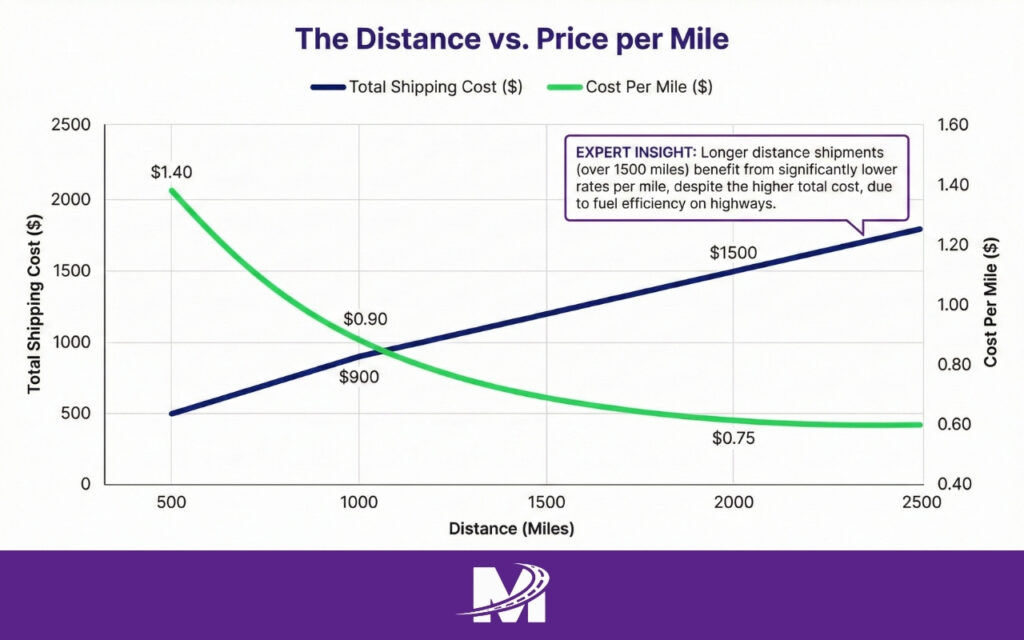
When budgeting for auto transport, the most significant variable is the total mileage. While the total price increases with distance, the cost per mile actually decreases on longer routes. This is because carriers have fixed costs, such as loading, unloading, and insurance, that are spread over more miles.
| Distance | Estimated Cost (Open Carrier) | Estimated Cost (Enclosed Carrier) |
| Short Distance (0–500 miles) | $450 – $800 | $700 – $1,100 |
| Medium Distance (500–1,500 miles) | $800 – $1,200 | $1,100 – $1,700 |
| Long Distance (1,500–2,500+ miles) | $1,200 – $1,900 | $1,800 – $2,800+ |
The “Cost Per Mile” Reality
Industry rates are dynamic, but you can generally estimate your expenses based on these per-mile brackets:
Primary Factors Influencing Your Shipping Quote
Knowing the “why” of your quote gives you a better idea of which areas you can reduce costs and which could be dangerous to cut.
1. Vehicle Size, Weight, and Modifications
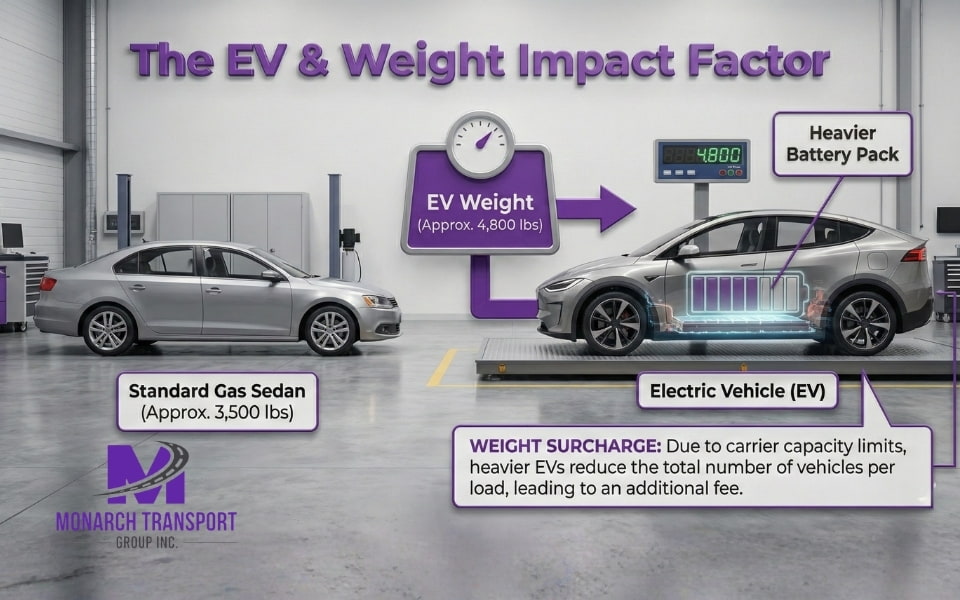
A typical sedan occupies a fraction of the space and adds a fraction of the weight of a Ford F-350 to a trailer. Carriers are subject to very stringent GVWR limits. A heavy vehicle reduces the total number of vehicles a driver is legally allowed to carry, which means your price is going up.
2. Open vs. Enclosed Transport
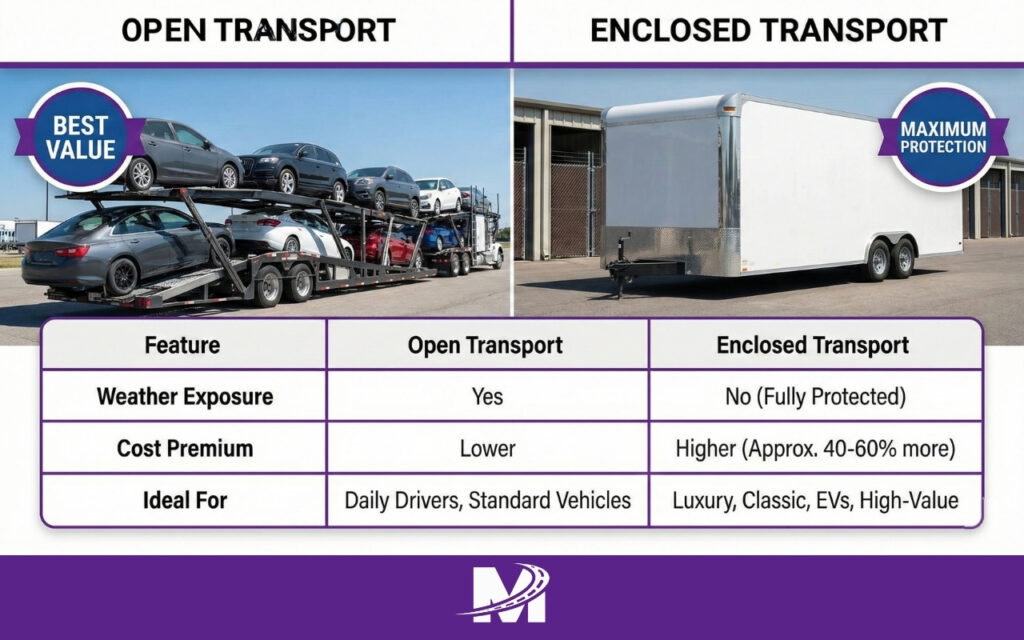
This is the most impactful choice for your budget.
If you’re shipping a collector or enthusiast vehicle purchased on an auction platform, enclosed car shipping is typically the right call.
3. Delivery Method: Door-to-Door vs. Terminal
4. Vehicle Operability
When your car won’t start, steer, or brake, it is classified as “inoperable.” This means the driver has to load and unload the vehicle using a winch or a forklift. Due to the additional equipment and labor, there will be an “Inop Fee” in the range of $150 to $300.
Geographic Influence on Pricing
Not all miles are created equal. Shipping a car from Los Angeles to New York (a major “lane”) is often cheaper than shipping a car between two rural towns in Wyoming and Nebraska, even if the distance is shorter.
Understanding the Quote Structure
When you receive a quote, it isn’t just a random number. It is a composite of several operational costs:
That’s because when the costs are broken out like this, you’ll see that a ”too good to be true” low quote typically means carrier pay is so low that no dependable driver will take the job, resulting in delays.
Seasonal Market Fluctuations and Timing: When to Ship for the Best Price
The price to transport a car is not fixed and can be affected by the time of year, gas prices, and how quickly you want your car on the other side. In auto transport, demand is very seasonal, so the same route can cost several hundred dollars more in July than in November. Knowing these cycles will allow you to time your shipment to lock in the lowest rates.
The Impact of Seasonality on Auto Transport Rates
Seasonality is influenced by two main factors: migration patterns and climate conditions. In general, when demand for moving increases, prices rise because carrier availability is limited.
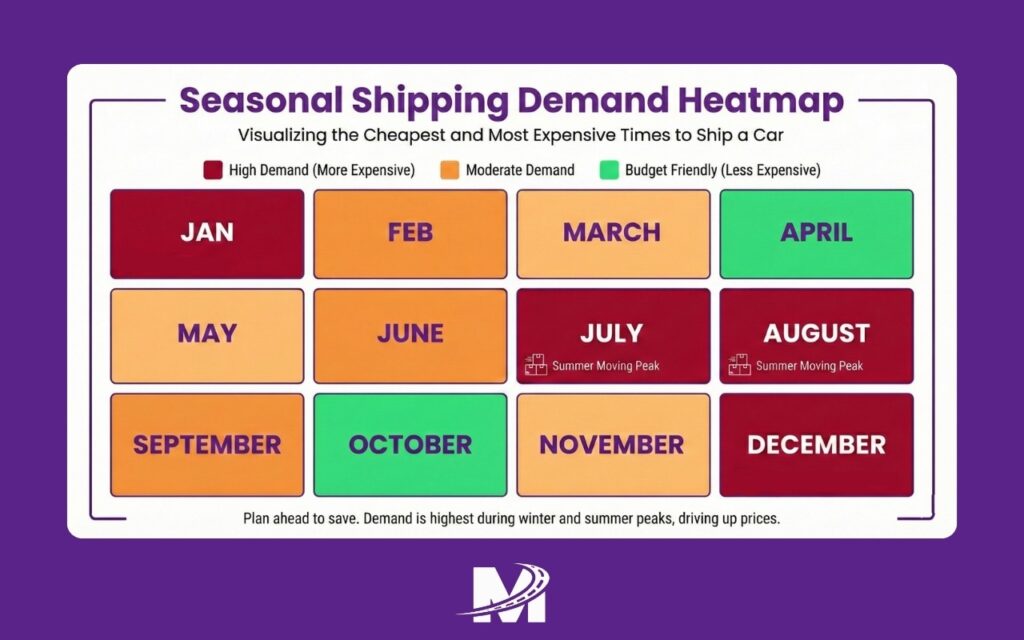
| Season | Price Trend | Availability | Best For |
| Spring | Moderate | High | Balancing cost and speed |
| Summer | Highest | Low (Book early) | Reliability and timing |
| Fall | Lowest | Moderate | Budget-conscious shippers |
| Winter | Varies | Weather-dependent | Rural routes (non-Snowbird) |
Timing and Urgency: The Price of Speed
If you are flexible with your dates, you can save hundreds of dollars. Most standard quotes assume a pickup window of 1 to 5 business days. If you require “Expedited Shipping” or a guaranteed pickup date, the cost will increase.
The Role of Fuel Prices and Economic Factors
The cost of fuel alone is what makes or breaks any auto carrier. Since car carriers achieve poor fuel economy (usually 5-8 miles per gallon when fully loaded), even a small rise in diesel prices could translate into a significant increase in shipping quotes.
How Fuel Surcharges Work
Nearly all reputable carriers use a dynamic pricing system that factors in the national average diesel price. When fuel prices rise, shippers tack on a fuel surcharge. It is almost never a separate line item on your bill; it is included in the total quote you get. If you see a quote that seems way too low compared to the others during a period of high gas prices, be wary – it could be a low-ball offer that will be “adjusted” once the driver is assigned.
Hidden Costs and Common Surcharges to Avoid
The quote you receive is rarely the “final” price if you haven’t accounted for specific variables. Professional shippers know that small details can trigger extra fees.
1. Personal Items in the Vehicle
While it is tempting to use your car as a moving box, most carriers have a strict weight limit (usually 100 lbs) for personal items kept in the trunk.
2. Oversized Vehicle Fees
Standard quotes are based on factory specifications. If you have modified your car, you must disclose it upfront.
3. Inoperable Vehicle Fees
As mentioned in Part 1, an “Inop” car requires a winch to get onto the trailer. If you tell the company the car runs, but it fails to start on the day of pickup, the driver may charge an on-site convenience fee or even refuse the load if they don’t have the necessary equipment.
4. Residential Access Surcharges
Car haulers are massive (up to 80 feet long). If you live in a gated community, on a narrow cul-de-sac, or in an area with low-hanging trees, the truck physically cannot reach your door.
Insurance: Is Your Vehicle Truly Covered?
Every licensed interstate carrier must carry Cargo Insurance. However, coverage levels vary significantly.
Expert Tip: Before booking, request a copy of the carrier’s Certificate of Insurance (COI). Make sure the policy is active and that the deductible is paid by the carrier, not the customer. While your own auto insurance may cover the car on its way to you, it is typically considered a “secondary” coverage, with the carrier’s insurance acting as the primary coverage for any transit-related damage.
Strategic Budgeting: How to Save Money and Maximize Value on Car Shipping
If you want to lower your car shipping quotes, you should book the service at least 2 weeks in advance, choose open-carrier transport, and be flexible with pickup and delivery dates. You can also save on your quote by shipping terminal-to-terminal and removing all personal items to lighten the load. Shopping around with three to five well-reviewed providers will ensure you get a competitive rate while also guaranteeing quality service.
Actionable Strategies to Lower Your Quote
While some factors, such as distance and vehicle size, are fixed, several logistical choices are within your control. Implementing these strategies can shave 10% to 25% off the total price.
1. Choose Open Transport Over Enclosed
The bottom line is that unless you’re shipping a high-end classic car or a brand-new exotic vehicle, open transport is your best bet. It is all of the above because it is a standard for the industry and beyond. You let your vehicle be exposed to the weather (that’s how cars are delivered to dealerships), and you skip the 40 per cent premium of an enclosed trailer.
2. Flexibility is Your Best Negotiating Tool
Shipping quotes are often based on a “window” of time. Tell any company, “I need my car picked up precisely on Tuesday morning,” and you’ll pay a premium. But if you give a five-day time window, the broker or carrier can fit your vehicle on a run with an open slot.
3. Terminal-to-Terminal Savings
If your residence is in a rural area or a busy city core where a big truck cannot access, consider a terminal delivery. You don’t have the driver driving two hours through local traffic to come to your home – you meet them at a big, centralized hub. This reduces labor and fuel consumption for the driver and may result in a $50-$100 discount.
4. Military, Senior, and Student Discounts
Many national auto transport companies offer specialized discounts.
Preparing Your Vehicle to Avoid Extra Charges
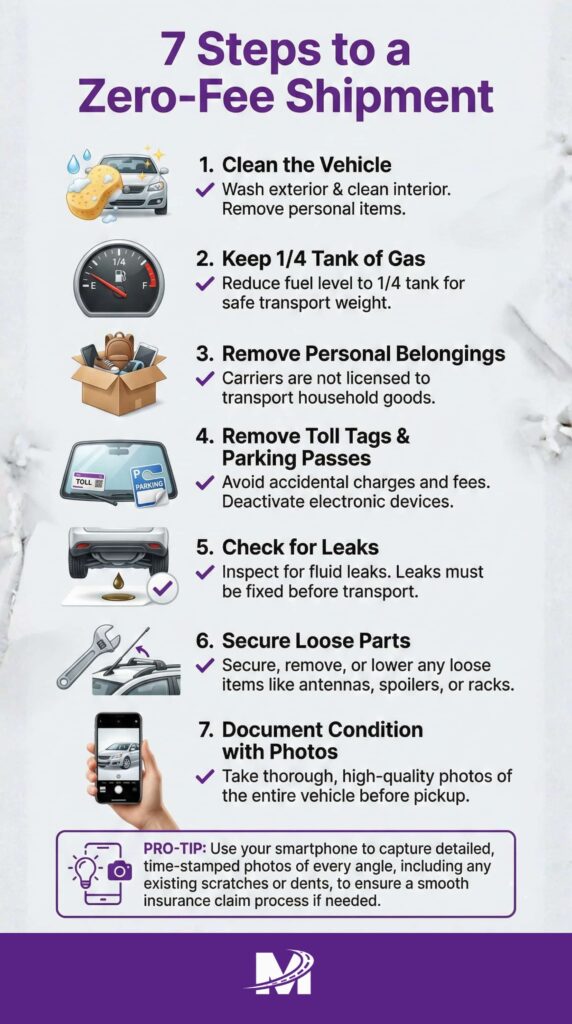
The “final price” may change if your vehicle arrives at the loading dock in a condition different from the quoted condition. Follow this checklist to ensure no surprise fees are added on the day of pickup.
| Step | Action Item | Reason for Cost Impact |
| 1 | Clean the Interior/Exterior | Allows for a clear inspection (Bill of Lading). |
| 2 | Quarter-Tank of Fuel | Reduces weight; higher fuel levels add unnecessary pounds. |
| 3 | Remove Toll Tags | Prevents accidental charges as the truck passes through tolls. |
| 4 | Check Tire Pressure | Essential for safe loading; flat tires may trigger “Inop” fees. |
| 5 | Document Damage | Take high-res photos to prevent insurance disputes later. |
The “Hidden” Value: Understanding the Bill of Lading (BoL)
The Bill of Lading is the most important document in the car shipping process. It serves as your receipt, contract, and inspection report.
Choosing the Right Partner: Broker vs. Carrier
Understanding who you are paying is vital for budgeting.
Pro Tip: Use a broker for the best price and route availability, but ensure they work only with carriers that have a 95% or higher rating on safety and performance databases.
For a full walkthrough of what happens after booking – from pickup window to final delivery inspection – read our state-to-state car transport guide.
Conclusion
Shipping a car between states is a complex logistical dance where price is dictated by supply and demand. To get the best deal, remember the “Three C’s”:
By choosing open transport, staying flexible with your dates, and booking a few weeks in advance, you can ensure your vehicle arrives safely without overextending your budget.
FAQ
The most affordable method is open-carrier transport with terminal-to-terminal delivery. Choosing this combination, along with booking during the “off-season” (late fall or early winter) and providing a flexible pickup window, allows you to secure the lowest possible market rate, often saving $200–$400 compared to expedited or enclosed services.
No, basic cargo insurance should be included in your initial quote. Licensed interstate carriers are required by the Department of Transportation to carry liability and cargo insurance. However, always ask for the specific limits of their policy, typically $100,000 for open trailers, to ensure your vehicle’s total value is fully covered during the journey.
Quotes can increase if there is a sudden spike in national diesel prices, if the vehicle was incorrectly described (e.g., you didn’t mention it was an oversized SUV), or if the pickup location is in a “dead zone” where carriers rarely travel. To avoid this, provide an accurate VIN and be honest about the vehicle’s condition and modifications during the quoting process.
While costs are fixed, transit time depends on distance. Generally, a 500-mile trip takes 1–3 days, a 1,500-mile trip takes 3–5 days, and a cross-country haul (2,500+ miles) can take 7–10 days. Keep in mind that drivers are subject to federal “Hours of Service” laws, which limit the number of hours they can legally drive each day.
Yes, you can ship an inoperable vehicle, but it will cost more. Carriers must use a winch or specialized loading equipment to get the car onto the trailer. You should expect an additional “Inop Fee” ranging from $150 to $300. You must inform the shipping company upfront to ensure they send a truck equipped with the necessary tools.
Related articles

Best Places to Buy a Motorcycle Online in the USA
IN THIS ARTICLE: The Digital Shift: Geography No Longer Constrains the Ride Where to Buy: Top 2026 Platforms Analysis Comparison Table: Platform Overview The Facet of Finance: Not Just the

Complete Guide to Car Shipping in 2026
The landscape of American mobility has shifted, making vehicle logistics more accessible and seamless than ever before. Understanding this new norm is the first step toward a stress-free relocation that

Complete Guide to RV Shipping in 2026
IN THIS ARTICLE: Introduction: The Freedom of the Road, Delivered by Professionals Understanding the Fleet: Classes and Types of RVs Methods of Transport: How We Get Your RV Home Measuring

Door-to-Door vs. Terminal-to-Terminal: Which Logistics Model Fits You?
IN THIS ARTICLE: Understanding the Two Primary Logistics Models Comparative Analysis: Door-to-Door vs. Terminal-to-Terminal The Financial and Temporal Mechanics of Shipping Models Geographical Impact: Urban vs. Rural Accessibility The Final

How State-to-State Car Transport Works: From Pickup to Delivery
IN THIS ARTICLE: Understanding the Auto Transport Ecosystem Choose Your Transport Type The Process of Shipping Calculating the Cost and Timeline of State-to-State Car Transport The 2026 EV Transport Protocol

How to Prepare Your Car for Shipping: Step-by-Step Checklist
IN THIS ARTICLE: Why Preparation is not just a Chore Step 1: Selecting Your Logistics Partner Step 2: The Evidence Phase – Cleaning and Documentation Step 3: Protecting the Extravagant

How to Ship a Motorcycle Safely: The 2026 Guide
IN THIS ARTICLE: The “Why” Behind the Shipping Method Option 1: The DIY Route (Towing it Yourself) Option 2: Open vs. Enclosed Transport Option 3: Specialized Motorcycle Shippers vs. General
Open vs. Enclosed Auto Transport: Which Should You Choose?
IN THIS ARTICLE: The Reality of the Road: What is Open Car Shipping? Where Open Transport Makes Perfect Sense Comparison Table: Open Transport Quick Glance The Practitioner Tip: The Myth