
IN THIS ARTICLE:
- Why Preparation is not just a Chore
- Step 1: Selecting Your Logistics Partner
- Step 2: The Evidence Phase – Cleaning and Documentation
- Step 3: Protecting the Extravagant Exterior Furnishings
- Step 4: Electronics and Toll Systems Management
- Step 5: Cleaning up a nonfunctional Vehicle
- Step 6: Final Physical Task, The Spare Key
- Step 7: Seasonal Readiness- Preparing the Elements
- Step 8: The Hand-Off Day – Managing the Logistics
- Step 9: The Journey – What to Expect
- Step 10: Delivery and Final Inspection
- Conclusion
- FAQ
A change of state or even country is not only a logistical puzzle to be solved, but also an emotional process. Amid the mountain of boxes in the hall of your house, amid the bitter goodbyes to the old neighborhood, there is the one valuable thing, which can give rise to the greatest anxiety, namely, your car. A car, to most of us, is not merely a machine. The ship is our family road trips, our everyday escape on our morning trip to work, and a big investment.
It may be scary to hand your keys to a stranger and watch your vehicle disappear onto a giant trailer. Will it arrive on time? Will it be a target of road debris? And here is where preparation is your insurance policy. By 2026, the auto transport industry will be highly specialized, and the key to a stress-free, undamaged delivery will be a well-prepared owner. It is not merely a dry list of items; it is a professional-level roadmap that gives you peace of mind from the moment you receive the quote until your tires roll onto your new driveway.
Why Preparation is not just a Chore
We are used to owners who believe that once a carrier is booked, the job is done. As a matter of fact, the days before pickup are where the physical and administrative preparation takes place, and where the difference between a smooth delivery and a logistical nightmare lies.
Avoiding the “Hidden Damage” Dispute
The chief motive for demanding a strict checklist is to establish a truth standard. Cars become grimy, they receive slight door dents in grocery store car parks, and we, at times, stop noticing them. Unless you record every millimeter of your car before loading it onto the truck, you have no bargaining power if an actual transit incident occurs. Preparation also ensures that you and the driver are on the same page regarding the vehicle’s condition.
Efficiency, Safety, and Driving
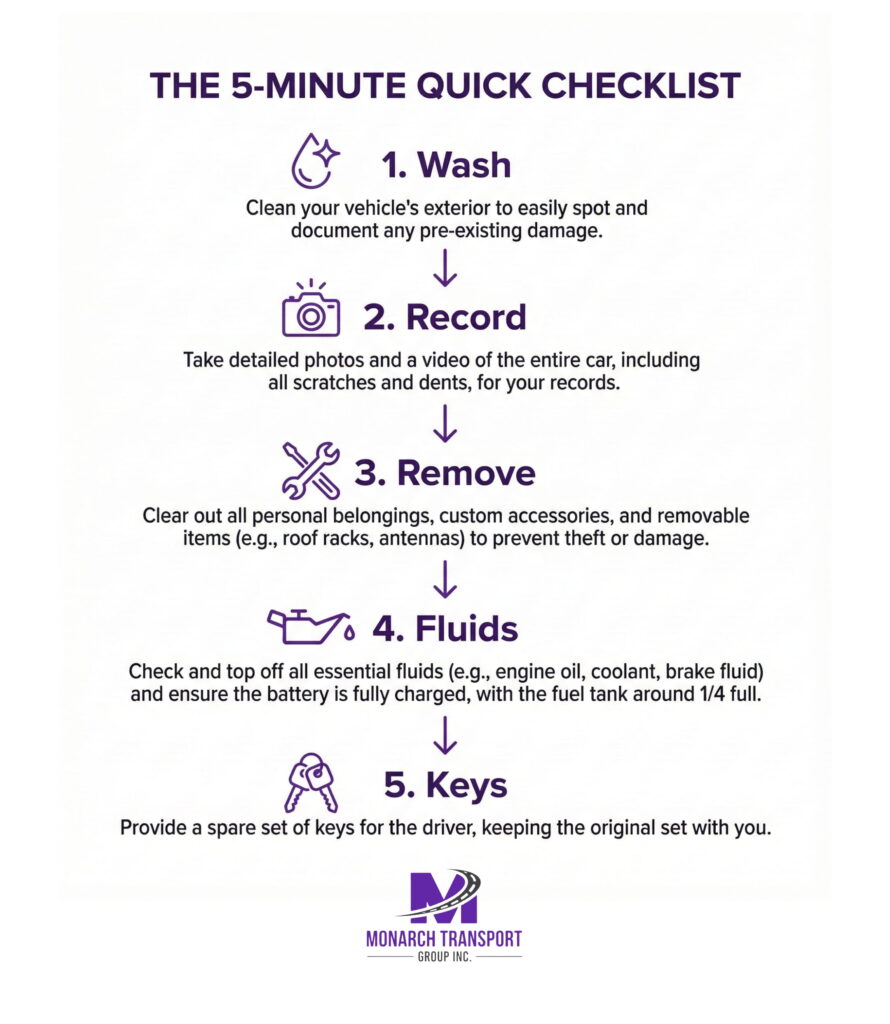
A prepared car is a safe car. Objects that are not adequately secured in a vehicle may become projectiles as the trailer is moved, and leaks may cause damage to other vehicles loaded beneath it. With a professional checklist, you are not just securing your own car; you are securing the entire load.
Step 1: Selecting Your Logistics Partner
The fact that you have to pick whom you trust with your keys is a preliminary task before you even pick up a wash bucket or a camera. Vehicle transport services are not all equal. In 2026, you are overwhelmed by brokers and carriers, and the knowledge of how to check them is your foundation or checklist.
Vetting for Peace of Mind
Do not simply accept the cheapest vehicle shipping estimate. A too-good-to-be-true price really turns out to be a car at the terminal, waiting weeks on end for a driver to take the low-paying order in this industry.
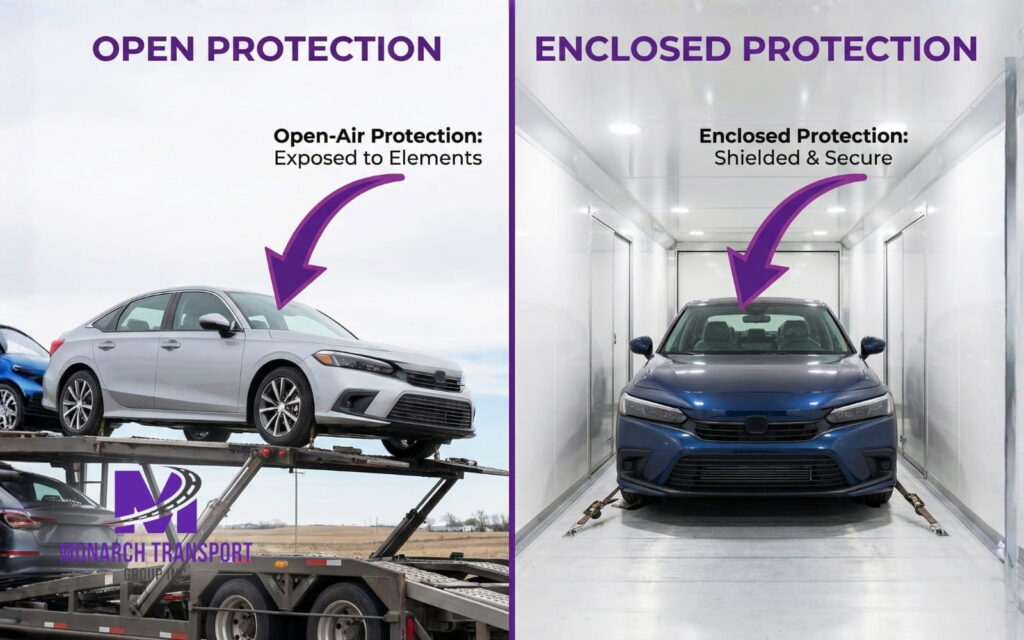
Choice of Open and Enclosed Transport
One of your preparations is to determine the amount of exposure your car can withstand.
Step 2: The Evidence Phase – Cleaning and Documentation
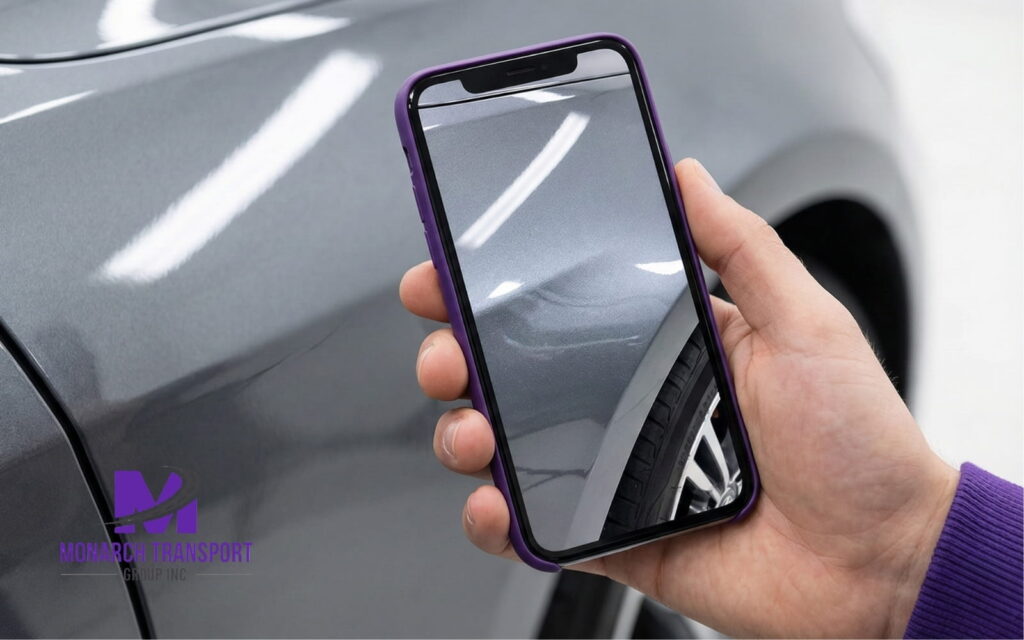
What you cannot see, you cannot write down. Most people believe that it is not worth washing it now, and it will end up dirty in the truck anyway. It is a typical rookie error.
The Strategic Car Wash
The first physical step on your checklist should be a thorough wash. Dust and grease serve as a disguise to tiny scratches, paint patches, and dents.
Step 3: Protecting the Extravagant Exterior Furnishings
That aftermarket roof rack or custom front spoiler looks great on your car, but in a car hauler, that extra feature makes the car weak. The clearance under a double-decker trailer is very low, and the wind at 70 mph can turn a free piece of equipment into a flying object.
Retract, Fold, and Remove
Ground Clearance Awareness
When you have a lowered sports car or custom body kits, this needs to be communicated at the vehicle shipping estimate stage. Normal trailers have ramps with a fixed angle; when your car is too low, it will scrape. We usually suggest Enclosed Transport in these situations, which most commonly incorporates hydraulic lift gates that remain at ground level, so your bumpers remain in perfect shape.
Step 4: Electronics and Toll Systems Management
This is one of the contemporary preparation procedures that most of the ten-year-old checklists fail to address. We will be able to call our cars more connected than ever in 2026, and it might cause some irritating surprises once they are delivered.
The E-ZPass and Toll Tag Trap
Can you imagine going to your new home and finding a bill for three tolls you didn’t even pass through, charging you 200 dollars in toll fees? It occurs more often than you might imagine. The sensors can scan the tags on the cars on the deck as the trailer passes high-speed toll gantries.
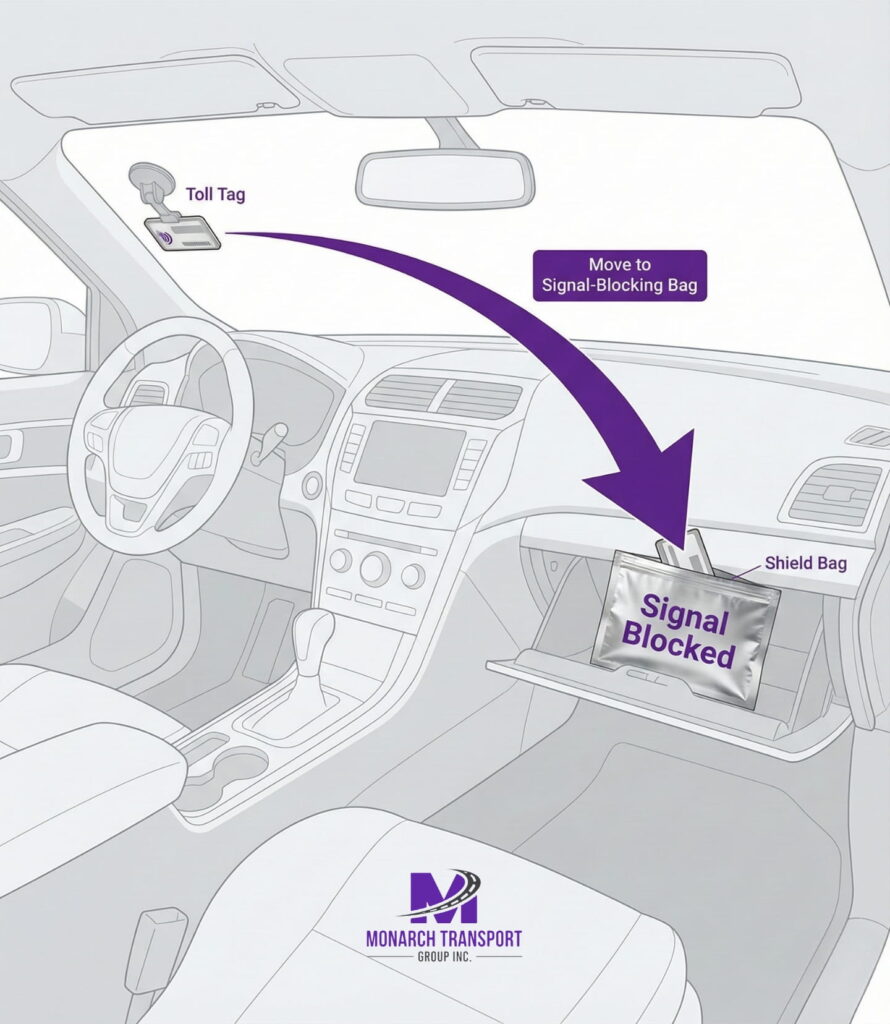
Anti-Theft Systems and alarms
The nightmare of a driver is a car alarm that goes off every time there is a bump on the trailer. It is not only a distraction; it will also have drained your battery by the time you get the car to its destination.
Step 5: Cleaning up a nonfunctional Vehicle
The need to ship a car that does not run, whether a classic project you just purchased or one with mechanical failure, requires an entirely different emotional and logical approach.
The Requirement of Inop Shipping
The fact that it is not running does not mean that it can be a rolling shell with no wheels. In order to ship an inoperable vehicle safely, it still needs to:
The Logistics of the Winch
Not all trucks are fitted with a winch. Unless you notify the auto transportation company about the car not starting, the driver will arrive, notice that the car does not start, and will have to go. This will cause a dry run fee and a significant delay.
Step 6: Final Physical Task, The Spare Key
It may sound easy, but believe me, how many individuals give out what they have as the only set of keys to the driver?
Why You Need a Backup
The driver requires a key to drive the car; unfortunately, something occurs. The keys may be lost during a long-term trip.
Step 7: Seasonal Readiness- Preparing the Elements
In the year 2026, when shipping a car across a country, you must take into account the fact that your car may go through three zones of climate in just a week. A vehicle driving out of a sunny driveway in Florida may be waking up in an icy terminal in Chicago three days later.
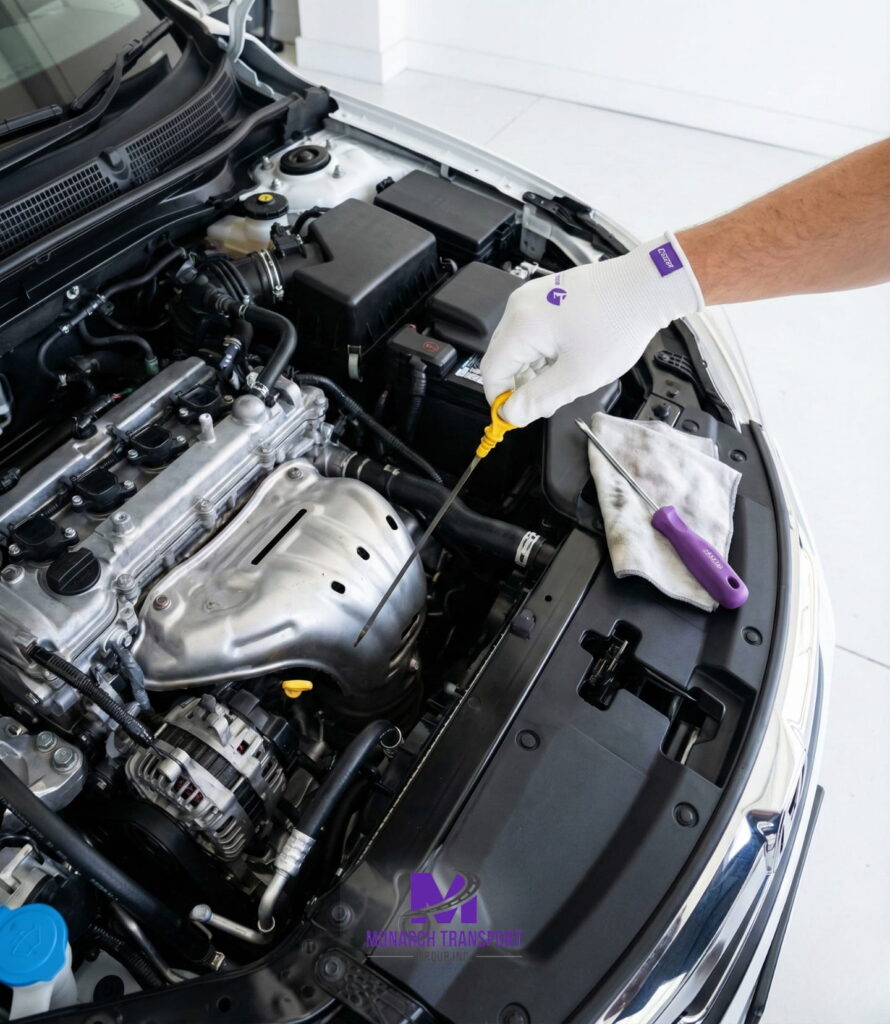
Winter Proofing Your Move
When you are shifting in rather cold seasons, your packing should include a warm layer.
Step 8: The Hand-Off Day – Managing the Logistics
The day has finally arrived. The truck is around the corner, and your nerves might be kicking in. This is where your earlier preparation pays off.
Communication with the Driver
Remember, the driver is your partner in this process. Most drivers will call you 12–24 hours before arrival to coordinate a specific pickup window.
The Bill of Lading (BOL) – Your Most Important Document
The Bill of Lading is the legal contract between you and the carrier. It serves as your receipt and your inspection report.
Step 9: The Journey – What to Expect
Once the trailer pulls away, your car is part of a moving ecosystem.
Tracking and Patience
In 2026, many carriers offer GPS tracking, but don’t panic if the “dot” on the map doesn’t move for a few hours. Drivers have mandatory rest periods and strict ELD (Electronic Logging Device) regulations.
Step 10: Delivery and Final Inspection
The most exciting moment is when the truck arrives at your new home. But before you jump in the driver’s seat and head to the nearest gas station, there is one final, critical task.
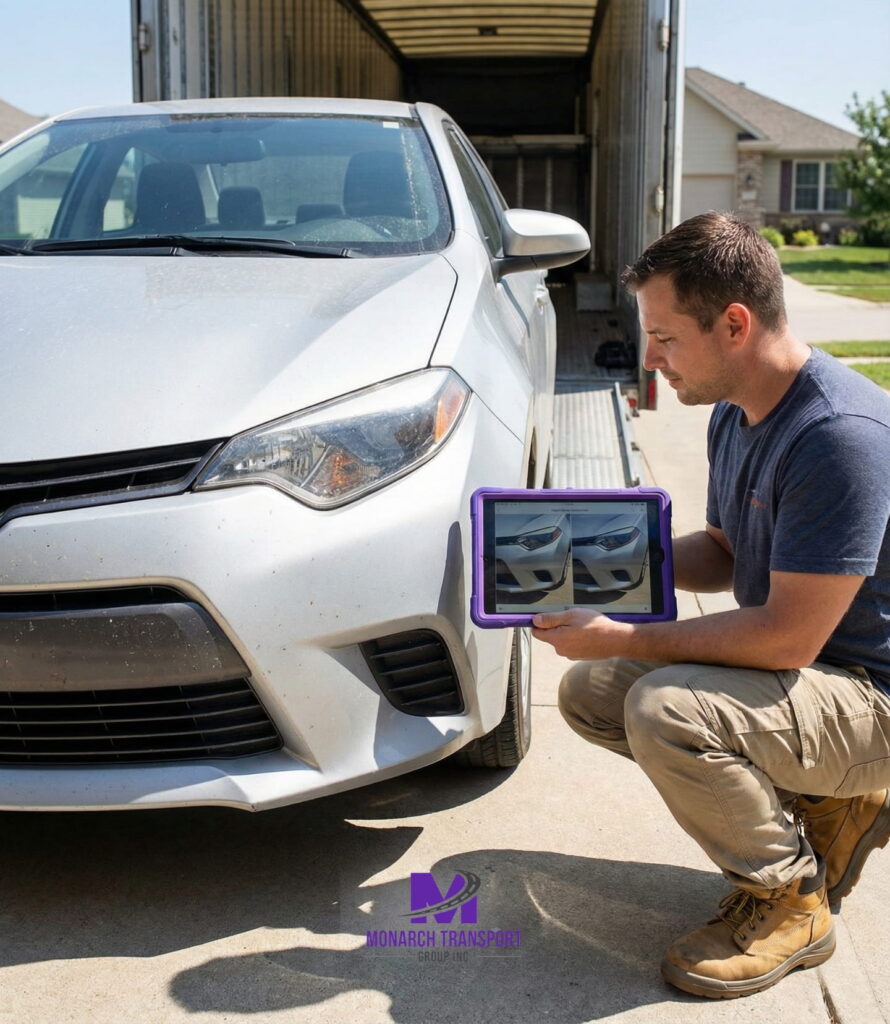
The Reverse Inspection
You must perform the same 360-degree walk-around you did at pickup.
Conclusion
Preparing your car for shipping is a labor of love that pays dividends in peace of mind. By treating the process with the professional care it deserves, documenting the condition, managing the mechanics, and choosing a high-quality partner like Monarch Transport Group, you transform a high-stress event into a smooth transition. Your car is ready for its next chapter, and so are you. Safe travels!
FAQ
The shipping process is straightforward. First, you request a quote based on your vehicle and route. Once you’re happy with the price, you book the shipment and schedule a pickup window. Before pickup, you prepare the car by cleaning it and checking its condition. At pickup, the driver inspects the vehicle and you sign the Bill of Lading. After that, the car is transported to its destination, where you complete a final inspection and receive your vehicle.
The “best” way depends on your car’s value and your budget. For most daily drivers, Open Transport is the best balance of cost and reliability. However, for luxury, classic, or exotic cars, Enclosed Transport is the superior choice as it provides a “rolling vault” of protection from weather and road debris. Always choose a carrier that is fully licensed, insured, and has a proven track record.
If you’re a service member getting ready for deployment, shipping your car usually means planning for long-term storage as well. In addition to the usual preparation, it’s a good idea to change the oil, properly inflate the tires to avoid flat spots, and add a fuel stabilizer if the vehicle will sit unused for months. You should also think about using a battery tender or disconnecting the battery to prevent it from draining while the car is in storage.
Most modern cars can safely sit for 2 to 3 weeks without major issues. However, beyond that, batteries can begin to lose their charge, and tires can develop flat spots. If your car is being shipped across the country (a journey of 5–10 days), it is perfectly fine. For storage longer than a month, specialized preparation is required.
No. This is a common misconception. Carrier insurance strictly covers the vehicle itself. Any personal belongings left inside electronics, clothes, or tools are typically not covered against theft or damage. Additionally, personal items add weight that can lead to DOT fines for the driver. It is always best to ship your car completely empty.
Related articles

Complete Guide to Car Shipping in 2026
The landscape of American mobility has shifted, making vehicle logistics more accessible and seamless than ever before. Understanding this new norm is the first step toward a stress-free relocation that

Complete Guide to RV Shipping in 2026
IN THIS ARTICLE: Introduction: The Freedom of the Road, Delivered by Professionals Understanding the Fleet: Classes and Types of RVs Methods of Transport: How We Get Your RV Home Measuring