
IN THIS ARTICLE:
- Why “Cheap” Doesn’t Have to Mean “Dangerous”
- 1. Open Transport: The Industry Gold Standard for Savings
- 2. The Power of “Terminal-to-Terminal” Shipping
- 3. Timing the Market: The “Snowbird” Effect and Seasonality
- 4. Flexibility: The Secret Negotiation Lever
- 5. Evaluating the Route: Major Hubs vs. Rural Areas
- 6. The Middleman Mystery: Brokers vs. Carriers
- 7. Weight and “Personal Items”: The Hidden Cost Increasers
- 8. The “Lowball Quote” Trap: Why the Cheapest Isn’t Always the Best
- 9. Insurance: Don’t Pay for Double Coverage
- 10. The Importance of the Bill of Lading (BOL)
- 11. Multi-Car Discounts: Strength in Numbers
- 12. The “Pre-Flight” Checklist: Preparing Your Car to Avoid Surcharges
- 13. Understanding “Non-Operational” Costs
- 14. The Delivery Day: Don’t Rush the Inspection
- 15. Summary of Costs: Comparing Your Options
- Conclusion
- FAQ
The cheapest way to ship a car across the country is using open transport on a terminal-to-terminal basis during the off-season (late fall or winter). By choosing an open carrier and remaining flexible with your dates, you can reduce the total cost by 30% to 50% compared to enclosed door-to-door shipping.
Why “Cheap” Doesn’t Have to Mean “Dangerous”
Let’s get one thing straight: when we talk about the “cheapest” way to move a car, we aren’t talking about hiring a guy with a rusted trailer he found on Craigslist. In the auto transport industry, “cheap” refers to optimizing logistics. It’s about understanding how carriers fill their spots and knowing which bells and whistles you can safely cut out.
Shipping a car from New York to California or Florida to Washington is a massive logistical puzzle. For you, that empty spot is an opportunity to negotiate. If you know how the industry prices its routes and utilize professional car transport services, you can save hundreds if not thousands of dollars.
1. Open Transport: The Industry Gold Standard for Savings
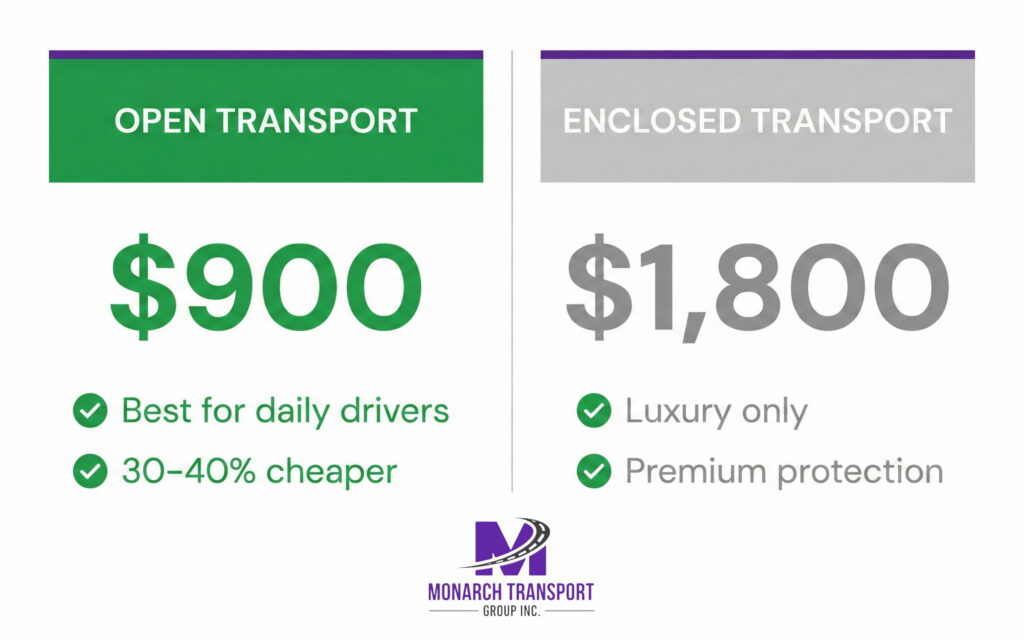
If you want to save money, this is your first and most impactful decision. You have two main choices: Open Transport and Enclosed Transport.
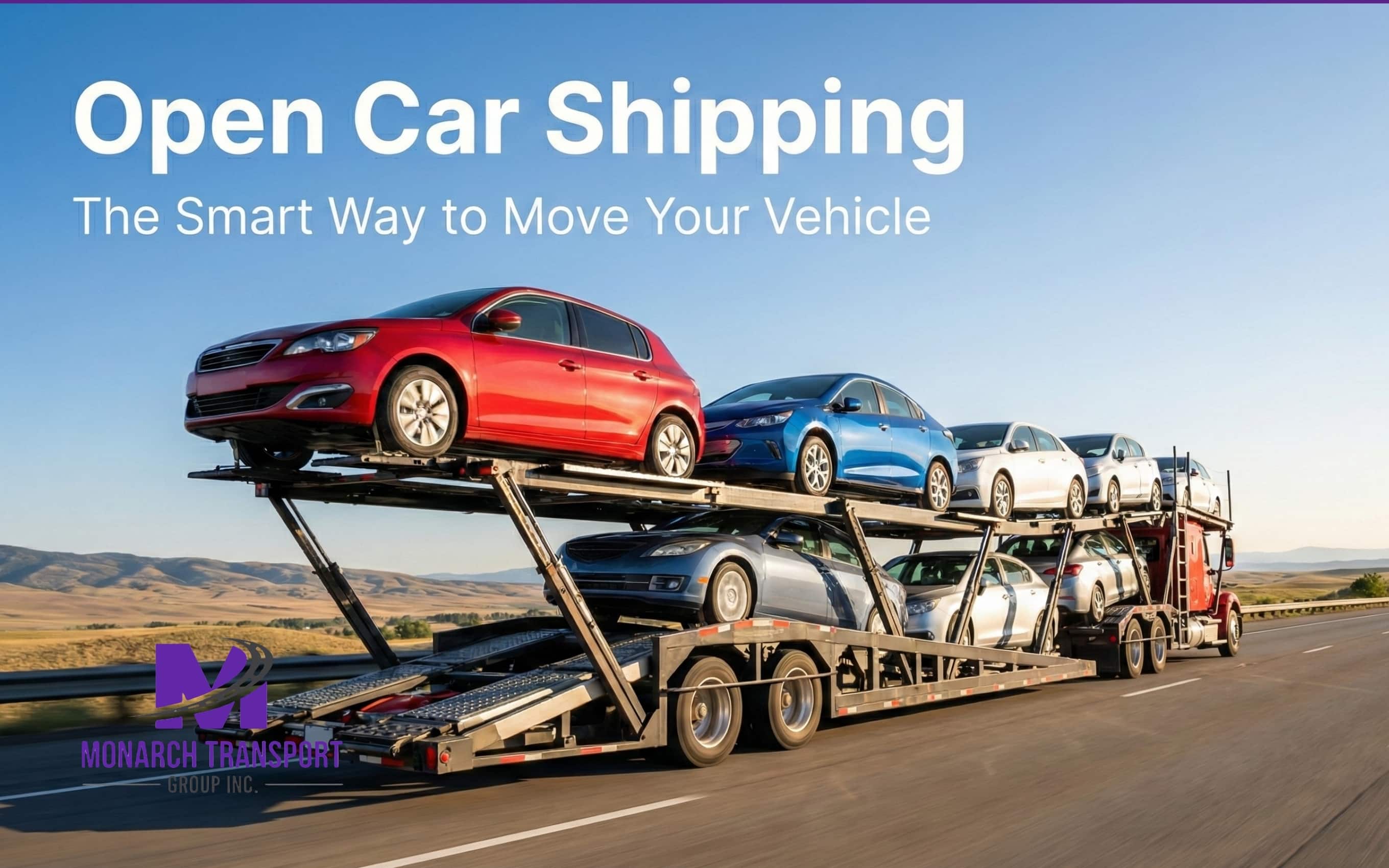
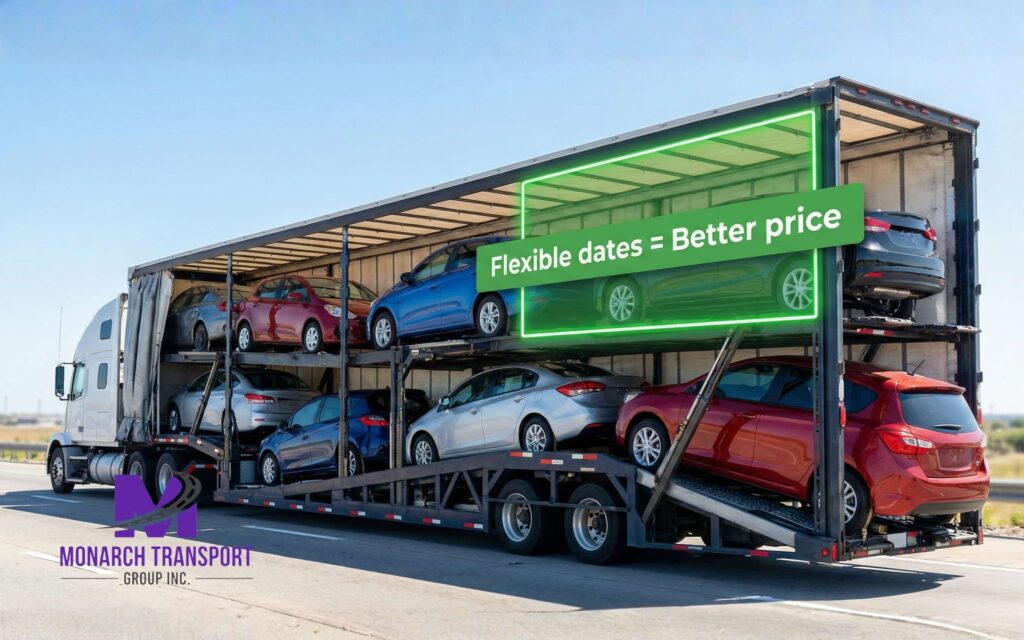
Open transport is exactly what it sounds like. Your car sits on a long, two-level trailer, completely exposed to the elements. You’ve seen these on the highway usually carrying 7 to 10 cars at a time.
Enclosed transport, meanwhile, is a boutique service. It uses a hard-sided trailer that protects the car from every pebble and raindrop. It’s great for a 1965 Mustang or a Ferrari, but for a standard SUV or sedan, you’re essentially paying a massive premium for a “mobile garage” you don’t strictly need.
2. The Power of “Terminal-to-Terminal” Shipping
Most people default to Door-to-Door shipping because it sounds convenient. A truck shows up at your driveway, loads the car, and drops it off at your new house.
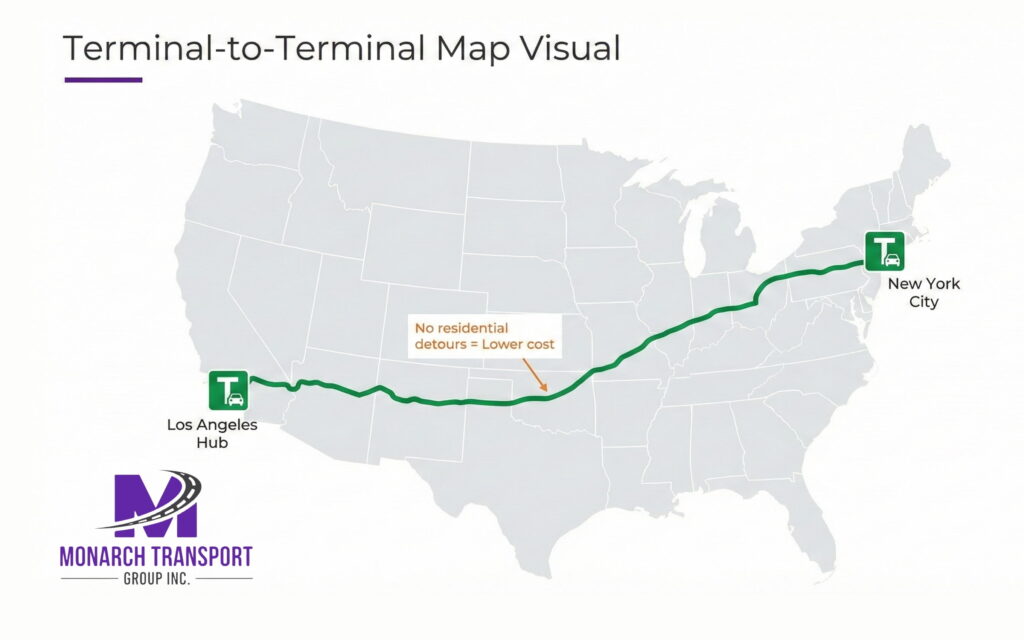
However, big transport trucks (80-foot long car haulers) hate residential neighborhoods. They hate low-hanging trees, tight turns, and “No Commercial Truck” signs. When you ask for door-to-door service, you are often paying for the driver’s stress and the extra fuel spent navigating suburbs.
Terminal-to-Terminal shipping works differently:
It streamlines the carrier’s route. They don’t have to deviate from the main highway, which keeps your car transport quote significantly lower.
Note: Just be sure to check storage fees. If you leave your car at a terminal for five days before picking it up, the storage costs might eat up all your savings.
3. Timing the Market: The “Snowbird” Effect and Seasonality
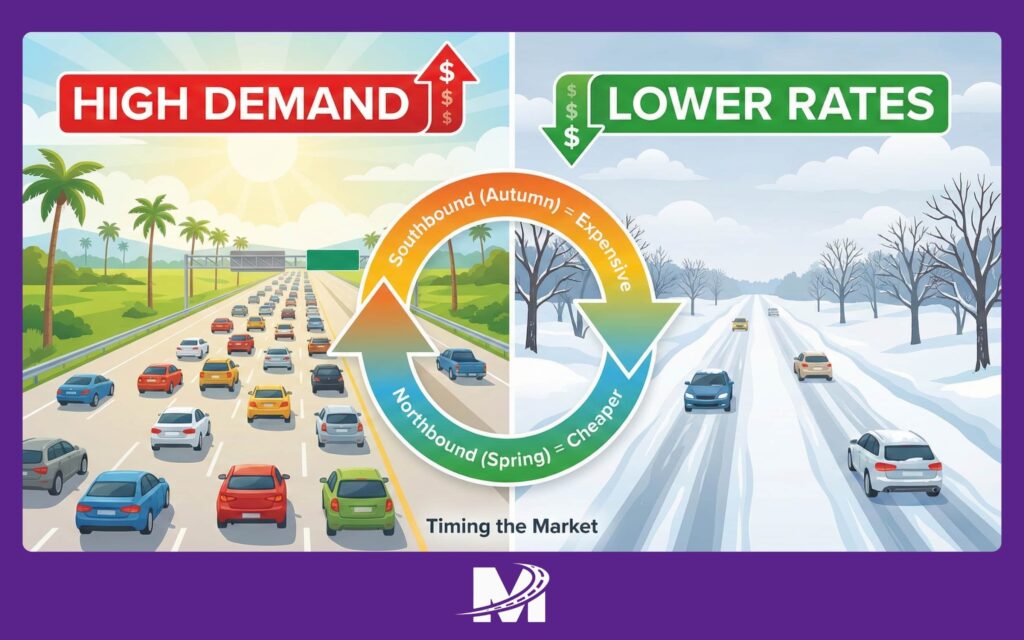
Auto transport is a seasonal business. If you try to ship a car like everyone else, you’ll pay a premium.
4. Flexibility: The Secret Negotiation Lever
If you tell a shipping broker, “I need my car picked up on Tuesday the 14th and delivered by Friday,” you are going to pay the “impatience tax.”
Carriers love flexibility. If you can give them a 5-to-7-day window for pickup, they can fit your car into a route that is already mostly full. Think of it like a jigsaw puzzle. If your car is the last piece they need to complete a trip, they’ll often give you a better price just to get the show on the road.
Pro-Practitioner Tip: Don’t book at the very last minute, but don’t book six months in advance either. The “sweet spot” for the best rates is usually 2–3 weeks before your desired move date. This is when carriers have a clear view of their schedule but still have empty spots to fill.
5. Evaluating the Route: Major Hubs vs. Rural Areas
Geography plays a massive role in your quote. Shipping between two major cities (like Los Angeles to Dallas) is much cheaper than shipping from a small town in Wyoming to a village in Maine.
If you live in a rural area, you can save money by meeting the driver at a large parking lot near a major interstate. Ask the broker: “If I meet the driver in [Major City nearby], how much will that drop the price?” Often, driving 45 minutes to a big truck stop can save you $100 or more because it keeps the carrier on their main path.
6. The Middleman Mystery: Brokers vs. Carriers
One of the most confusing parts of car shipping is figuring out who you’re actually talking to. In this industry, there are Brokers and Carriers. Understanding the difference is key to saving money and avoiding headaches.
How to save here: You might think, “I’ll just go directly to a carrier and save the broker fee!” In theory, yes. In practice, carriers are often small operations (1-3 trucks) that don’t have marketing departments. They rely on brokers to fill their trailers.
If you use a reputable broker, they can often get you a lower price than you’d get alone because they have “bulk” buying power. However, always verify that your carrier is registered with the Federal Motor Carrier Safety Administration (FMCSA) to ensure they meet federal safety standards.
7. Weight and “Personal Items”: The Hidden Cost Increasers
Many people see a car transport trailer as a giant, moving suitcase. It’s tempting to pack your trunk with gym equipment, winter clothes, or spare tires to save on moving truck costs. Don’t do it.
Carriers are strictly regulated by the U.S. Department of Transportation (DOT) regarding the total weight they can carry.
8. The “Lowball Quote” Trap: Why the Cheapest Isn’t Always the Best
In the world of SEO and digital marketing, we often see “too good to be true” offers. The auto transport industry is the same. You will likely receive a quote that is $300–$500 lower than all the others. Be very careful.
This is often a “Bait and Switch” tactic:
To save money safely, ignore the lowest and highest quotes. Look for the “Sweet Spot” in the middle. A realistic price ensures a professional driver actually wants to pick up your car.
9. Insurance: Don’t Pay for Double Coverage
Every legitimate carrier must have cargo insurance. Before you pay for any “extra” insurance offered by a broker, do two things:
If your personal insurance and the carrier’s insurance are both solid, you can confidently decline any “supplemental gap insurance” the broker tries to upsell you. That’s an instant $50–$100 saved.
10. The Importance of the Bill of Lading (BOL)
The Bill of Lading is your most important document. It is the official receipt and the “condition report” of your vehicle.
How this saves you money: It protects your investment. If damage occurs during transit and you have a clear, signed BOL showing the damage wasn’t there before, the carrier’s insurance will pay for the repairs. Without a proper BOL, you’re stuck paying the deductible on your own insurance.
11. Multi-Car Discounts: Strength in Numbers
Are you moving with a spouse? Do you have a neighbor who is also moving? Shipping two or more cars at the same time from the same location is one of the easiest ways to negotiate a discount.
Carriers love this because it reduces their “deadhead” time (driving between different pickup locations). Often, you can negotiate $50–$150 off per vehicle just by booking them together on the same trailer. Even if you don’t have a second car, check local community groups or “moving” forums to see if anyone else in your area is heading in the same direction.
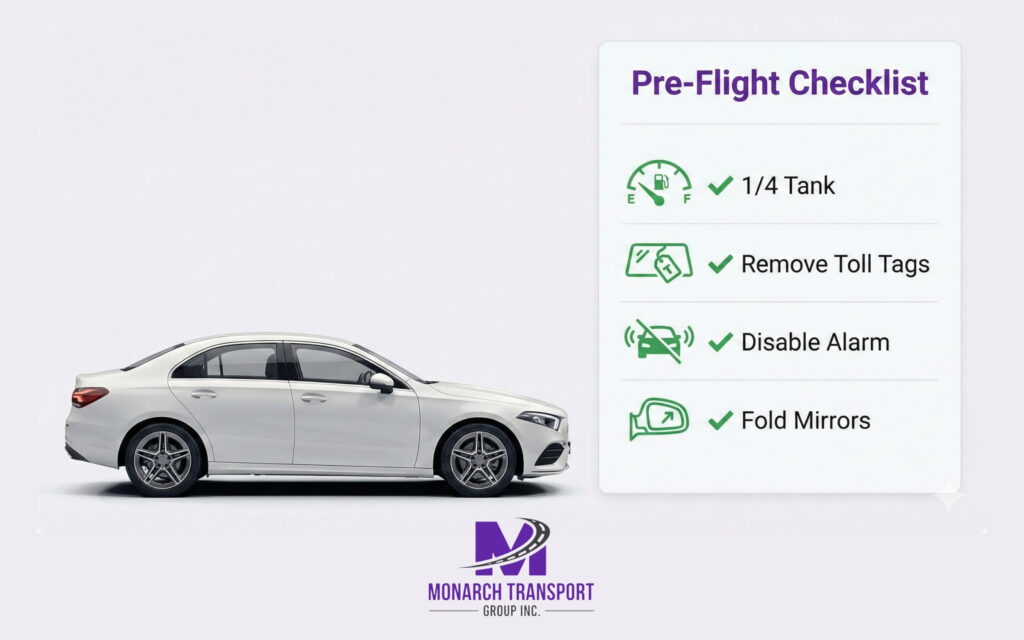
12. The “Pre-Flight” Checklist: Preparing Your Car to Avoid Surcharges
Saving money on the front end (the quote) is great, but you don’t want to lose those savings on the back end due to “negligence fees.” Preparation isn’t just about safety; it’s about ensuring the carrier doesn’t have a reason to charge you more.
13. Understanding “Non-Operational” Costs
In the SEO world, we talk about “site downtime.” In car shipping, we talk about “inoperable vehicles.” If your car doesn’t start, steer, or roll, it’s a “Non-Op.”
Shipping a Non-Op car is significantly more expensive because the carrier needs special equipment (like a winch or a forklift) to get it onto the trailer. If you think you can “save” money by shipping a car that barely runs, be honest with the broker. If the car dies during the trip, the carrier will charge you a premium for the extra labor required to offload it.
Pro-Tip: If your battery is old, replace it before shipping. A $100 battery is much cheaper than a $250 “winch fee.”
14. The Delivery Day: Don’t Rush the Inspection
When that big truck finally pulls up near your destination, your first instinct will be to grab the keys and drive home. Wait. This is the most critical moment for your wallet. Once you sign the delivery document (the Bill of Lading), you are legally stating that the car arrived in perfect condition.
15. Summary of Costs: Comparing Your Options
To give you a bird’s-eye view, here is a quick comparison of what you can expect to pay for a standard cross-country move (e.g., 2,500 miles).
| Method | Estimated Cost | Best For |
| Open / Terminal-to-Terminal | $800 – $1,100 | Maximum savings, daily drivers. |
| Open / Door-to-Door | $1,100 – $1,400 | Balance of convenience and cost. |
| Enclosed / Door-to-Door | $1,600 – $2,200 | Luxury, classic, or brand-new cars. |
| Expedited / Exact Dates | $1,800+ | Last-minute moves or strict schedules. |
Note: Prices vary based on fuel costs and current demand.
Conclusion
Shipping a car across the country is a significant expense, but it doesn’t have to be a financial burden. By treating it like a business transaction remaining flexible, choosing open transport, and being meticulous with your paperwork you can keep your costs closer to the $900 mark rather than the $2,000 mark.
The “human” side of this? Be kind to your driver. They are the ones actually protecting your asset through 3,000 miles of traffic and weather. A polite attitude (and maybe a small tip if they do a great job) often goes further than any contract in ensuring your car is treated with care.
FAQ
The most budget-friendly method is choosing open transport and terminal-to-terminal delivery. By dropping off and picking up your vehicle at a shipping hub rather than your home, you eliminate the carrier’s “last-mile” navigation costs. Additionally, booking during off-peak months like January or February can further reduce the price by 20% due to lower demand.
Yes, weight is a major factor in auto transport pricing. Carriers are limited by federal law on how much total weight they can haul. A heavier vehicle, such as a large SUV or an electric vehicle (EV), consumes more fuel and takes up more weight capacity than a small sedan. To save money, ensure your gas tank is only 1/4 full and remove all personal belongings.
Open transport is highly safe and remains the industry standard. While the vehicle is exposed to weather and road dust, significant damage is rare. Statistically, it is no more dangerous than driving the car yourself on the highway. Most new cars are delivered to dealerships via open trailers, proving it is a reliable and cost-effective method for most vehicles.
Using a reputable broker is often cheaper than trying to find a carrier yourself. Brokers have access to national “load boards” and can negotiate better rates because they provide carriers with consistent business. However, avoid “lowball” quotes that seem too good to be true, as these often lead to delays or hidden price hikes later in the process.
The “sweet spot” for booking is 2 to 3 weeks before your desired move date. Booking too early (months in advance) may result in an inaccurate quote because fuel prices fluctuate. Booking at the last minute often incurs “expedited” fees. A 14-day lead time gives the broker enough time to find a carrier on your route at a competitive price.
Related articles

Complete Guide to Car Shipping in 2026
The landscape of American mobility has shifted, making vehicle logistics more accessible and seamless than ever before. Understanding this new norm is the first step toward a stress-free relocation that

Complete Guide to RV Shipping in 2026
IN THIS ARTICLE: Introduction: The Freedom of the Road, Delivered by Professionals Understanding the Fleet: Classes and Types of RVs Methods of Transport: How We Get Your RV Home Measuring

How State-to-State Car Transport Works: From Pickup to Delivery
IN THIS ARTICLE: Understanding the Auto Transport Ecosystem Choose Your Transport Type The Process of Shipping Calculating the Cost and Timeline of State-to-State Car Transport The 2026 EV Transport Protocol

How Much Does It Cost to Ship a Car Between States?
IN THIS ARTICLE: Average Cost Breakdown by Distance Primary Factors Influencing Your Shipping Quote Geographic Influence on Pricing Understanding the Quote Structure The Impact of Seasonality on Auto Transport Rates

How to Ship a Motorcycle Safely: The 2026 Guide
IN THIS ARTICLE: The “Why” Behind the Shipping Method Option 1: The DIY Route (Towing it Yourself) Option 2: Open vs. Enclosed Transport Option 3: Specialized Motorcycle Shippers vs. General

How to Prepare Your Car for Shipping: Step-by-Step Checklist
IN THIS ARTICLE: Why Preparation is not just a Chore Step 1: Selecting Your Logistics Partner Step 2: The Evidence Phase – Cleaning and Documentation Step 3: Protecting the Extravagant