
IN THIS ARTICLE:
- The State of Auto Transport Fraud in 2026
- Red Flag #1: The “Impossible” Quote (Bait-and-Switch 2.0)
- The Rise of “Ghost” Brokers and AI-Cloned Websites
- Payment Red Flags: If it Feels Like “Quick Cash,” It Is
- The “Fake Buyer” Scam: Targeting Sellers
- The Paperwork Trap: Hidden Clauses and “Legal” Scams
- Insurance Scams: The “Full Coverage” Illusion
- How the Insurance Scam Works
- The “Amazonification” of Reviews: Spotting AI-Generated Praise
- Avoiding the “Relocation Specialist” Trap
- The Safe Booking Protocol: A Step-by-Step Defense
- The Inspection Report: Your Only Legal Shield
- What to Do If You’ve Been Scammed
- Conclusion
- FAQ
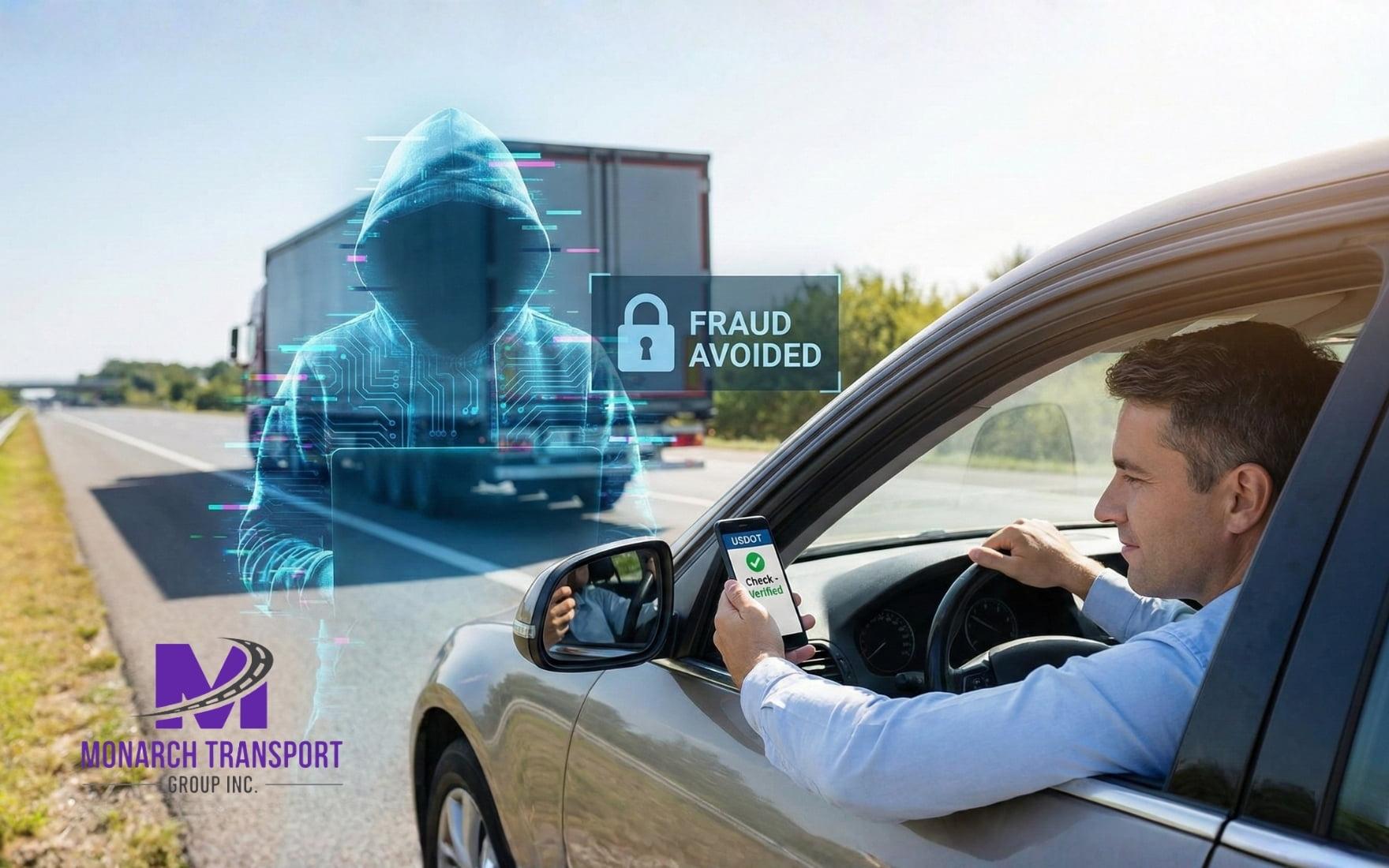
Car shipping scams in 2026 have become more sophisticated, often using AI-generated websites and “ghost” brokers to deceive consumers. To avoid these frauds, you must verify a company’s USDOT number, avoid “too-good-to-be-true” low quotes, and never pay via non-refundable methods like wire transfers or crypto before a carrier is assigned. Reliable transport requires transparency, a physical business presence, and a clear, written contract.
The State of Auto Transport Fraud in 2026
If you’re looking to move your car across the country today, you’re likely starting where everyone else does: a search engine or a social media marketplace. But here’s the reality the digital landscape of 2026 is a double-edged sword. While it’s easier than ever to book a service, it’s also easier than ever for a scammer to build a professional-looking “front” in about ten minutes using generative AI tools.
The auto transport industry has always been a prime target for fraudsters because it involves high-value assets and significant sums of money. In 2026, the scams have moved past simple “bait and switch” pricing. We’re now seeing deepfake customer service reps, sophisticated phishing clones of legitimate FMCSA (Federal Motor Carrier Safety Administration) portals, and “ghost brokers” who disappear the moment a deposit hits their digital wallet.
As someone who navigates this industry daily, I can tell you: staying safe isn’t about finding the “best deal.” It’s about knowing how to look under the hood of a company’s digital presence to see if there’s an actual engine running the business, like a reputable car transport service, or just a clever facade.
Red Flag #1: The “Impossible” Quote (Bait-and-Switch 2.0)
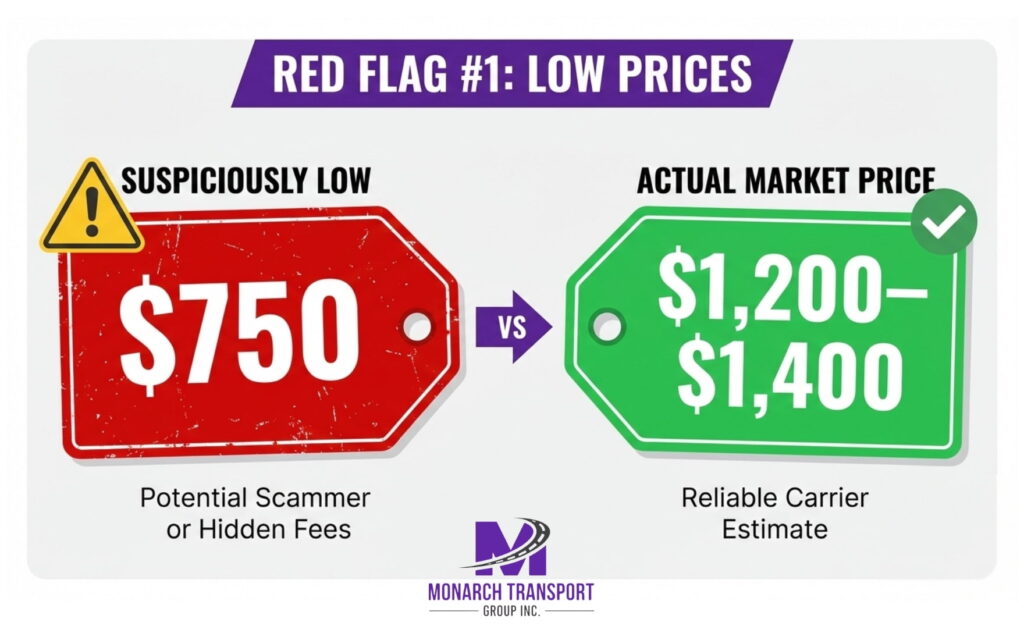
In 2026, the most common scam remains the lowball quote, but it has a modern twist. Scammers use “dynamic pricing AI” to promise you a rate that is 30% to 50% lower than the market average.
Why this happens
The logic is simple: they want to grab your attention and, more importantly, your credit card for an “initial reservation fee.” Once you’re locked in and the scheduled pickup date approaches, the “broker” will call you with a “crisis.” They’ll claim the driver’s truck broke down, fuel prices spiked overnight, or that your vehicle is suddenly “oversized.” To “save” the shipment, they’ll demand an extra $500 or $1,000.
How to spot the trap
If five reputable companies quote you between $1,200 and $1,400 for a cross-country haul, and one company quotes you $750, that $750 quote is not a deal; it’s a trap. Real carriers have fixed overhead costs: diesel, insurance, and driver wages don’t magically drop by 50% for one specific company.
The Rise of “Ghost” Brokers and AI-Cloned Websites
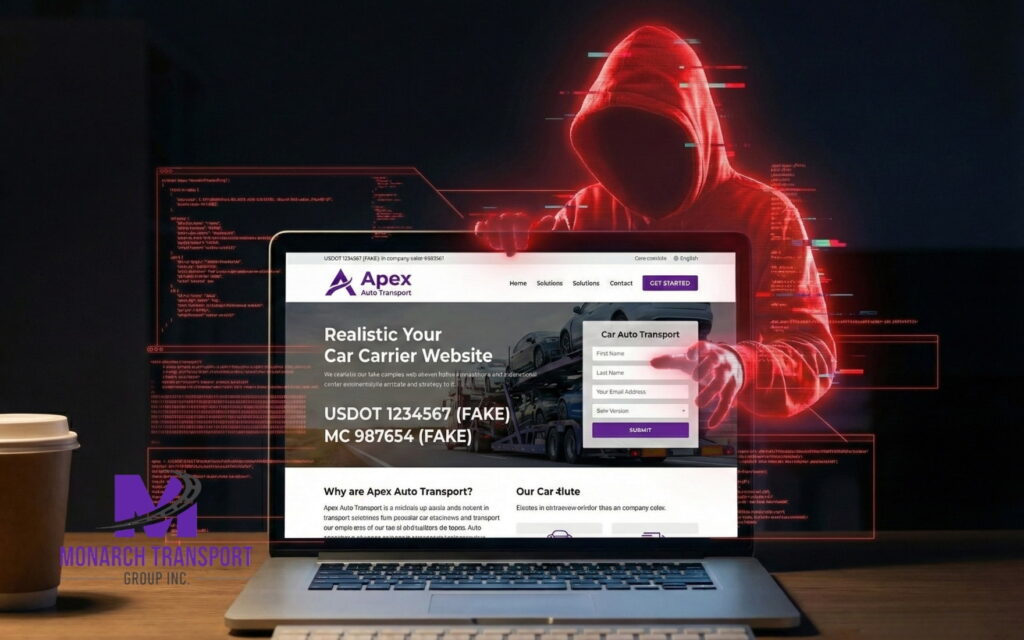
A “Ghost Broker” is an entity that exists only on your screen. In 2026, these scammers will become experts at “Identity Spoofing.” They find a legitimate, small trucking company with a clean record, steal its USDOT and MC (Motor Carrier) numbers, and build a high-end website around that stolen data.
How the scam works:
How to protect yourself:
Don’t just check if the USDOT number is active. Check the contact information registered with the FMCSA.
Payment Red Flags: If it Feels Like “Quick Cash,” It Is
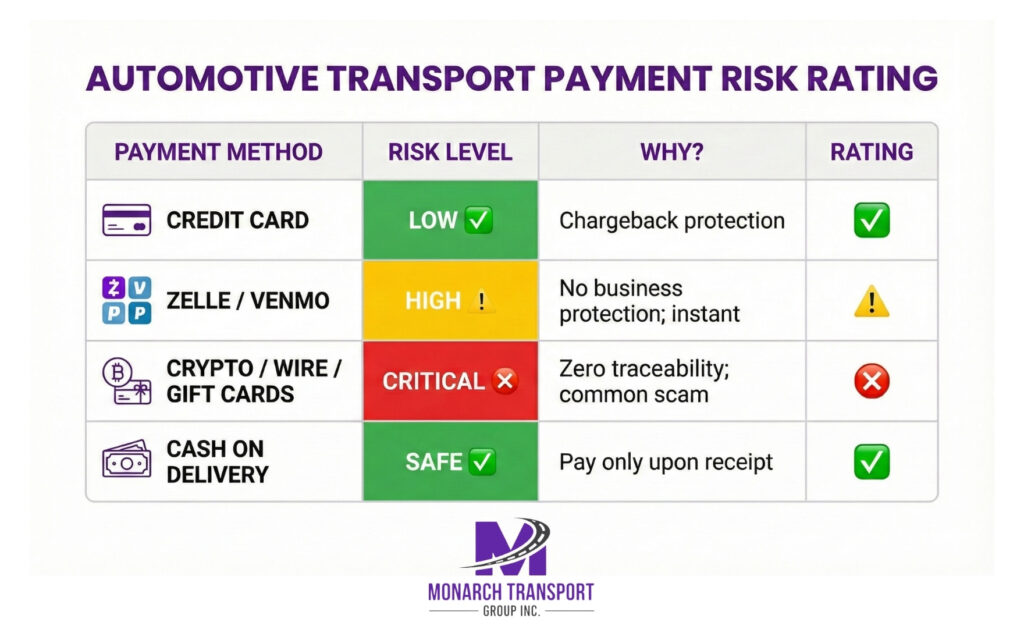
How a company asks you to pay is a major giveaway. Legitimate car transport services operate like professional businesses; they use traceable, reversible payment methods.
Methods Scammers Love in 2026:
The Legitimate Way:
A reputable company will usually ask for a credit card to hold as a deposit (often not charged until a carrier is actually assigned) and allow you to pay the remaining balance via Cashier’s Check or Cash upon delivery.
| Payment Method | Risk Level | Why? |
| Credit Card | Low | You can initiate a chargeback if the service is never provided. |
| Zelle / Venmo | High | No “Business Protection” for these types of services; money is instant. |
| Crypto / Wire | Critical | Zero traceability; 100% indicator of a scam. |
| Cash on Delivery | Safe | You only pay once the car is physically in front of you. |
The “Fake Buyer” Scam: Targeting Sellers
Not all car shipping scams target people moving their own cars. Some target people trying to sell their cars online.
If you’re selling a vehicle on a marketplace, a “buyer” might contact you, offering to pay your full asking price without even seeing the car. They’ll say, “I’ll send you a check for the car plus the shipping costs. Just pay the shipping company for me when they arrive.”
The Reality: The check they send you is fake (even if your bank initially “clears” it). You pay the “shipping company” (who is just the scammer in disguise) out of your own pocket. A week later, the bank realizes the check was fraudulent, reverses the deposit, and you’re out the money you sent to the “shipper.”
The Paperwork Trap: Hidden Clauses and “Legal” Scams
In 2026, the most dangerous scams aren’t the ones where someone disappears with your money; they are the ones where they take your money and point to a contract you signed as justification. This is “legalized” fraud. Scammers know that most people scan a digital document on their phone and click “Sign” without reading the 15-page PDF attached to the email.
The “Estimated” vs. “Guaranteed” Window
Here is a classic move: a broker promises you a specific pickup date over the phone. You’re moving, you have a flight to catch, and you need that car gone on Tuesday. But in the fine print of the contract, the wording says all dates are “estimated” and “subject to carrier availability.”
If the carrier doesn’t show up for three weeks, you can’t cancel without losing your $500 deposit because, technically, they haven’t “breached” the contract. They’ve just failed to meet a verbal promise that isn’t legally binding.
The Storage Fee Extortion
This is a nasty one that’s been gaining traction. A scammy carrier picks up your car, but then claims they can’t reach you for delivery (even if your phone is on). They take your car to a “secure storage facility” and start charging you $150 per day. They won’t release the vehicle until you pay the original shipping fee plus the storage “penalties.” Because these terms are often buried in the “Terms and Conditions” link at the bottom of an email, they feel they have the legal high ground to hold your car hostage.
Insurance Scams: The “Full Coverage” Illusion
Everyone tells you their service includes “Full Insurance.” In the world of auto transport, “Full Coverage” is a marketing term, not a legal one. In 2026, scammers have mastered the art of providing fake or expired Certificates of Insurance (COI).
How the Insurance Scam Works
A broker might present a professional-looking insurance certificate for $1,000,000. However, this policy may only cover the broker’s office, not the truck actually hauling your vehicle. In worse cases, brokers might use outdated or canceled PDFs. Since insurance is held by the carrier, not the broker, if your car is damaged and the carrier’s policy is invalid, you could be left with the bill.
The Broker’s Role in Your Protection
A reputable broker doesn’t just find a truck; they act as your first line of defense. A high-quality broker will:
How to Double-Check Like a Pro
While your broker should handle the heavy lifting, you can easily verify the carrier’s legitimacy yourself:
The “Amazonification” of Reviews: Spotting AI-Generated Praise
By 2026, review sections on Google, Trustpilot, and Yelp have been flooded with AI-generated feedback. Scammers buy “Reputation Packages” where bots write thousands of realistic-sounding reviews to drown out the genuine complaints from angry customers.
How to distinguish a Human from a Bot in 2026:
| Feature | Human Review | AI-Generated Review |
| Language | Messy, uses slang, might have a typo. | Perfectly structured, “academic” flow. |
| Details | Mentions the driver’s name (e.g., “Marek was great”) or a specific delay at a rest stop. | Vague praise: “The logistics were handled with utmost professionalism and efficiency.” |
| Timing | Reviews are spread out over months/years. | A sudden “burst” of 50 reviews in three days, then silence. |
| Profile | Has a history of reviewing local coffee shops, mechanics, etc. | The profile has only ever reviewed this one car shipping company. |
The “Negative Review” Test: Look at how the company responds to 1-star reviews. A legitimate company will try to solve the problem or provide a professional explanation. A scammer will either ignore them entirely or post a generic, aggressive response generated by an AI bot.
Avoiding the “Relocation Specialist” Trap
In the last year, a new type of scammer has emerged: the “Relocation Specialist” who claims to work for a major van line or moving company. They’ll offer to “bundle” your car shipping with your household move for a massive discount.
The problem? Most household movers aren’t licensed to transport vehicles. They outsource the job to the cheapest, most unreliable “bottom-feeder” carriers they can find. You pay the mover a premium, they pay the carrier a pittance, and your car ends up on a rusty trailer with no GPS tracking and a driver who hasn’t slept in 20 hours.
The Rule of Thumb: Keep your moves separate. Hire a dedicated auto transport expert for your car and a moving company for your boxes. When you bundle, you lose visibility into who is actually touching your vehicle.
The Safe Booking Protocol: A Step-by-Step Defense
By now, you know how to spot the scammers lurking in your inbox and search results. But even with a legitimate company, you need a “defense-in-depth” strategy during the actual booking process. In 2026, transparency isn’t just a courtesy; it’s a requirement for a safe transaction.
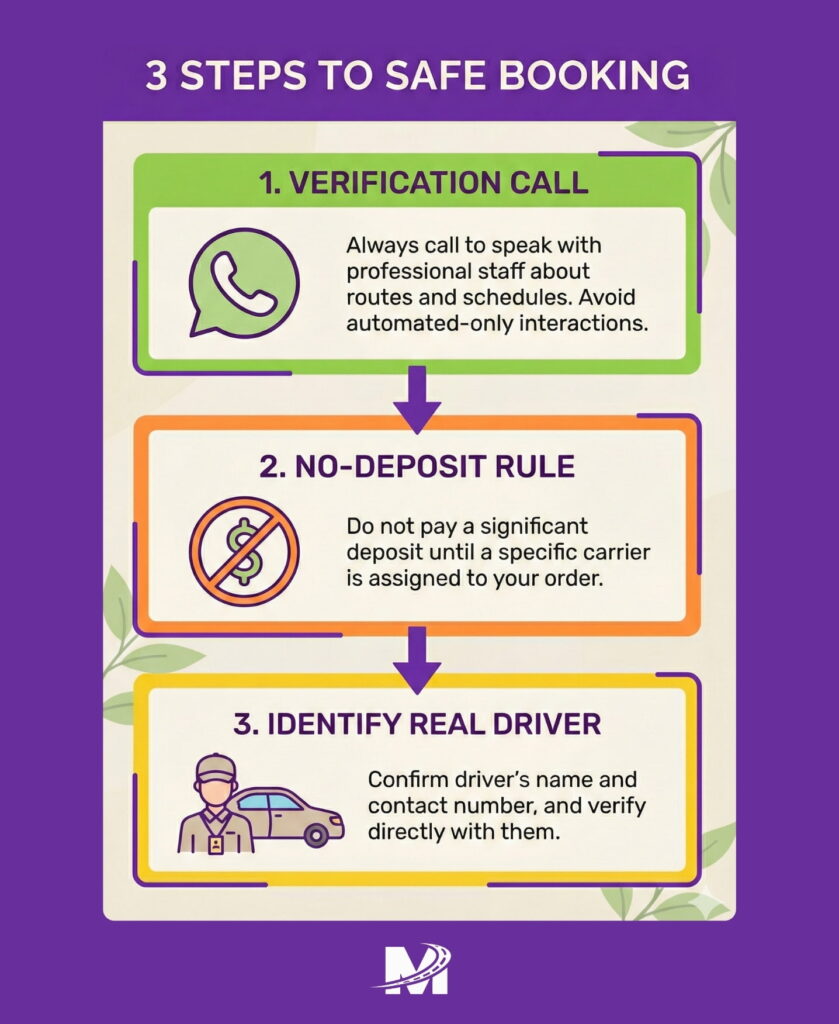
Step 1: The Verification Call
Never book entirely via text or automated chat. Call the company. A legitimate broker or carrier will have a professional staff that can answer specific questions about routes, trailer types (open vs. enclosed), and driver schedules. If the “agent” sounds like they are in a noisy basement or gets defensive when you ask for their MC number, hang up.
Step 2: The No-Deposit Rule
This is the hill to die on: Do not pay a significant deposit until a carrier has been assigned to your order. In the standard, honest version of this industry, a broker takes your info and “posts” your car to a national dispatch board. Only when a specific driver with a specific truck says, “I’ll take that car on Tuesday,” should you be charged a brokerage fee. If they want $500 today just to “start looking,” you are likely dealing with a firm that will keep your money regardless of whether they ever find a truck.
Step 3: Identify the “Real” Driver
Once a carrier is assigned, ask for the driver’s name and cell phone number. A reputable broker will provide this immediately. Call the driver. Confirm they actually have your car on their manifest and that the price matches what the broker told you. Scammers often tell the driver one price and the customer another, pocketing the difference or leaving you to argue with a confused driver at the curb.
The Inspection Report: Your Only Legal Shield
The most common “soft scam” isn’t about stolen money; it’s about denied damage claims. If your car arrives with a new dent and you didn’t document it properly at pickup, you have zero chance of getting it fixed on the company’s dime.
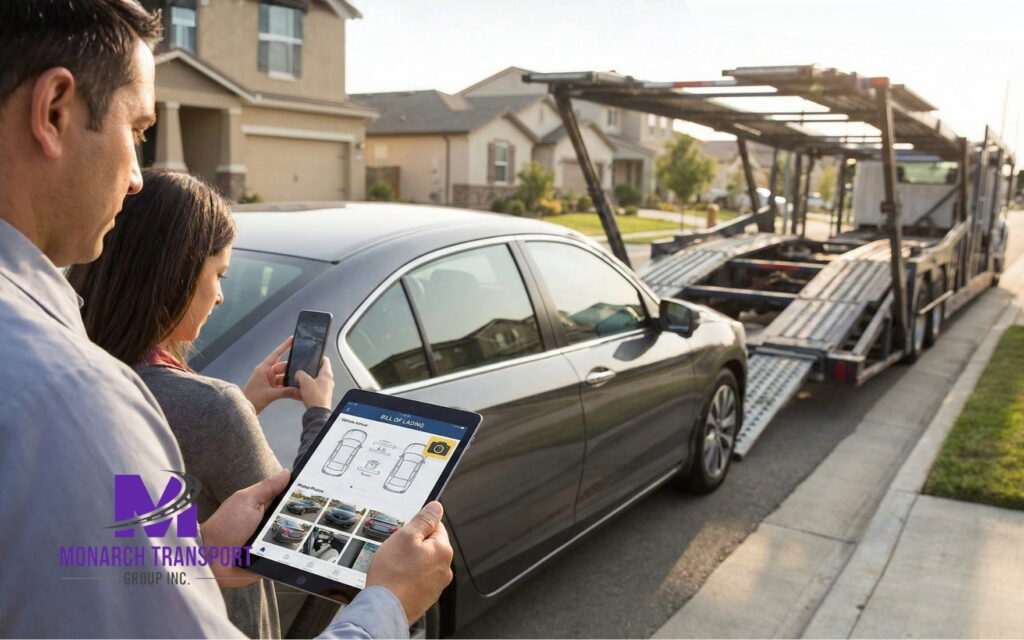
The Bill of Lading (BOL) is King
The BOL is the legal contract between you and the carrier. It acts as a receipt and an inspection report.
The Delivery Walkaround
When the car arrives, do the exact same thing. Compare the car’s current state to the BOL from pickup. If there is new damage, you must note it on the BOL before you sign it. If you sign a “clean” BOL and notice a crack in the windshield ten minutes later, the insurance company will legally consider that damage to have happened after delivery.
What to Do If You’ve Been Scammed
If you realize you’ve been ghosted or extorted, speed is your best friend. Scammers move money fast; you have to move faster.
Conclusion
Shipping a car in 2026 doesn’t have to be a gamble. The “secret” to a stress-free move is simply refusing to be rushed. Scammers thrive on the pressure of your moving deadline. By verifying the DOT credentials, insisting on a price-lock guarantee, and meticulously documenting your car’s condition, you take the power back.
FAQ
A legitimate car shipping company must have an active USDOT (U.S. Department of Transportation) number and a Motor Carrier (MC) number. You can verify these on the FMCSA SAFER website. Legitimate firms also have a physical office address, verifiable customer reviews, and will never demand payment via non-traceable methods like Western Union or cryptocurrency.
An unusually low quote is often a “bait-and-switch” scam. Fraudulent brokers provide a low initial price to secure a deposit, then claim “market price increases” or “vessel delays” to demand more money before delivery. Always compare quotes; if one is 30% lower than the average, it is likely a scam.
If you paid by credit card, you can dispute the charge through your bank’s chargeback process. However, if you paid via Zelle, wire transfer, or gift cards, recovering funds is extremely difficult. Immediately report the fraud to the FMCSA and the FBI’s IC3 portal to increase the chances of legal action.
You should only pay a deposit once a specific carrier (truck and driver) has been assigned to your shipment. Avoid companies that demand an upfront “reservation fee” before they have confirmed a driver. A reputable broker only earns their commission when the logistics are actually arranged.
This is considered “holding a vehicle hostage,” which is illegal under federal law. Do not pay the extra amount if it contradicts your written contract. Contact the FMCSA and, if necessary, local law enforcement at the delivery location. Most legitimate disputes are resolved by showing the driver the original signed “binding quote” or contract.
Related articles

Complete Guide to Car Shipping in 2026
The landscape of American mobility has shifted, making vehicle logistics more accessible and seamless than ever before. Understanding this new norm is the first step toward a stress-free relocation that

Cross-Country Car Shipping: How to Save Money Safely
IN THIS ARTICLE: Why “Cheap” Doesn’t Have to Mean “Dangerous” 1. Open Transport: The Industry Gold Standard for Savings 2. The Power of “Terminal-to-Terminal” Shipping 3. Timing the Market: The

Door-to-Door vs. Terminal-to-Terminal: Which Logistics Model Fits You?
IN THIS ARTICLE: Understanding the Two Primary Logistics Models Comparative Analysis: Door-to-Door vs. Terminal-to-Terminal The Financial and Temporal Mechanics of Shipping Models Geographical Impact: Urban vs. Rural Accessibility The Final

How State-to-State Car Transport Works: From Pickup to Delivery
IN THIS ARTICLE: Understanding the Auto Transport Ecosystem Choose Your Transport Type The Process of Shipping Calculating the Cost and Timeline of State-to-State Car Transport The 2026 EV Transport Protocol

Open vs. Enclosed Auto Transport: Which Should You Choose?
IN THIS ARTICLE: The Reality of the Road: What is Open Car Shipping? Where Open Transport Makes Perfect Sense Comparison Table: Open Transport Quick Glance The Practitioner Tip: The Myth

How to Prepare Your Car for Shipping: Step-by-Step Checklist
IN THIS ARTICLE: Why Preparation is not just a Chore Step 1: Selecting Your Logistics Partner Step 2: The Evidence Phase – Cleaning and Documentation Step 3: Protecting the Extravagant