
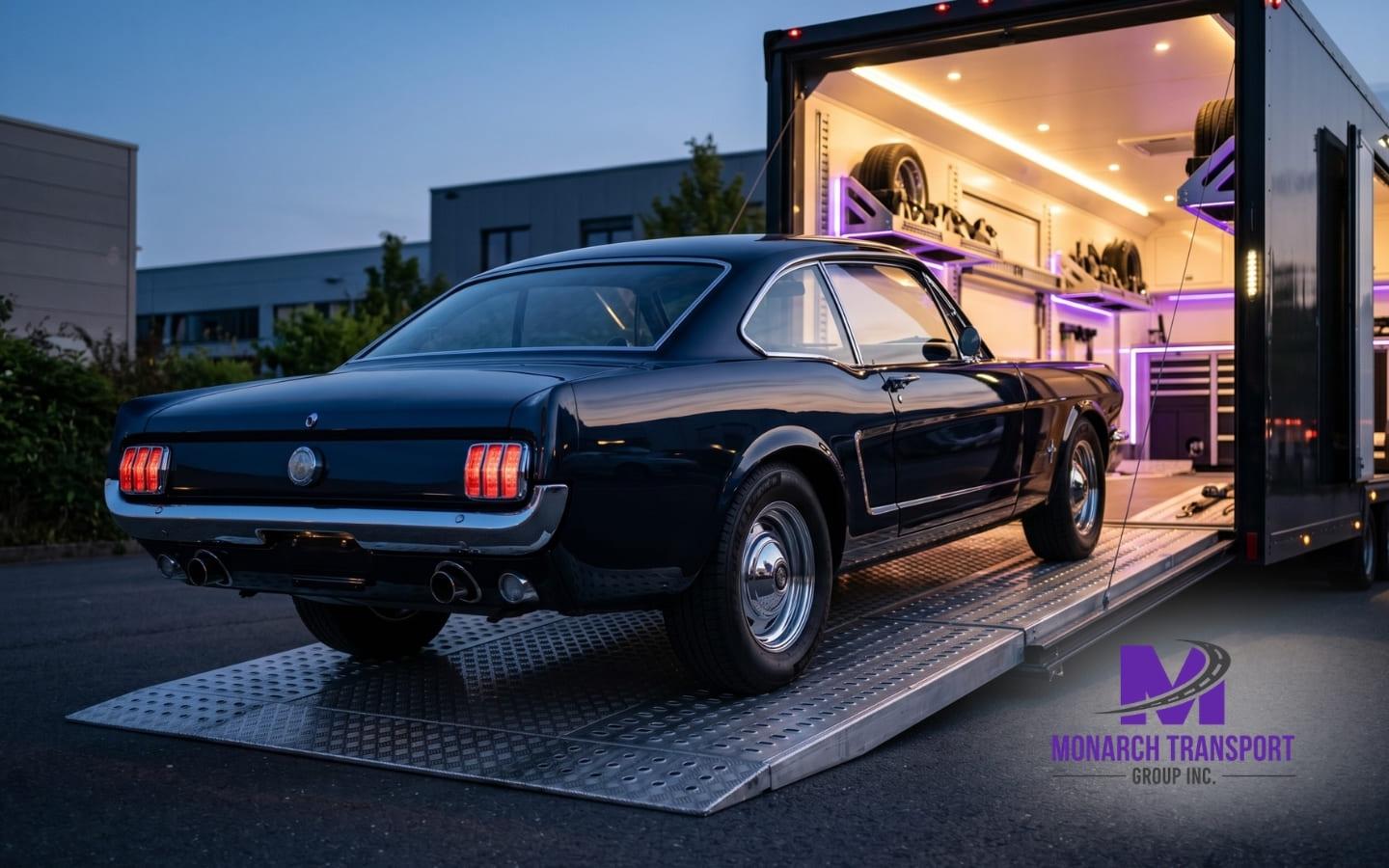
IN THIS ARTICLE:
- Why Classic Cars Require a Different Approach to Transport
- Open vs. Enclosed Transport – For Classic Cars, This Is Not a 50/50 Decision
- The Equipment That Actually Touches Your Car – What to Ask About
- Shipping a Non-Running or Inoperable Classic Car
- The Insurance Gap That Could Cost You Everything
- How to Prepare Your Classic Car for Transport
- Choosing a Carrier That Specializes in Classic Cars
- Timing Your Classic Car Shipment
- Conclusion
- FAQ: How to Ship a Classic or Vintage Car
Shipping a standard daily driver is a transactional process. You are simply moving a piece of transportation from point A to point B. Shipping a classic or vintage car is an entirely different logistical discipline. A classic car is not just a vehicle; it is a financial investment, a piece of automotive history, and often the result of thousands of hours of meticulous restoration. Its emotional and monetary value cannot be measured by standard metrics.
Most general auto transport guides fail to make this distinction. They treat a 1969 Chevrolet Camaro or a pristine Porsche 356 the same way they treat a modern Honda Civic. That is a recipe for disaster. When dealing with vintage metal, one stray rock from the highway or a single scratch from a metal tie-down chain can instantly erase thousands of dollars in value and require months of custom bodywork to repair.
Therefore, every single decision you make when shipping a classic car – from the type of trailer you book to the specific straps the driver uses – requires a highly specialized approach. This guide breaks down exactly how to ship a classic car safely, the specific equipment your carrier must have, and the red flags that indicate a transport company is not qualified to touch your vehicle.
Why Classic Cars Require a Different Approach to Transport
Before you start requesting quotes, you need to understand exactly why vintage car shipping involves special considerations. Standard car haulers operate on volume and speed. Classic car transport must operate on precision and risk mitigation. This comes down to three fundamental differences:
1. Value Appreciation vs. Depreciation
A modern vehicle loses value the moment it rolls off the dealer lot. In the eyes of a standard freight carrier, a damaged 2020 SUV is just a depreciating asset that their basic cargo insurance can easily cover based on Kelley Blue Book value. Classic cars, however, appreciate. A rare, numbers-matching classic has a highly specific market value that traditional insurance metrics do not understand. This fundamentally changes the liability profile and dictates how the car must be insured during transit.
2. Physical Vulnerability
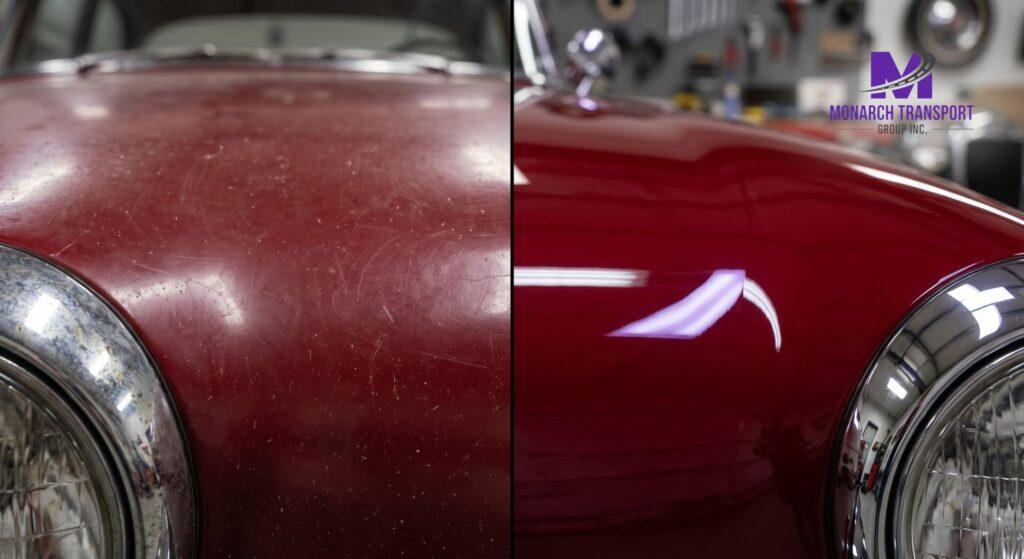
Modern cars are wrapped in thick, protective clear coats, heavy plastics, and durable synthetic trims designed to withstand highway debris. Vintage cars are not. A classic car from the 1960s or earlier often features single-stage paint, fragile original chrome, and exposed undercarriages. A small pebble that would simply bounce off a modern bumper can chip the original paint of a vintage Corvette, causing irreparable damage to its preservation status.
3. Mechanical Fragility
Standard car haulers expect a vehicle to start instantly, idle smoothly, and drive up a steep loading ramp without issue. Many classic cars, even fully restored ones, do not operate this way. They might have cold-blooded carbureted engines that take time to warm up. Their drum brakes might be finicky, their batteries might be weak from sitting in a climate-controlled garage, or their clutches might be exceptionally stiff. The carrier must have the patience and the specific technical knowledge to load a mechanically temperamental vehicle without flooding the engine or burning the clutch.
Open vs. Enclosed Transport – For Classic Cars, This Is Not a 50/50 Decision
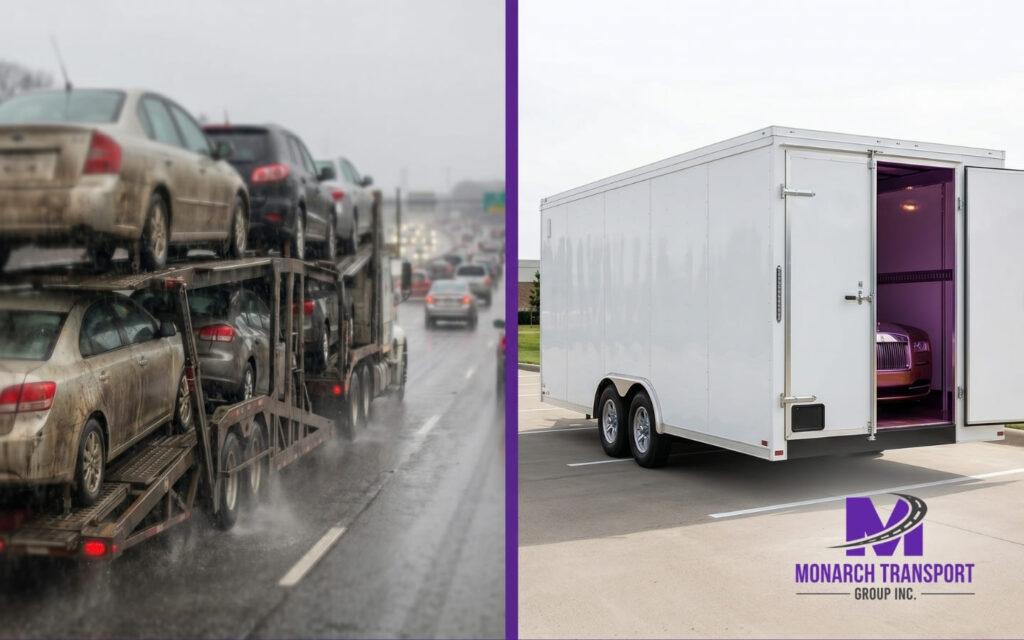
If you read generic shipping advice, they often present open and enclosed transport as equal options, suggesting you just pick whichever fits your budget. For classic car transport, this is simply not true.
Open Transport – When Is It Acceptable?
Open transport involves shipping your vehicle on an exposed, multi-level trailer. For a classic car, you should only consider open transport under very specific, limited circumstances:
Enclosed Transport – The Industry Standard for Classics
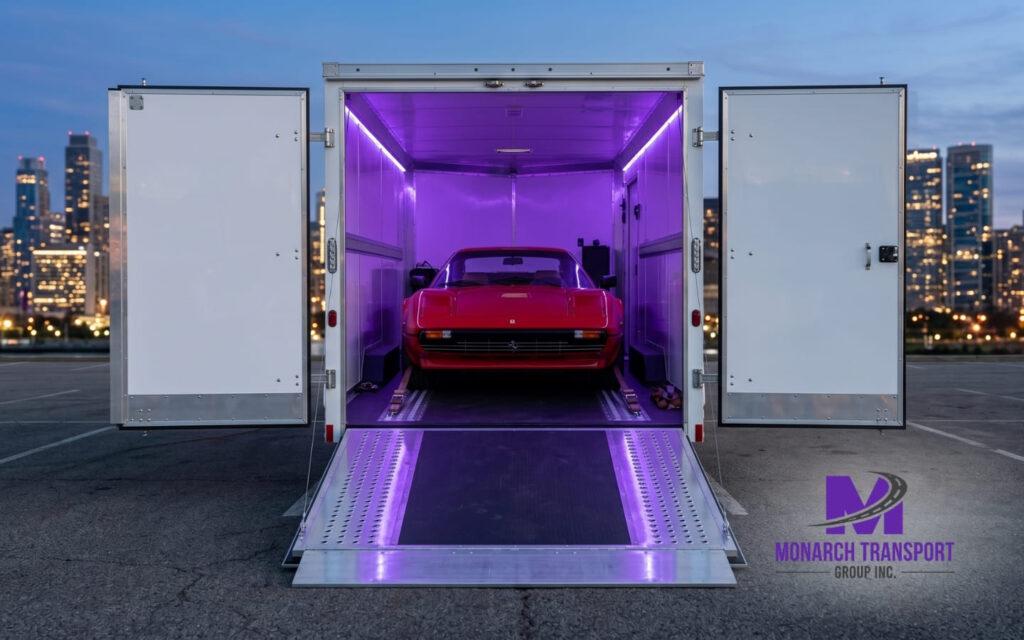
Classic car transport enclosed in a trailer is the only way to guarantee your vehicle arrives in the exact condition it left. It shields the car from weather, road debris, rock chips, and prying eyes. Enclosed transport is mandatory if:
Soft-Sided vs. Hard-Sided Enclosed Trailers
Not all enclosed trailers are created equal. You need to know the difference:
The Equipment That Actually Touches Your Car – What to Ask About
This is the section where most transport guides fall short. Finding an enclosed trailer is easy; finding a carrier who uses the correct interior hardware is the hard part. The equipment that physically secures your vehicle matters just as much as the walls of the trailer.
Soft Straps vs. Metal Chains
Standard freight carriers often use heavy steel chains and metal hooks to tie down vehicles. They hook these into factory slots on the frame and crank them down tight, compressing the suspension. For a classic car, metal chains are absolutely unacceptable. Metal grinds against painted frames, scratches original chrome, damages rocker panels, and can literally bend delicate older suspension components.
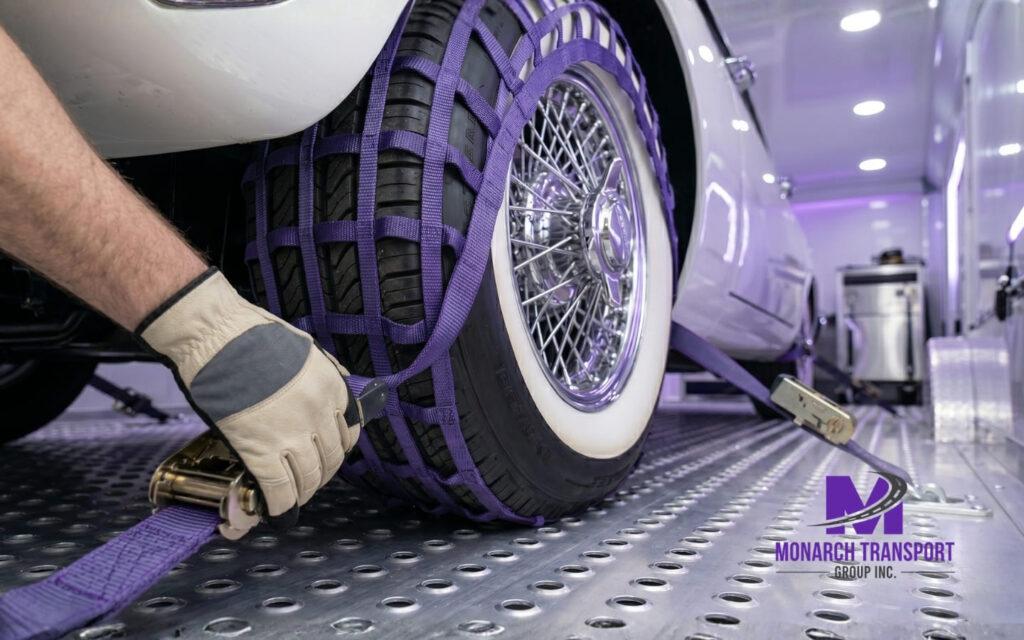
A qualified vintage transport company exclusively uses soft nylon straps. These high-tensile fabric straps wrap gently around the tires or solid axles, securing the car without ever allowing metal to make contact with the vehicle’s body or chassis.
Hydraulic Lift Gates for Low-Clearance Vehicles
Many classic cars, especially muscle cars, European sports cars, or custom builds with lowering kits, suffer from notoriously low ground clearance. Standard enclosed trailers use extended metal ramps for loading. If the approach angle is too steep, your classic car’s front spoiler, custom exhaust, or oil pan will aggressively scrape the metal ramp, causing severe damage before the car is even inside the trailer.
To prevent this, specialized enclosed carriers use a hydraulic liftgate. Instead of driving up an angled ramp, the car is driven straight onto a flat, horizontal platform resting on the ground. The hydraulic system then lifts the entire car vertically to the trailer level, keeping the vehicle perfectly level the entire time.
Wheel Nets vs. Frame Tie-Downs
How the straps are anchored makes a difference. “Frame tie-downs” pull the chassis of the car downward. If a classic car has an aging frame or a custom modified chassis, this downward torque can tweak the alignment or stress the frame rails over hundreds of miles of highway bouncing.
Wheel nets (or over-the-tire straps) are the superior alternative. They basket over the entire tire and lock the wheels to the trailer floor. The car’s suspension is left free to absorb the bumps of the road naturally, exactly as it was engineered to do, dramatically reducing the physical stress on the vintage chassis.
Shipping a Non-Running or Inoperable Classic Car
A massive gap in most online transport advice is the assumption that every car can simply be driven onto a trailer. The reality of the classic car market is completely different. Many vintage vehicles being shipped are “barn finds,” mid-restoration project cars, or rolling chassis purchased at auction.
Shipping a non-running classic car requires specific mechanical equipment. If you fail to communicate the exact operational state of your vehicle, the driver will arrive, realize they cannot load it, and leave – often charging you a “dry run” fee for wasting their time.
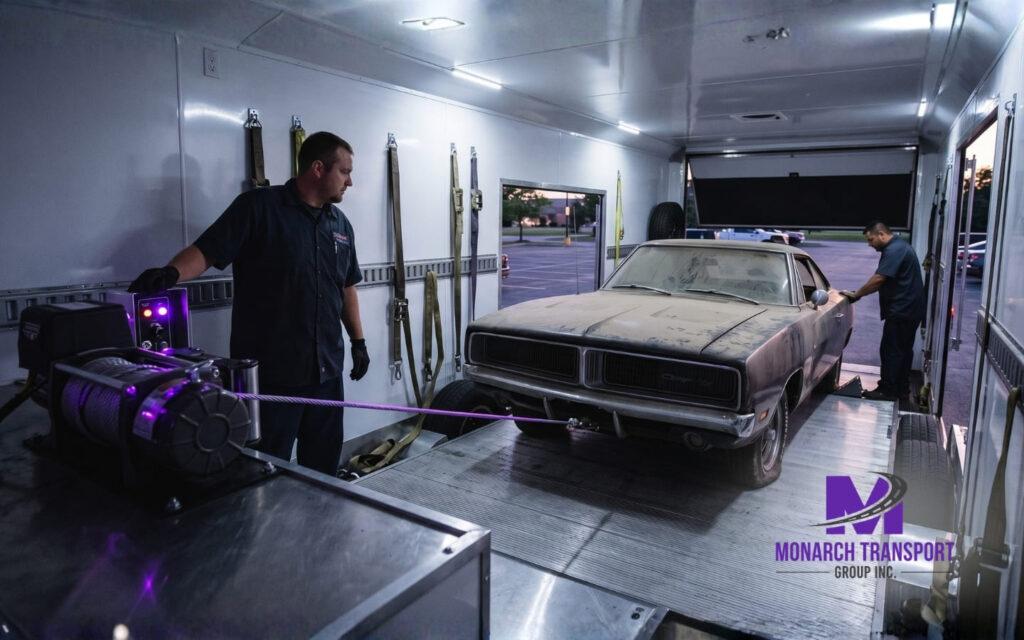
In the logistics industry, “non-running” is not a single category. It breaks down into three distinct tiers of inoperability, each requiring different handling:
1. Rolls, Steers, and Brakes
The car does not have a running engine, but the tires hold air, the steering wheel turns the front wheels, and the brakes can stop the car’s momentum. This is the easiest non-running scenario. The carrier can simply use an electric or hydraulic winch mounted inside the enclosed trailer to slowly pull the vehicle up the ramp or onto the liftgate.
2. Rolls, But Does Not Steer or Brake
The suspension and wheels are attached, but the steering column is locked or missing, and the hydraulic brakes are dead. This is highly dangerous for a solo driver to load. It requires a winch, but it also requires at least one additional person to physically guide the tires and manage the vehicle’s momentum. You must confirm this capability upfront.
3. Does Not Roll At All
This applies to a car missing wheels, suffering from a collapsed suspension, or consisting of just a bare metal shell. You cannot winch this. The carrier must have a specialized forklift or a crane system to physically hoist the chassis into the trailer. Very few enclosed carriers own this equipment. You need to book this type of transport at least two to three weeks in advance.
What to verify before booking an inoperable classic:
The Insurance Gap That Could Cost You Everything
If there is one section of this guide you memorize, make it this one. The biggest mistake classic car owners make is assuming the carrier’s standard liability insurance will cover the true value of their vehicle. It almost certainly will not.
By federal law, auto transport carriers must carry cargo insurance. However, standard cargo policies payout based on Actual Cash Value (ACV). ACV calculates the payout based on standard market value minus depreciation.
For a daily driver, ACV works fine. For a classic car, it is a financial catastrophe. Imagine you are shipping a fully restored 1969 Chevrolet Camaro Z/28 with a numbers-matching engine. On the collector market, that car might easily be worth $120,000. But if the transport trailer crashes and the car is totaled, a standard ACV policy adjuster might look at a generic database, ignore your custom restoration, and offer you $35,000 as the “average market value” for a 50-year-old Chevrolet.
The only way to protect a vintage vehicle is through Agreed Value coverage. This is a policy where you and the insurance provider agree on the exact, specific dollar amount the car is worth before it is shipped. If the car is destroyed, you get a check for that exact amount. Zero depreciation, zero negotiations.
The Three Levels of Transit Protection:
How to Prepare Your Classic Car for Transport
You cannot just hand the keys to the driver and walk away. Preparing a classic car for a cross-country journey requires rigorous documentation and mechanical stabilization. Follow this specific checklist to protect your liability and your vehicle.
Documentation Before Pickup
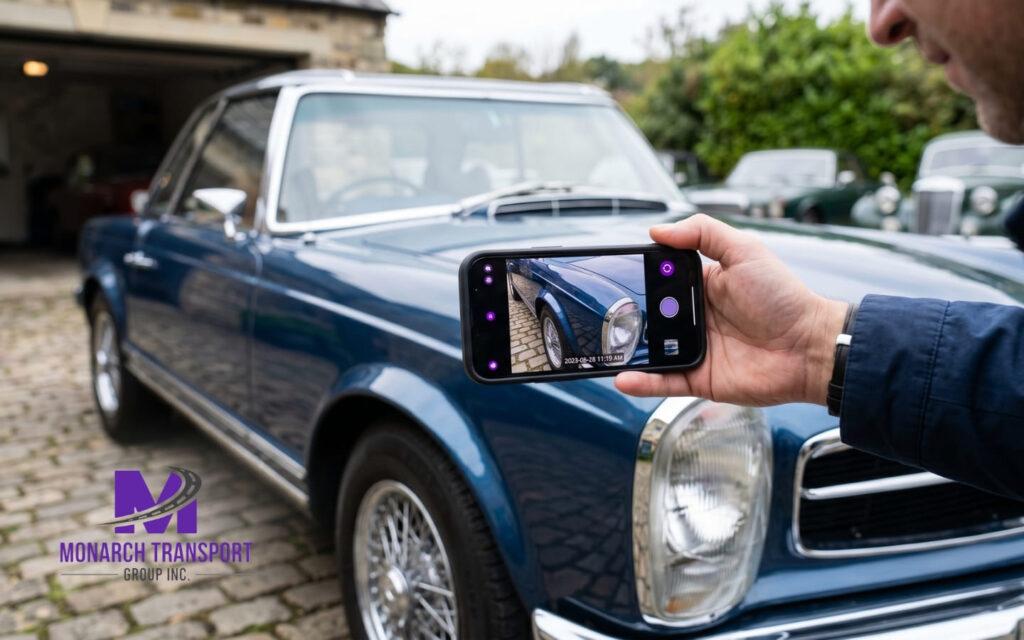
Do not rely on the driver’s memory. Your personal documentation is your only defense if you need to file a damage claim.
Mechanical Preparation
The Soft Top Question
If you are shipping a vintage convertible with a soft canvas or vinyl top, enclosed transport is your only logical option. On an open trailer, a classic car is subjected to sustained 65 mph highway winds. For a 40-year-old soft top, that wind gets underneath the fabric, stretches the material, stresses the ancient stitching, and can literally rip the convertible top right off the frame. If you must ship it on an open trailer (which is strongly discouraged), the top must be mechanically secured or wrapped entirely.
Choosing a Carrier That Specializes in Classic Cars
Not every auto transport company you find on Google has the qualifications to move a vintage vehicle. Many brokers will tell you they can “handle classics,” but they simply dispatch your vehicle to a standard freight hauler to increase their profit margin. You must verify a carrier’s specific classic car credentials before signing a contract.
A true classic car transport specialist meets the following rigorous criteria:
Do not take a sales representative’s word for it. When evaluating a logistics partner, such as Monarch Auto Transport, you will notice they take the guesswork out of this process by actively verifying carrier equipment upfront and ensuring soft strap protocols are strictly followed before a driver ever arrives at your location.
If you are speaking to a different company, ask them directly: “Can you send me photos of the actual trailer and strapping equipment you will use for my vehicle?” If they refuse, make excuses, or claim that “all trailers are the same,” that is not the right carrier for your classic car.
Timing Your Classic Car Shipment
Seasonality affects classic car shipping much more severely than standard auto transport. You need to plan your logistics around the calendar to ensure availability and protect the vehicle.
Conclusion
Shipping a classic car is not the same as shipping a Toyota Camry. From the vulnerability of single-stage paint to the complexities of agreed value insurance, every logistical decision carries a higher cost of failure.
Protect your investment by eliminating the guesswork. Demand an enclosed trailer, insist on soft nylon wheel nets, verify the carrier’s cargo insurance limits, and meticulously document your vehicle’s condition prior to loading. Your classic car represents automotive history and countless hours of dedication; do not let an underqualified freight hauler put it at risk.
If you need a logistics partner who understands the stakes, contact Monarch Auto Transport. We specialize in enclosed transport logistics, verify soft strap equipment standards, and provide the transparency you need regarding agreed value coverage to ensure your vintage vehicle is protected from pickup to delivery.
FAQ: How to Ship a Classic or Vintage Car
Yes. If your vehicle has original or restored paint, is valued over $25,000, or is traveling more than 300 miles, an enclosed trailer is the only way to protect it from road debris, severe weather, and rock chips.
A carrier should exclusively use soft nylon straps, specifically wheel nets or over-the-tire straps. They should never use heavy metal chains or frame tie-downs that can scratch chrome or bend aging suspension components.
Yes, but you must inform the carrier of its exact condition. If it rolls, steers, and brakes, a standard enclosed carrier can load it using a winch. If it is completely immobile or missing wheels, you will need a highly specialized carrier with a forklift or crane.
Actual Cash Value (ACV) pays out based on a depreciated market average, which heavily undervalues classic cars. Agreed Value insurance guarantees a payout for a specific, pre-determined dollar amount that you and the insurer agree upon before shipping.
Wash the car thoroughly. Take timestamped, high-resolution photos of all four sides and all four corners. Photograph the odometer, the interior, and take close-ups of any pre-existing scratches, dents, or paint chips.
Because classic cars require enclosed trailers and specialized handling, expect to pay 30% to 50% more than standard open transport. The final cost depends on the distance, the vehicle’s operability, and whether you require a hydraulic liftgate.
Standard enclosed trailers with extended ramps typically require at least 4 to 5 inches of ground clearance. If your classic car sits lower than that, you must request an enclosed trailer equipped with a hydraulic liftgate to prevent undercarriage damage during loading.
For standard enclosed transport, book at least 2 weeks ahead. During car show season (April through October), when demand for enclosed trailers spikes sharply, allow 3 to 4 weeks minimum. If your vehicle requires a hydraulic liftgate or specialized winching for a non-running car, add another week to that window – qualified carriers with the right equipment book up fast.

Related articles

10 Best Platforms to Buy or Sell Used Cars Online in 2026
IN THIS ARTICLE: Platform Comparison at a Glance Safety: How to Protect Yourself on Any Platform The Bottom Line: Choosing Your 2026 Auto Platform FAQ Buying or selling a used

Car Shipping by Train: Costs, Process & What to Expect in 2026
IN THIS ARTICLE: The Two Faces of Rail Transport: Consumer vs. Commercial Why Choose the Tracks? (The Human Perspective) Dimensions and Constraints: Will Your Car Fit? The “Hidden” Logic of

Complete Guide to Car Shipping in 2026
The landscape of American mobility has shifted, making vehicle logistics more accessible and seamless than ever before. Understanding this new norm is the first step toward a stress-free relocation that

Cross-Country Car Shipping: How to Save Money Safely
IN THIS ARTICLE: Why “Cheap” Doesn’t Have to Mean “Dangerous” 1. Open Transport: The Industry Gold Standard for Savings 2. The Power of “Terminal-to-Terminal” Shipping 3. Timing the Market: The

Door-to-Door vs. Terminal-to-Terminal: Which Logistics Model Fits You?
IN THIS ARTICLE: Understanding the Two Primary Logistics Models Comparative Analysis: Door-to-Door vs. Terminal-to-Terminal The Financial and Temporal Mechanics of Shipping Models Geographical Impact: Urban vs. Rural Accessibility The Final

How Much Does It Cost to Ship a Car Between States?
IN THIS ARTICLE: Average Cost Breakdown by Distance Primary Factors Influencing Your Shipping Quote Geographic Influence on Pricing Understanding the Quote Structure The Impact of Seasonality on Auto Transport Rates

Enclosed Car Shipping: The Gold Standard for Luxury and Exotic Vehicle Transport
IN THIS ARTICLE: Why “Standard” Transport Doesn’t Cut It for Masterpieces The Anatomy of Protection: Hard-Sided vs. Soft-Sided Trailers The Low-Clearance Nightmare: Why Hydraulic Lifts Matter Beyond the Walls: The

How State-to-State Car Transport Works: From Pickup to Delivery
IN THIS ARTICLE: Understanding the Auto Transport Ecosystem Choose Your Transport Type The Process of Shipping Calculating the Cost and Timeline of State-to-State Car Transport The 2026 EV Transport Protocol