
IN THIS ARTICLE:
- Step 1: Get Quotes Before the Deal Closes
- Step 2: Choose Open or Enclosed Transport
- Step 3: Coordinate Pickup with the Seller
- Step 4: Inspect and Sign the Bill of Lading
- Two Things Most Guides Skip
- Is My New Car Insured During Transport?
- What Documents Do I Need to Ship a Car I Just Bought?
- Can I Put Personal Items Inside the Car?
- How Long Does it Take to Ship a Car After Purchase?
- Conclusion
- FAQ – About Shipping a Car You Just Bought
You just clicked “Buy” or won the auction on a car located halfway across the country. Now comes the logistical reality: getting that vehicle to your driveway without adding thousands of miles to the odometer.
Online car buying has exploded in recent years. Platforms like Carvana, CarGurus, and Facebook Marketplace have made it completely normal to purchase a vehicle from a seller you’ve never met, in a state you’ve never visited. The upside is access to a nationwide inventory and better prices. The downside is that the car doesn’t come to you automatically – you have to arrange that part yourself.
The good news is that professional auto transport is more accessible and more affordable than most buyers expect. Shipping a car you bought online is a straightforward four-step process that eliminates the need for a cross-country road trip, a one-way flight, or relying on a stranger to drive it to you. The key is handling the paperwork and logistics correctly before the carrier arrives – and knowing a few things that most guides conveniently leave out.
Step 1: Get Quotes Before the Deal Closes
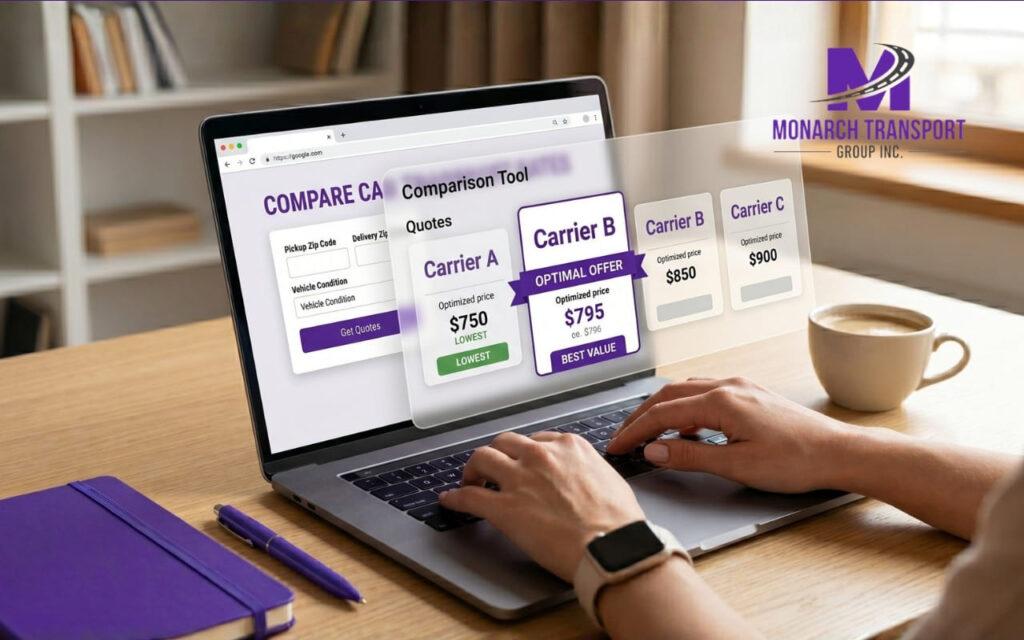
Most buyers wait until the money has changed hands to start looking for a transport company. This is a strategic mistake. You should begin sourcing quotes while you are still in negotiations or during the “pending” phase of the sale.
Why Timing Matters
Getting quotes early allows you to build the shipping cost into your overall budget. More importantly, it gives you leverage to coordinate the pickup window with the seller. If you wait until after the deal is finalized, you may find that the seller is in a hurry to clear their driveway, while the best carriers might not have a truck in that area for another five days.
Knowing Your Numbers
When requesting quotes for an online purchase, have the following details ready:
The Realistic Quote
Avoid the “lowball” quotes that seem too good to be true. In the auto transport industry, carriers bid on loads. If a broker quotes you $500 for a route that usually costs $800, your car will sit in the seller’s lot for weeks because no driver will accept the low-paying job. Aim for the median price to ensure your car moves quickly.
Working with an established broker like Monarch Auto Transport takes the guesswork out of this process. Instead of contacting dozens of carriers individually, Monarch vets the drivers, confirms insurance coverage, and matches your shipment to a carrier already running that route – which means faster pickup and a fair market price from the start.
Step 2: Choose Open or Enclosed Transport
Once you have your quotes, you need to decide how the vehicle will travel. This isn’t just about price; it’s about the value and vulnerability of your new investment.
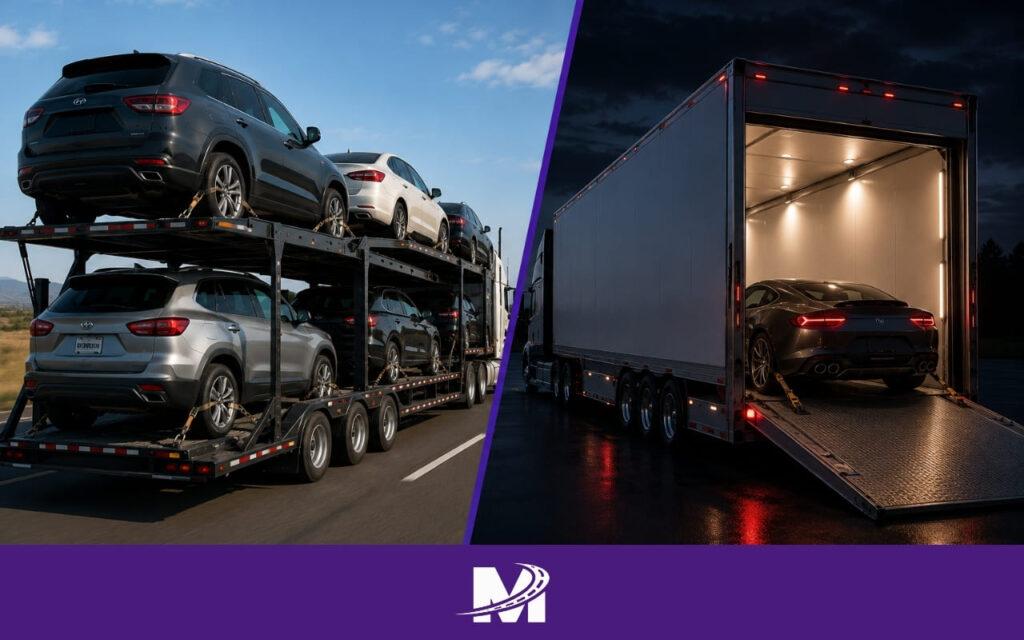
Open Carrier: The Standard Choice
This is the most common method, used for over 90% of vehicle shipments. Your car will be on a multi-car trailer, exposed to the elements (rain, sun, road dust).
Enclosed Carrier: The Premium Shield
If you just bought a high-end luxury vehicle, a classic car, or a brand-new sports car with low ground clearance, enclosed transport is the only logical choice. The car stays inside a hard-sided or soft-sided trailer, protected from every external factor.
Step 3: Coordinate Pickup with the Seller
This is where many online purchases hit a snag. Unlike a dealership that has a dedicated lot and staff, a private seller has a life, a job, and limited patience.
Confirming the “Point Person”
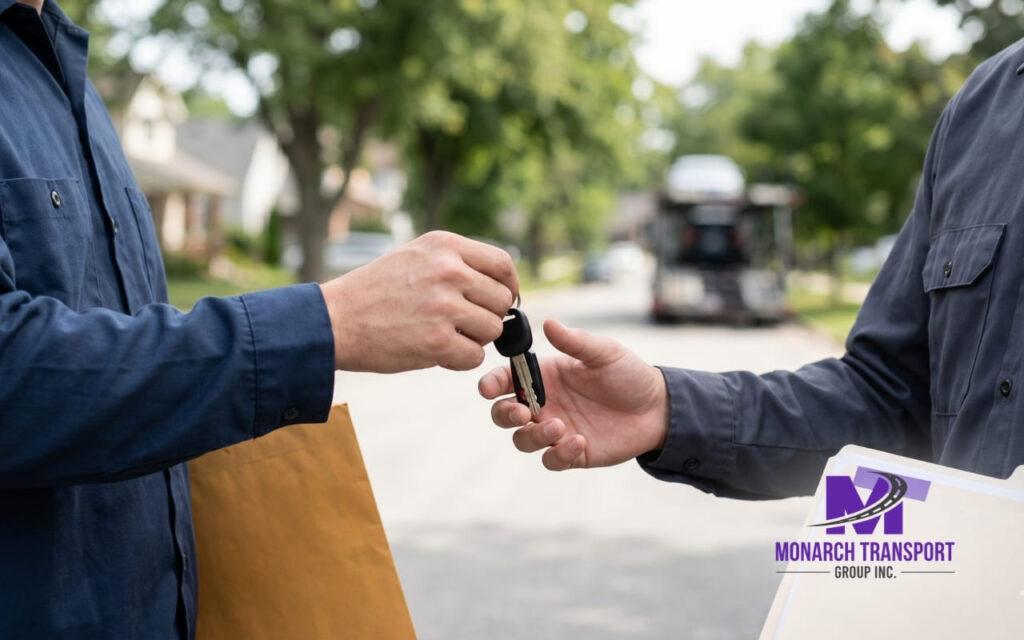
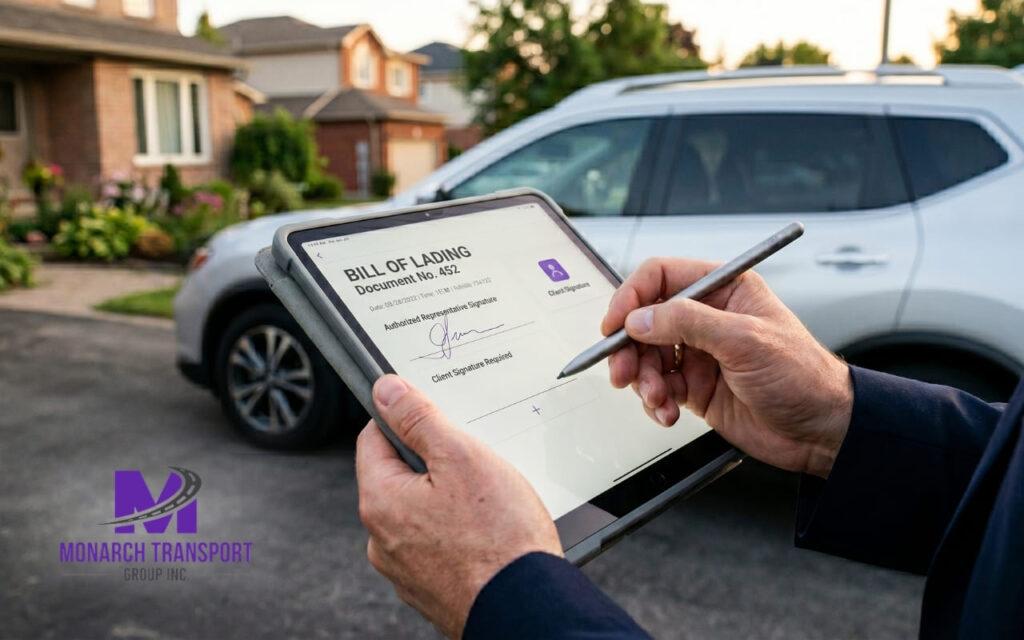
You must confirm who will be present when the truck arrives. If the seller can’t be there, do they have a neighbor or a relative who can hand over the keys? The carrier needs a physical person to sign the initial inspection report (the Bill of Lading).
Documentation and Keys
Before the carrier arrives, ensure the seller has:
The Accessibility Check
Ask the seller: “Can an 80-foot car hauler fit on your street?” If the answer is no (due to low-hanging trees, tight turns, or residential restrictions), coordinate a meeting point at a nearby grocery store parking lot or a wide-open commercial zone. This prevents delays and “restricted access” fees.
Step 4: Inspect and Sign the Bill of Lading
The Bill of Lading (BOL) is the most important document in the shipping process. It serves as your receipt and your insurance baseline.
The “Before” Photos
Since you aren’t there in person, ask the seller to take high-resolution photos of the car from all four corners, including the odometer and any existing scratches, right before the driver loads it. Most professional drivers will also take their own photos, but having your own set from the seller is your safety net.
The Delivery Inspection
When the car arrives at your door, do not let the excitement of the “new toy” rush you.
Signing the Document
By signing the BOL at delivery without noting damage, you are legally stating that the car arrived in good condition. Insurance claims for damage found after the driver leaves are almost impossible to win. Take five minutes, use a flashlight if it’s dark, and ensure the vehicle is exactly as described in the listing.
Two Things Most Guides Skip
When you read general guides online, they often skip the “on-the-ground” realities of buying from a distance. Here are two critical factors usually left out of the fine print:
1. The Temporary Registration Reality
A common concern for online buyers is: “How do I ship it if it doesn’t have plates yet?”
Competitors rarely mention that carriers do not require a license plate to transport a vehicle. As long as you have the temporary registration or a valid Bill of Sale proving ownership, the car can be loaded onto the trailer. The truck itself is the “registered” entity on the road; your car is simply cargo.
2. The Final Payment Protocol
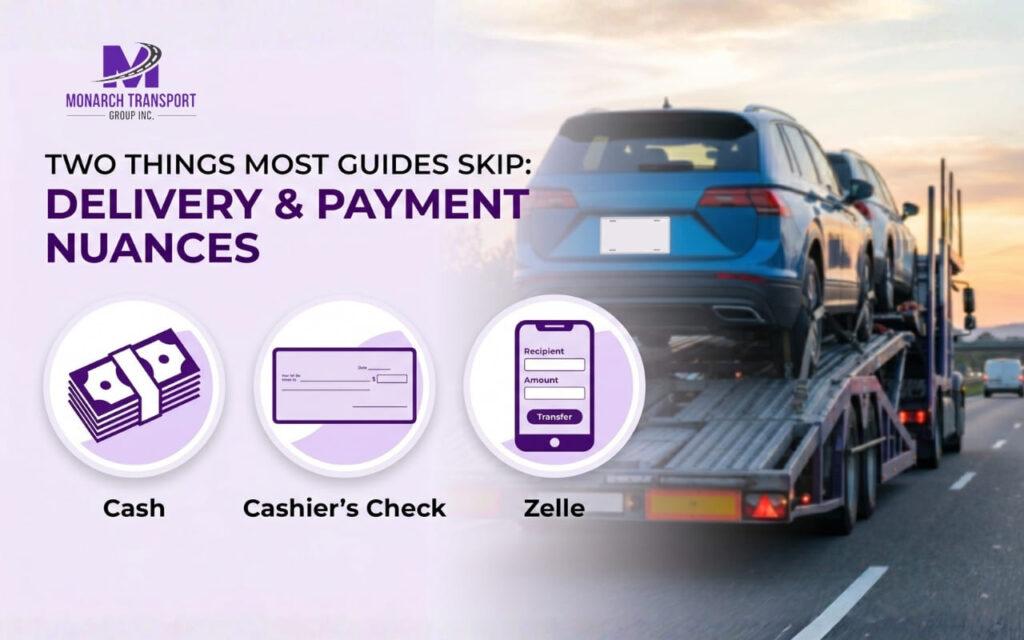
Most people expect to pay for everything via credit card through a website. However, the industry standard for many carriers is a split payment. You may pay a small deposit/broker fee via card, but the “Balance on Delivery” (the largest portion of the cost) is almost always paid directly to the driver via Cash, Cashier’s Check, or Zelle/Venmo.
Carriers rarely accept credit cards at the curb because of the high risk of chargebacks once the car is safely delivered. Always clarify the payment method with your transport coordinator 48 hours before delivery so you aren’t scrambling for a cashier’s check while the driver is waiting.
Is My New Car Insured During Transport?
One of the biggest anxieties for online buyers is the “what if” scenario: what if the truck flips or a hail storm hits while my car is in transit?
The Carrier’s Liability
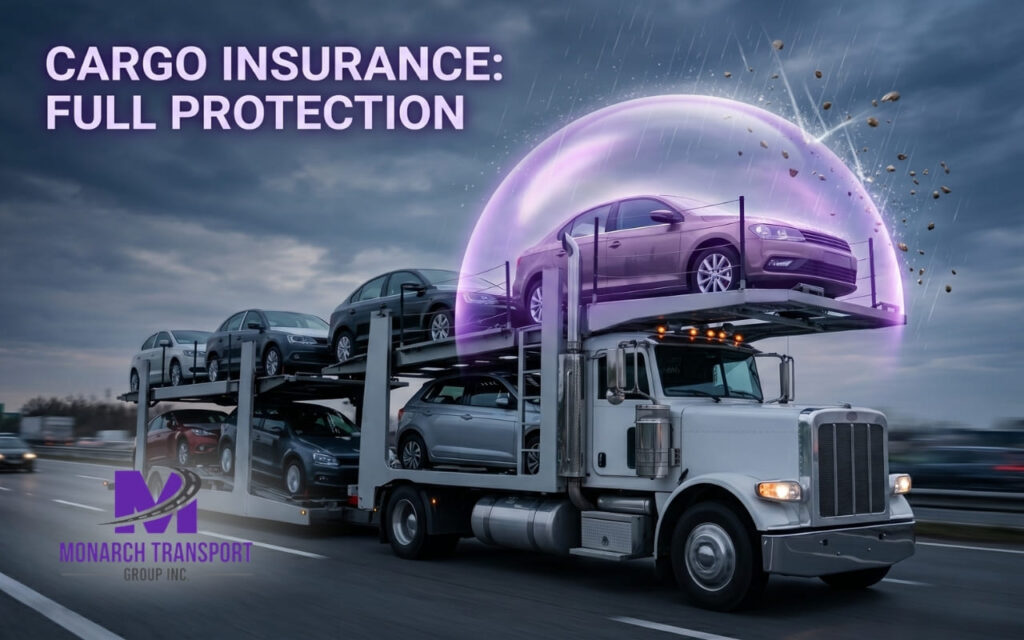
By law, every commercial auto hauler must carry Liability and Cargo Insurance.
When you book through a reputable company like Monarch Auto Transport, we verify that the specific carrier assigned to your car has an active policy with sufficient coverage limits (typically between $100,000 and $250,000 for open trailers and much higher for enclosed).
Your Personal Insurance
It is a common misconception that you should wait until the car arrives to insure it. Call your insurance provider as soon as the Bill of Sale is signed. Most policies have a “newly acquired vehicle” clause that provides a grace period, but having a specific binder for the new VIN ensures that if a “Force Majeure” event (like a tornado or flood) occurs – which carrier insurance sometimes disputes – you are fully protected.
What Documents Do I Need to Ship a Car I Just Bought?
Shipping a car isn’t as document-heavy as the purchase itself, but missing one piece of paper can halt the entire process.
1. The Bill of Sale
This is your proof of purchase. While the driver doesn’t need the original, having a digital or physical copy available is essential if the truck is stopped at a state weigh station or an inspection point. It proves the vehicle isn’t stolen and is being moved legally.
2. Title and Registration
As mentioned earlier, the carrier doesn’t need the car to be registered to move it. However, if the car is being picked up from a Copart or IAAI auction, the driver must have the gate pass and the PIN provided by the auction house. For private sales, ensure the seller has signed the title over to you, but keep the original document out of the car if possible.
3. The Bill of Lading (BOL)
This is generated by the driver at the point of pickup. It acts as the “contract of carriage.” It will list the origin, the destination, and the condition of the car. You don’t need to provide this; the driver provides it to the person handing over the keys.
Can I Put Personal Items Inside the Car?
It’s tempting to ask the seller to “throw the extra tires and some spare parts in the trunk” to save on shipping costs. However, this is a gray area in the industry.
The 100-Pound Rule
Most carriers will allow up to 100 lbs of personal items, provided they are tucked away in the trunk or below the window line. However, these items are NOT insured by the carrier’s cargo policy. If a box of spare parts bounces around and breaks a window from the inside, or if the items are stolen at a truck stop, the carrier is not liable.
Household Goods vs. Vehicles
Federal law prohibits auto haulers from acting as “household goods movers.” If a driver is caught at a weigh station with a car packed to the roof with boxes, they can be fined, and your car may be delayed or even offloaded. Keep it empty, or keep it light.
How Long Does it Take to Ship a Car After Purchase?
Timing is the most variable part of the process. Online buyers often expect Amazon prime speed, but vehicle logistics move at the speed of the highway and the driver’s “Hours of Service” (HOS) regulations.
The Pickup Window
Once you book, it typically takes 1 to 5 business days for a carrier to arrive at the seller’s location. This depends on how remote the pickup city is.
The Transit Time
Once the car is on the trailer, you can estimate the delivery time based on the distance:
Keep in mind that drivers often have 7–9 other cars on the trailer. Your car might be the first one loaded (at the back of the top rack) but the last one delivered, depending on the most efficient route for the driver.
Conclusion
Buying a car online allows you to find the exact spec and price you want, regardless of geography. By securing your shipping quotes early, choosing the right trailer type, and maintaining clear communication with the seller, you can ensure your new investment arrives safely and without surprises.
Ready to ship your car? Contact Monarch Auto Transport today and get a free quote in minutes.
FAQ – About Shipping a Car You Just Bought
The cost depends on distance, vehicle size, and transport type. Open carrier shipping typically ranges from $500 to $1,500 for coast-to-coast routes. Enclosed transport costs 30–40% more. Short regional routes under 500 miles can fall between $300 and $600. Always compare at least three quotes and aim for the median price – quotes significantly below market rate usually mean your car will wait weeks for a driver willing to accept the low-paying load.
The total process typically takes 7 to 14 days. Carrier assignment takes 1 to 5 business days depending on route demand. Transit time varies by distance: under 500 miles takes 1–2 days, 500–1,500 miles takes 3–5 days, and coast-to-coast shipments take 7–10 days. Remote pickup locations add time.
No. A license plate is not required for transport. The vehicle travels as cargo on the trailer, not as a road-going vehicle. A Bill of Sale or temporary registration is sufficient documentation. You only need valid plates once you plan to drive the car on public roads after delivery.
You need a Bill of Sale or purchase invoice as proof of ownership. The carrier generates the Bill of Lading at pickup – you do not need to provide it. Registration and insurance documents do not need to be physically inside the car. For auction purchases, a gate pass and auction PIN are required for vehicle release.
Yes, in most cases. Many online purchases involve a delay between payment and title transfer – especially with out-of-state dealers or private sellers. A signed Bill of Sale and a notarized transfer document are usually sufficient for the carrier to load the vehicle. However, you cannot legally register or drive the car until the physical title is in your name. Check your state’s DMV requirements before delivery.
Yes, but auction shipments require specific steps. The carrier needs the gate pass and buyer PIN issued by the auction house to release the vehicle. Auction cars are often non-running, so confirm with your transport company whether they have winch-equipped carriers available. Standard ramp trailers cannot load inoperable vehicles.
Yes. Private seller pickups are one of the most common auto transport requests. The process is identical to dealership shipping – the carrier arrives, inspects the vehicle, and both parties sign the Bill of Lading. Confirm in advance that the seller will be physically present at pickup, since there is no lot staff to hand over the keys.
Most carriers permit up to 100 lbs of personal items stored in the trunk, below the window line. However, these items are not covered by the carrier’s cargo insurance – if they are lost, stolen, or damaged, the carrier has no liability. Never leave valuables, electronics, or ownership documents inside the vehicle during transport.
Note any new damage on the Bill of Lading before the driver leaves – once they pull away, proving the damage happened in transit becomes significantly harder. Photograph the vehicle immediately at delivery and compare it to the photos taken at pickup. File a formal cargo claim with the carrier in writing within the timeframe specified in your contract, typically 30 to 60 days. Never sign a clean delivery receipt if you notice damage.
In most private online sales, the buyer arranges and pays for transport. Dealerships occasionally offer shipping as part of the sale price, but this is not standard for private sellers or auction purchases. Confirm responsibility for shipping costs before the deal closes so there is no confusion about who books the carrier and who covers the bill.
Related articles

10 Best Platforms to Buy or Sell Used Cars Online in 2026
IN THIS ARTICLE: Platform Comparison at a Glance Safety: How to Protect Yourself on Any Platform The Bottom Line: Choosing Your 2026 Auto Platform FAQ Buying or selling a used

Car Shipping by Train: Costs, Process & What to Expect in 2026
IN THIS ARTICLE: The Two Faces of Rail Transport: Consumer vs. Commercial Why Choose the Tracks? (The Human Perspective) Dimensions and Constraints: Will Your Car Fit? The “Hidden” Logic of
Cross-Country Car Shipping: How to Save Money Safely
IN THIS ARTICLE: Why “Cheap” Doesn’t Have to Mean “Dangerous” 1. Open Transport: The Industry Gold Standard for Savings 2. The Power of “Terminal-to-Terminal” Shipping 3. Timing the Market: The

Complete Guide to RV Shipping in 2026
IN THIS ARTICLE: Introduction: The Freedom of the Road, Delivered by Professionals Understanding the Fleet: Classes and Types of RVs Methods of Transport: How We Get Your RV Home Measuring
Complete Guide to Car Shipping in 2026
The landscape of American mobility has shifted, making vehicle logistics more accessible and seamless than ever before. Understanding this new norm is the first step toward a stress-free relocation that

Door-to-Door vs. Terminal-to-Terminal: Which Logistics Model Fits You?
IN THIS ARTICLE: Understanding the Two Primary Logistics Models Comparative Analysis: Door-to-Door vs. Terminal-to-Terminal The Financial and Temporal Mechanics of Shipping Models Geographical Impact: Urban vs. Rural Accessibility The Final

How to Spot and Avoid Car Shipping Scams in 2026
IN THIS ARTICLE: The State of Auto Transport Fraud in 2026 Red Flag #1: The “Impossible” Quote (Bait-and-Switch 2.0) The Rise of “Ghost” Brokers and AI-Cloned Websites Payment Red Flags:

How Much Does It Cost to Ship a Car Between States?
IN THIS ARTICLE: Average Cost Breakdown by Distance Primary Factors Influencing Your Shipping Quote Geographic Influence on Pricing Understanding the Quote Structure The Impact of Seasonality on Auto Transport Rates