
IN THIS ARTICLE:
- The Most Important Distinction Nobody Tells You Upfront
- What Car Shipping Insurance Actually Covers
- What Is NOT Covered – The Real Exclusions
- Coverage Limits – What the Numbers Actually Mean
- The Certificate of Insurance (COI) – Your Most Underused Tool
- Does Your Personal Auto Insurance Cover Car Shipping?
- Step-by-Step: How to File a Damage Claim
- 5 Common Claim Mistakes (Based on Real Forum Experiences)
- Open vs. Enclosed Transport – How It Affects Your Coverage
- Conclusion
- FAQ: About Car Shipping Insurance
Handing your keys to a driver and watching your vehicle get loaded onto a trailer for a 2,000-mile journey requires a massive amount of trust. Naturally, the immediate question is: what happens if something goes wrong? Who pays for the repair? Who is actually responsible?
The answer is not a blanket “you are insured, so everything is covered.” The auto transport industry operates under specific federal guidelines, and assuming full bumper-to-bumper protection without understanding the paperwork is a fast track to a denied claim.
Understanding how car shipping insurance actually functions, the limits of carrier liability, and the exact steps to take if damage occurs is the only way to genuinely protect your vehicle. This guide breaks down the reality of auto transport coverage, stripping away the marketing language so you know exactly where your protection starts and ends.
Want to ship your car with fully vetted, properly insured carriers? Get a secure quote from Monarch Transport today.
The Most Important Distinction Nobody Tells You Upfront
A major point of confusion for first-time shippers is understanding exactly who is insuring the vehicle. When you search for auto transport, you almost always book through a broker. However, the broker does not transport your car, and the broker does not hold the insurance policy that covers your vehicle during physical transit.
The broker is the logistics coordinator. The carrier – the actual truck driver or trucking company – is the entity legally responsible for your vehicle. If your car is damaged during transport, the damage claim is filed against the carrier’s insurance policy, not the broker’s. If a broker tells you “we are fully insured,” they mean they hold contingent policies or surety bonds, but the primary liability for your car falls on the carrier moving it.
Furthermore, carriers carry two distinct types of insurance, and the difference between them is critical:
| Type of Insurance | What It Actually Covers | Why It Matters to You |
| Automobile Liability Insurance | Damage the truck causes to third parties – other people, public property, other vehicles – if the driver causes a crash | Required by the FMCSA but does not cover your car |
| Motor Truck Cargo Insurance | Physical damage to vehicles loaded on the trailer during transit, loading, and unloading | This is the policy that actually protects your vehicle |
Many customers mistakenly assume that because a carrier holds a $1,000,000 liability policy, their car is highly protected. Liability pays for the guardrail the truck hit. Motor Truck Cargo pays for the dent on your door. These are two completely separate policies.
Get a quote from Monarch – we only work with carriers carrying verifiable Motor Truck Cargo insurance.
What Car Shipping Insurance Actually Covers
When evaluating a carrier’s Motor Truck Cargo insurance, you need to know what triggers a valid claim. Standard cargo policies cover direct physical damage caused by the carrier’s operations or equipment while the vehicle is in their possession.
Here is exactly what falls under standard coverage:
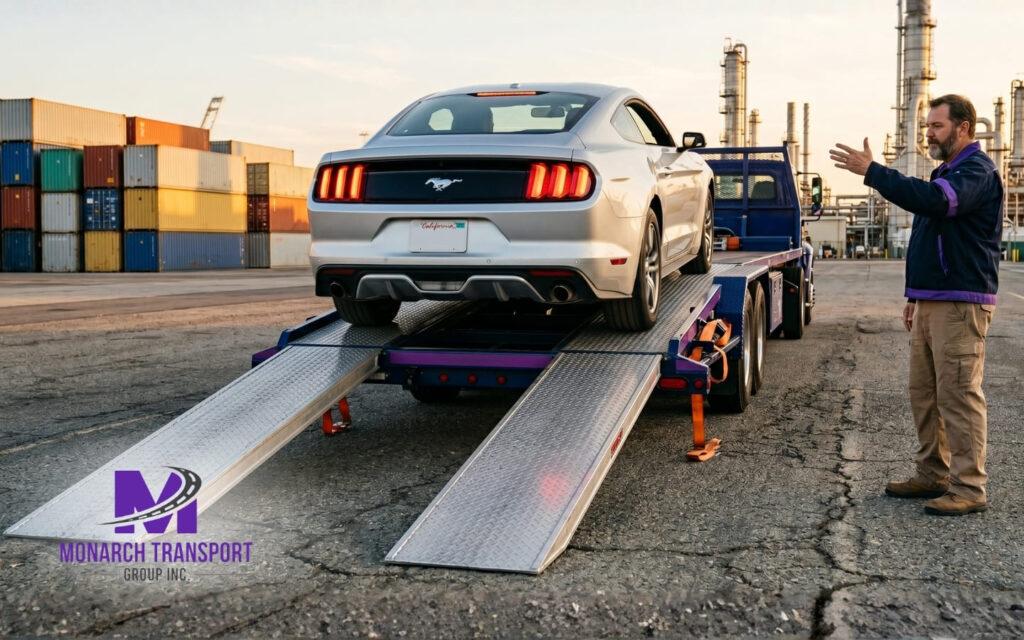
Loading and unloading damage. The majority of transport damage happens during loading. If the driver misjudges the angle of the ramp and scrapes your front bumper, or a chain slips and dents a door panel during securing, this is a covered event.
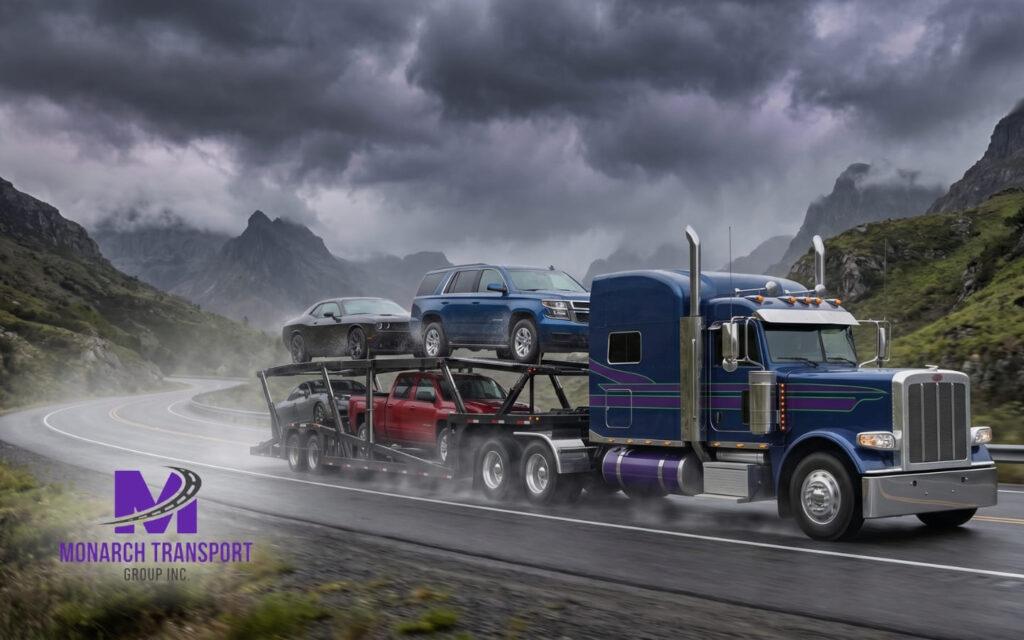
Accidents in transit. If the transport truck is involved in a highway collision – whether it is the carrier’s fault or another driver’s – the damage to your vehicle is covered under the cargo policy.
Equipment failure. If a hydraulic lift malfunctions on a multi-car trailer, or a tie-down strap snaps causing your vehicle to shift and strike another car on the same hauler, the carrier’s insurance covers the resulting damage.
Fire on the transport truck. In the rare event of an engine or brake fire that spreads to the trailer, cargo insurance covers the loss of loaded vehicles.
Carrier negligence. This is a broad category covering direct mistakes by the driver or company – for example, if a driver takes a turn too sharply and scrapes your car against a structural column while navigating a loading dock.
Ship your vehicle knowing these risks are covered. Compare quotes from top-rated carriers today.
What Is NOT Covered – The Real Exclusions
This is where most customer disputes originate. Cargo insurance is not a comprehensive warranty. There are strict exclusions, and knowing them upfront prevents serious surprises at delivery.
1. Personal items inside the vehicle. Auto transport carriers are licensed by the U.S. Department of Transportation to haul vehicles, not household goods. Because they are not licensed moving companies, their cargo insurance explicitly excludes any personal items left inside the cabin or trunk. If a laptop is stolen from the backseat or a television breaks in the trunk during a hard stop, the carrier’s insurance will deny the claim immediately.
2. Pre-existing damage. Any scratch, dent, or mechanical issue present before the driver takes possession is excluded. This is why the Bill of Lading (BOL) – the physical inspection report signed at pickup – is the most critical document in auto transport. If a scratch is noted on the pickup BOL, you cannot claim it at delivery.
3. Acts of God. Standard cargo policies exclude damage caused by uncontrollable natural events. If the transport truck drives through a severe hailstorm in Nebraska or is caught in a Florida hurricane flood, the carrier is generally not liable. These events are classified as “Acts of God,” and in these scenarios, you would likely need to file through your personal comprehensive auto insurance policy.
4. Road debris – the gray area. If you ship via open transport, your car is exposed to the road environment. If a passing truck kicks up a rock and chips your windshield, most carriers will classify this as an “unavoidable risk of open transport” rather than negligence. Proving that the carrier caused a specific rock chip is exceptionally difficult. If you want zero exposure to this risk, enclosed transport is the only definitive solution.
5. Mechanical or electrical failures. Carriers transport the vehicle – they do not maintain it. If your battery dies in transit, the alternator fails, or the transmission leaks fluid while sitting on the trailer, the carrier is not responsible. Mechanical failure is never covered by cargo insurance.
6. Damage discovered after signing the delivery BOL. This is the most common and costly mistake seen in consumer forums. If your car is delivered, you sign the final Bill of Lading stating it was received in good condition, and you discover a significant scratch three days later – your claim will be denied. Signing the delivery BOL releases the carrier from liability. The carrier will successfully argue the damage occurred after drop-off.
For a full checklist of how to document your vehicle’s condition before pickup and what to inspect at delivery, see our step-by-step car shipping preparation guide.
Coverage Limits – What the Numbers Actually Mean
Federal law requires auto transporters to carry liability insurance, but the government does not mandate a strict federal minimum for Motor Truck Cargo insurance. Coverage limits vary widely from one carrier to another, and assuming every hauler on the road carries a million-dollar cargo policy is a dangerous misconception.
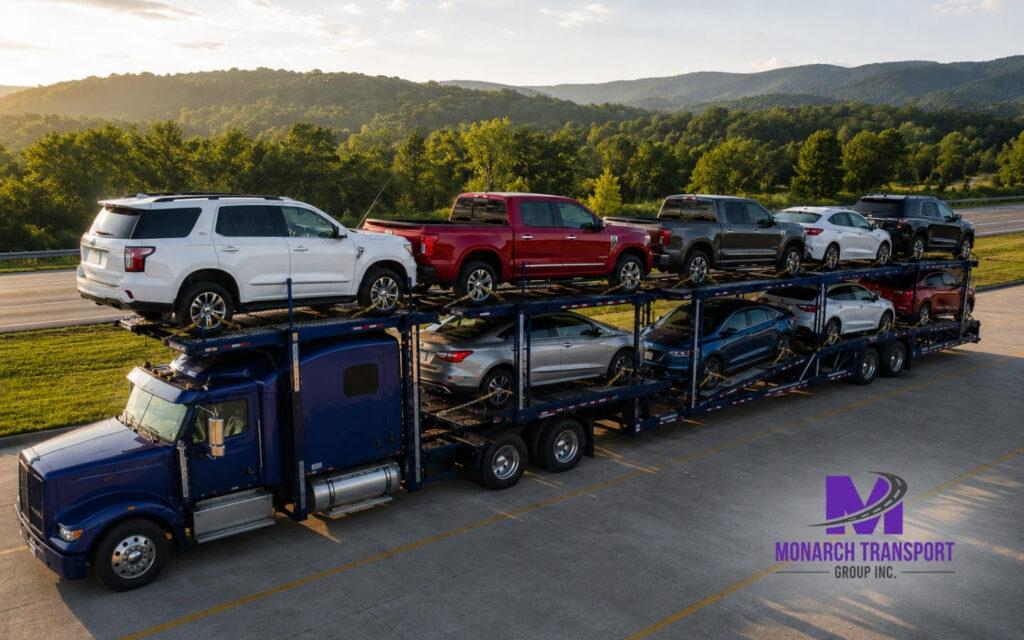
The most critical calculation in car shipping is dividing the carrier’s total cargo limit by the number of vehicles on the trailer. If an open carrier holds a $100,000 cargo policy and is hauling nine vehicles, the mathematical protection per car is approximately $11,000. If your vehicle is totaled in a highway accident, that figure will not cover the replacement cost of a modern car.
| Transport Type | Industry Standard Cargo Coverage | Recommended Minimum to Request |
| Open transport | $50,000–$100,000 per load | $100,000+ |
| Enclosed transport | $100,000–$500,000 per load | $250,000+ |
Before placing a deposit, ask the broker these three questions about the carrier they intend to assign:
If the broker hesitates to answer or guarantees “full coverage” without providing actual policy limits, find another company. The FMCSA’s carrier search tool allows you to verify any carrier’s active registration and insurance status in seconds – free of charge. For a full breakdown of how to identify trustworthy operators before you book, see our guide on how to spot and avoid car shipping scams in 2026.
The Certificate of Insurance (COI) – Your Most Underused Tool
The Certificate of Insurance is a single-page document issued directly by the carrier’s insurance underwriter. It is the only acceptable proof that a carrier holds active coverage. A screenshot of a policy number or an email from a dispatcher carries no legal weight. You have the absolute right to request this document after a carrier is assigned, and before the driver arrives at your address.
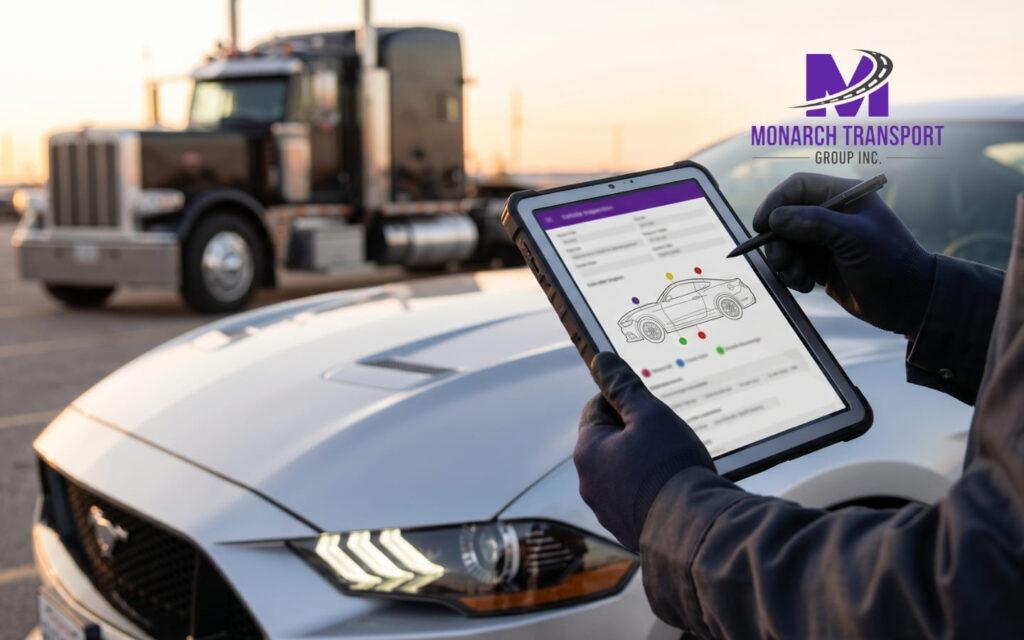
When you receive the COI, focus on the following:
Motor Truck Cargo line. This is your actual protection. Verify the dollar amount matches what the broker stated.
Effective and expiration dates. If the policy expires before your scheduled delivery date, the carrier will be operating uninsured for the final leg of the transport.
Insurance company name. A legitimate policy will be underwritten by a recognized commercial insurer. Cross-reference the carrier’s DOT number and insurance authority directly through the FMCSA Carrier Search to confirm their registration is active.
The deductible amount. While the carrier pays their own deductible on a valid claim, a very high deductible – say $10,000 – means the carrier has a strong financial incentive to fight minor damage claims rather than involve their insurance company.
If a carrier refuses to provide a COI upon request, or claims it is confidential business information, cancel the booking immediately. Refusal to provide a COI is the clearest red flag in auto transport.
Monarch provides full carrier transparency. Request your transport quote today.
Does Your Personal Auto Insurance Cover Car Shipping?
Your personal Geico, State Farm, or Progressive policy acts as a secondary safety net, not the primary shield. Standard personal auto insurance policies are written for vehicles being driven by the policyholder, not vehicles being hauled as commercial freight.
If your vehicle is damaged during transport, the carrier’s Motor Truck Cargo insurance is the primary coverage. The claim must be filed against the carrier’s policy first. Your personal auto insurance generally steps in only to cover the gap if the carrier’s insurance is insufficient to cover the total loss, or if the claim involves an excluded event – such as a hailstorm – that the carrier’s cargo policy does not cover.
However, you cannot assume your personal policy will step in. Many comprehensive auto policies explicitly exclude coverage while a vehicle is in the custody of a professional transport service. According to the Insurance Information Institute, personal auto policies vary significantly by state and provider in how they handle commercial transit situations.
The safest approach: call your personal insurance agent three days before your pickup date and ask one direct question – “Does my comprehensive policy cover physical damage or total loss while my car is being transported by a licensed commercial carrier?” If the answer is no, you are relying entirely on the carrier’s cargo limits. For a full overview of how the state-to-state transport process works from booking through delivery, see our State-to-State Car Transport Guide.
Supplemental Insurance – When You Actually Need It
A standard open carrier policy splitting $100,000 across nine vehicles leaves roughly $11,000 in coverage per car. For a ten-year-old Honda Civic, this is entirely sufficient. For a new Porsche 911, it is a serious financial risk.
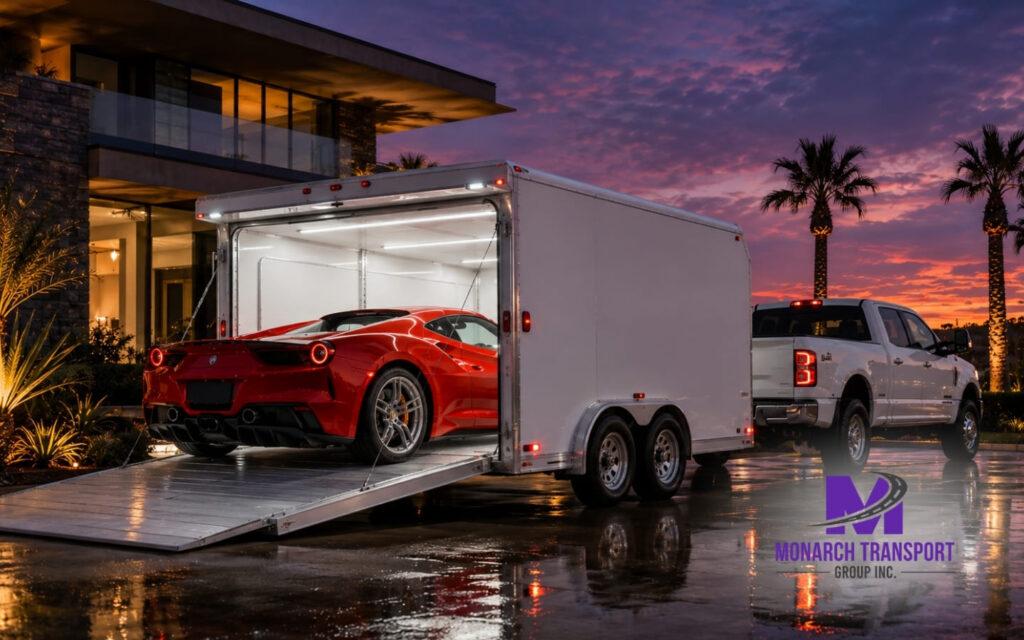
Supplemental insurance is third-party gap coverage purchased specifically for the duration of the transit. You should strongly consider it if your vehicle falls into one of these categories:
Luxury vehicles ($60,000+). Standard cargo limits rarely cover the full replacement cost of high-end models if the transport truck is involved in a total-loss accident.
Classic or vintage cars. Standard insurance calculates payouts based on depreciated cash value. Classic cars require “agreed value” policies because their market value frequently exceeds standard depreciation formulas.
Modified vehicles. If you have $15,000 invested in aftermarket suspension, custom paint, or engine work, standard cargo insurance will typically pay only for the factory base model and exclude aftermarket parts entirely.
Electric vehicles. High-end EVs with expensive battery packs can easily exceed the per-car coverage limit of a standard open carrier policy. For more detail on EV-specific shipping considerations, see our guide on how to ship your electric vehicle safely in 2026.
You can acquire supplemental transit insurance through three avenues: directly through your personal insurance provider as a temporary rider, through your auto transport broker at booking (many premium brokerages offer this), or through independent insurers that specialize in transit coverage. The cost is typically $50 to $200 depending on the vehicle’s declared value and distance – a low price for the peace of mind it provides.
Shipping a high-value vehicle? Monarch can match you with premium enclosed carriers.
Step-by-Step: How to File a Damage Claim
The exact sequence of actions you take at delivery determines whether your claim is approved or denied. Follow this process precisely.
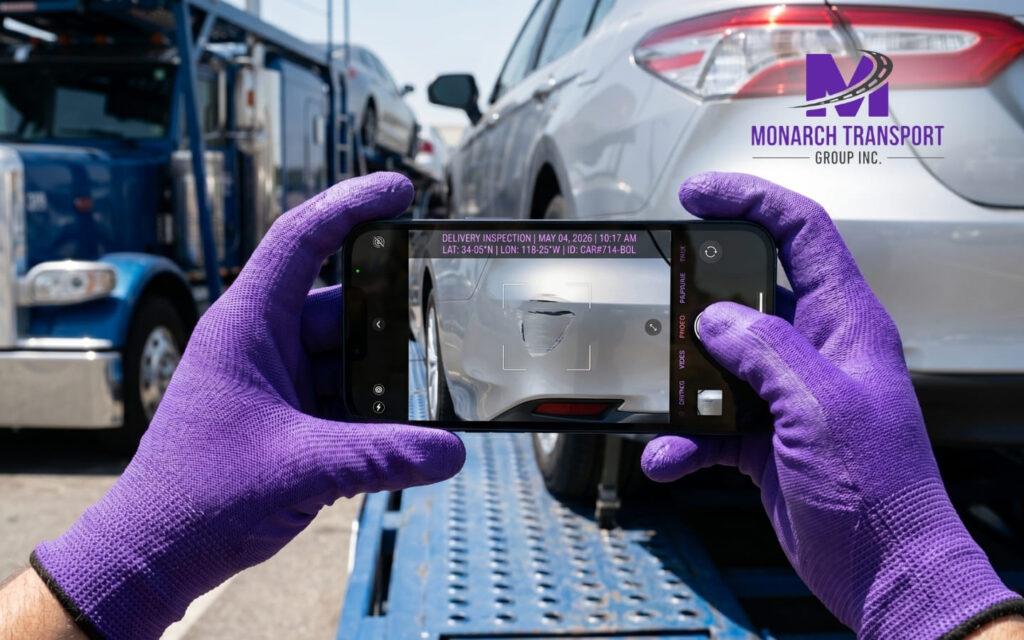
Phase 1: At Pickup – Establish the Baseline
Phase 2: At Delivery – The Critical Moment
Phase 3: Filing the Claim
Ship with brokers who support you through every step of the process. Get your Monarch quote today.
5 Common Claim Mistakes (Based on Real Forum Experiences)
1. Signing the BOL without inspecting the car. Your signature on a clean BOL legally absolves the carrier of liability. Once signed, the claim is effectively closed before it starts.
2. Taking only “before” photos. Photos of your car looking pristine in Florida do not prove a carrier scratched it in New York. You need “after” photos taken at delivery, with the truck in the frame, to establish the timeline definitively.
3. Filing the claim against the broker. Brokers do not hold cargo insurance. Sending demands to your broker wastes time. The broker’s job is to facilitate communication – the carrier’s insurance writes the check.
4. Waiting several days to report the damage. Cargo policies require prompt notification. If you wait five days to call because you were busy unpacking, the adjuster will argue the damage occurred while the car was in your possession after delivery.
5. Leaving personal items in the car. Stashing electronics or valuables in the trunk violates DOT licensing regulations. If those items break or cause internal damage during a hard stop, no cargo insurance policy covers the loss.
Avoid these mistakes by booking with a transparent, experienced transport team. Start your quote here.
Open vs. Enclosed Transport – How It Affects Your Coverage
The choice between open and enclosed transport directly affects which insurance exclusions apply to your shipment.
On open transport, road debris and weather events are almost always excluded. If a rock chips your windshield, or a hailstorm hits the highway, standard cargo policies will deny the claim as an unavoidable road hazard or Act of God. The vehicle is fully exposed to the environment for the entire journey.
Enclosed transport eliminates both exclusions. A rock cannot strike your car inside a sealed trailer. A hailstorm cannot dent it. Enclosed carriers also carry significantly higher cargo limits – typically $250,000 to $500,000 per load – specifically because they cater to high-value vehicles.
For standard daily drivers, open transport baseline coverage is adequate. For any vehicle valued above $50,000, enclosed transport is not a comfort upgrade – it is a structural insurance decision. For a full breakdown of when each option is the right choice, see our guide on open vs. enclosed auto transport.
Conclusion
Car shipping insurance is not the all-encompassing safety net most customers assume it is. It is a specific, federal-requirement-driven policy held by the carrier – not the broker – that covers a defined set of transit events while excluding others that are just as likely to occur.
The customers who come out of the process protected are the ones who understand three things before the truck arrives: what the cargo policy actually covers, what the coverage limit is divided across the number of vehicles on that trailer, and exactly what to do in the first five minutes at delivery.
If your vehicle is standard and under $30,000, a typical open carrier’s cargo insurance is adequate. If it is a luxury car, a classic, a modified vehicle, or a high-end EV, supplemental insurance is not optional – it is the only way to close the gap between what the carrier owes you and what your vehicle is actually worth.
The paperwork is simple. The Bill of Lading is straightforward. The claim process is well-defined. The only variable is whether you know the rules before you hand over the keys.
FAQ: About Car Shipping Insurance
Yes. If the transport truck is involved in a highway collision, the carrier’s Motor Truck Cargo insurance covers the physical damage to your loaded vehicle – whether the accident was the carrier’s fault or another driver’s.
Call the broker first to obtain the carrier’s insurance details, then file the claim directly with the carrier’s insurance company. The broker facilitates the paperwork; the carrier’s insurer processes the financial payout.
No. Enclosed transport typically carries higher coverage limits and eliminates the road debris and weather exclusions that apply to open transport.
Cancel the booking immediately. Any legitimate carrier will provide a Certificate of Insurance without hesitation. Refusal is the clearest possible warning sign of inadequate coverage.
No. Federal regulations require commercial auto transporters to maintain their own liability and cargo coverage. Your personal policy can act as secondary coverage only if the carrier’s policy falls short – it cannot replace it.
A claim filed days after delivery is extremely difficult to sustain. By signing the delivery BOL, you legally confirmed the vehicle arrived in the stated condition. Carriers will deny delayed claims, arguing damage occurred after drop-off.
Standard Motor Truck Cargo insurance generally covers theft of the entire vehicle while it is loaded on the trailer or stored at a secured carrier terminal. It strictly excludes theft of personal belongings left inside the vehicle.
Yes, but the carrier pays it – not you. If your vehicle sustains valid, documented transit damage, the carrier covers their deductible before their insurance compensates you for the repair costs.
Related articles

10 Best Platforms to Buy or Sell Used Cars Online in 2026
IN THIS ARTICLE: Platform Comparison at a Glance Safety: How to Protect Yourself on Any Platform The Bottom Line: Choosing Your 2026 Auto Platform FAQ Buying or selling a used
ATV vs UTV Shipping: Costs, Methods & What to Expect in 2026
IN THIS ARTICLE: The Fundamental Difference: Dimensional Weight and Trailer Space Average Shipping Costs in 2026: What to Budget Best Time to Ship Your ATV or UTV – Seasonal Price
Auto Transport Broker vs. Carrier: Which One Should You Use?
IN THIS ARTICLE: What Is an Auto Transport Broker? What Is an Auto Transport Carrier? The Key Differences Side by Side Does Using a Broker Cost More? What Is “Dual
Complete Guide to Car Shipping in 2026
The landscape of American mobility has shifted, making vehicle logistics more accessible and seamless than ever before. Understanding this new norm is the first step toward a stress-free relocation that

Cross-Country Car Shipping: How to Save Money Safely
IN THIS ARTICLE: Why “Cheap” Doesn’t Have to Mean “Dangerous” 1. Open Transport: The Industry Gold Standard for Savings 2. The Power of “Terminal-to-Terminal” Shipping 3. Timing the Market: The

How Much Does It Cost to Ship a Car Between States?
IN THIS ARTICLE: Average Cost Breakdown by Distance Primary Factors Influencing Your Shipping Quote Geographic Influence on Pricing Understanding the Quote Structure The Impact of Seasonality on Auto Transport Rates

How State-to-State Car Transport Works: From Pickup to Delivery
IN THIS ARTICLE: Understanding the Auto Transport Ecosystem Choose Your Transport Type The Process of Shipping Calculating the Cost and Timeline of State-to-State Car Transport The 2026 EV Transport Protocol
How to Prepare Your Car for Shipping: Step-by-Step Checklist
IN THIS ARTICLE: Why Preparation is not just a Chore Step 1: Selecting Your Logistics Partner Step 2: The Evidence Phase – Cleaning and Documentation Step 3: Protecting the Extravagant