
IN THIS ARTICLE:
Shipping a car for the first time feels like navigating a minefield. The auto transport industry is heavily saturated with brokers, middlemen, and unfortunately, outright scams. If you are new to the process and do not know the difference between a broker and a carrier, or have never heard of Central Dispatch, you are a prime target for a lowball quote that leaves your vehicle stranded.
This guide will show you exactly how to choose a car shipping company. We will break down how the logistics actually operate behind the scenes, the immediate red flags that signal a scam, and the definitive green flags that prove a company is legitimate and reliable.
First, Understand How the Industry Actually Works
The biggest gap in most car shipping advice is that it skips straight to the tips without explaining the mechanics of the industry. Before you look at a single quote, you need to understand who you are actually dealing with. When you search for auto transport, you will encounter three types of businesses:
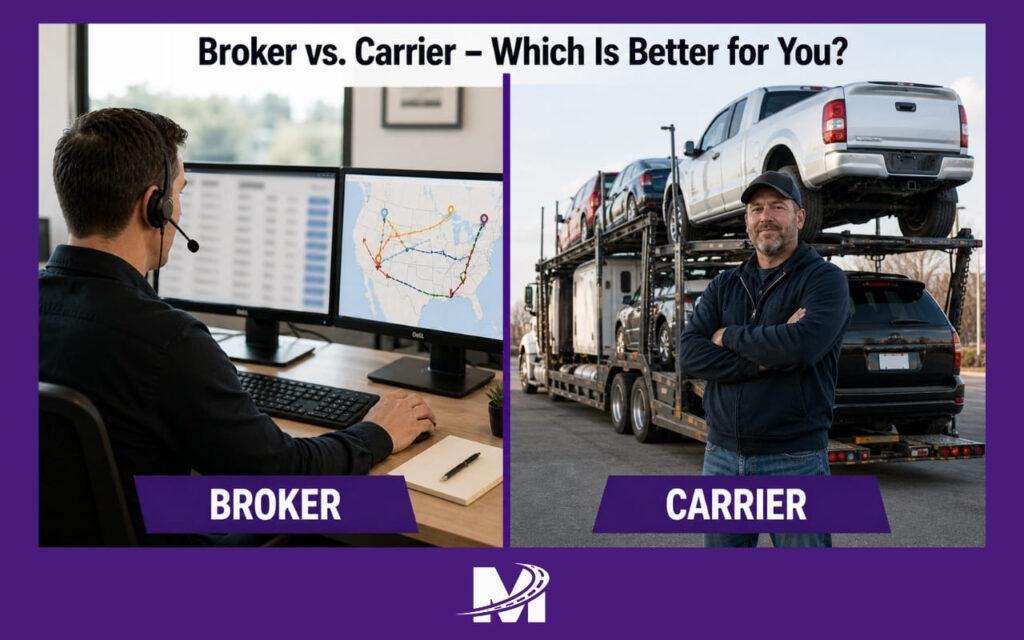
The Broker: A broker is a middleman. They do not own transport trucks. When you book with a broker, they take your order and list it on a national freight load board called Central Dispatch. Their job is to negotiate and find an independent carrier willing to take your vehicle for the price you agreed upon. Upwards of 95% of the companies you find on Google are brokers.
The Carrier: A carrier is the actual trucking company. They own the equipment, employ the drivers, and are physically responsible for moving your vehicle from pickup to delivery.
The Broker-Carrier Hybrid: Some logistics companies operate as both. They have their own physical fleet of trucks, but also hold a broker license to dispatch vehicles to a vetted network of partners if their own trucks are not running your specific route.
Why this matters: Understanding this structure protects you from bait-and-switch pricing. If a broker gives you an aggressively low quote to win your business, no actual carrier on Central Dispatch will accept the job for that rate. Your car will simply sit in your driveway for weeks while the broker ignores your calls.
🚩 Red Flags – Walk Away Immediately
When evaluating auto transport company red flags, do not give a business the benefit of the doubt. If you spot any of the following warning signs, walk away immediately.
1. The Quote Is Significantly Lower Than Everyone Else
The Mechanic: Unethical brokers win your business by quoting a bottom-dollar price. Once you sign the contract, they post your car on Central Dispatch at that low rate. Because carriers are independent owner-operators who pay for their own diesel, none of them will accept an underpaying load. Your car sits unmoved. Days later, the broker will call you claiming that “route conditions changed” or “gas prices spiked,” and demand hundreds of dollars more to finally move the car.
The Rule: If the market median for your route is $900, and one company offers $550, that is not a discount. It is a bait-and-switch trap.
2. They Ask for Full Payment or Large Deposit Upfront
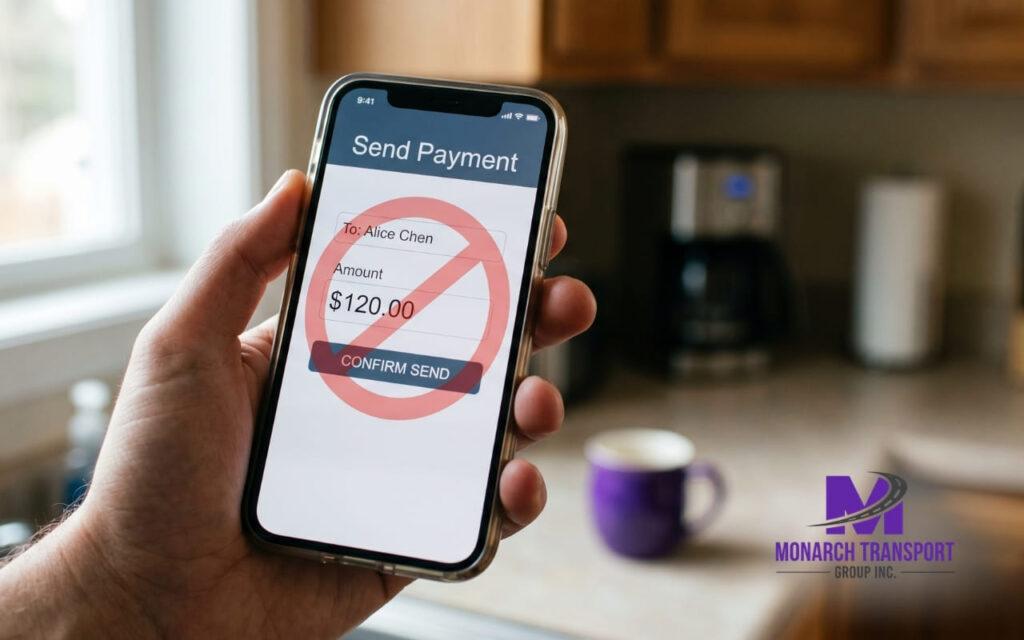
The Mechanic: A legitimate auto transport company only requires a nominal deposit (usually $100 to $200) to secure your spot on a trailer, often charged only after a carrier has been dispatched. The remaining balance is paid directly to the driver at delivery via cash or certified check. If a company demands 50% to 100% of the total cost upfront, you are likely dealing with a car transport deposit upfront scam.
The Rule: Never wire money or use non-refundable P2P apps like Zelle, Venmo, or CashApp to pay for car shipping in advance. Once the money is sent, the “company” will disappear.
3. No Verifiable FMCSA / DOT Number
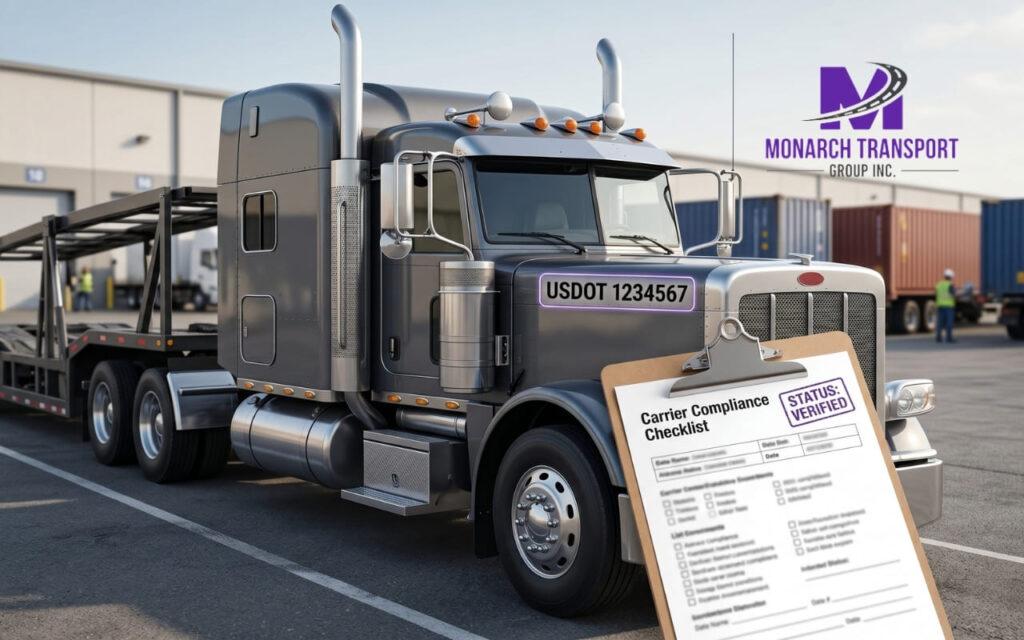
The Mechanic: By federal law, every legitimate entity operating in the interstate auto transport industry must be registered with the Department of Transportation. They will have a USDOT number and a Motor Carrier (MC) number. This applies to both brokers and carriers.
The Rule: If a company avoids giving you their MC number, or if you search the number on the official FMCSA website and it comes back as “Not Authorized” or “Inactive,” the company legally does not exist.

4. Pressure Tactics and Artificial Urgency
The Mechanic: Scammers thrive on forcing you to make rapid, uneducated decisions. They use artificial urgency to prevent you from doing background research. Common lines include: “This discounted rate is only valid for the next hour,” or “I have a driver in your neighborhood right now, but you need to pay the deposit immediately.”
The Rule: Legitimate logistics do not work this way. Trucks run on schedules, and quotes are generally valid for at least a few days. Walk away from high-pressure sales tactics.
5. Vague or No Written Contract
The Mechanic: Without a legally binding contract, you have zero protection. Predatory brokers rely on vague terms to legally protect themselves when they inevitably raise the price or delay your shipment. If the paperwork states that “prices are subject to carrier availability” without a cap, or that “transit times are strictly estimates with no guarantees,” they have a blank check to do whatever they want.
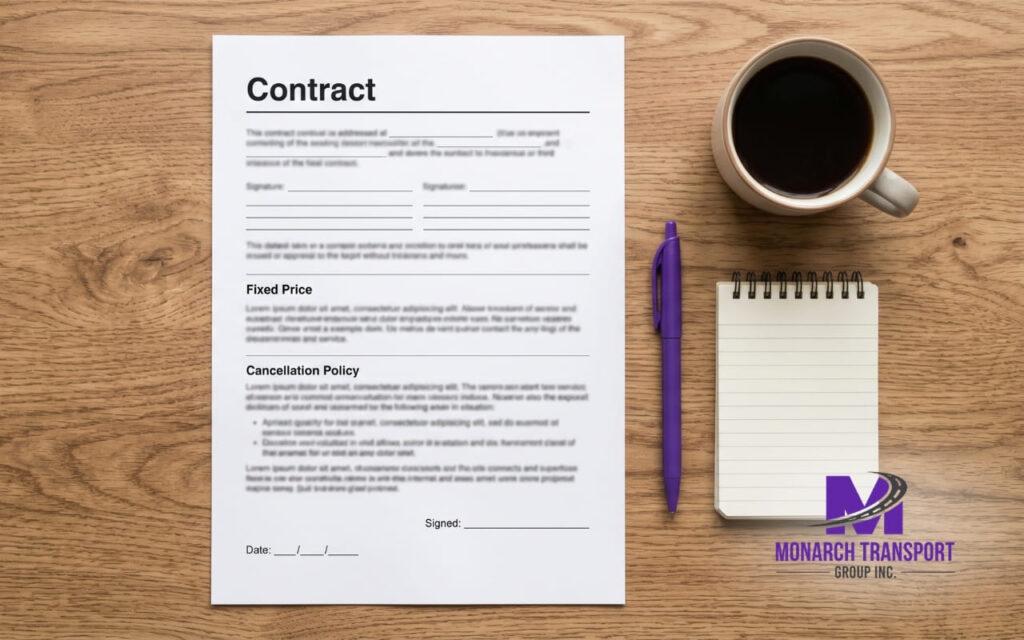
The Rule: Only sign a contract that clearly dictates a fixed price, specific cancellation terms, and exact liability procedures.
6. They Pretend Not to Be a Broker
The Mechanic: Because of the bad reputation of predatory brokers, many consumers actively try to book directly with a carrier. Dishonest brokers know this and will intentionally obscure their identity. When you ask them directly, “Are you the carrier, or are you a broker?” they will use evasive language like, “We are the dispatch center for the trucks,” or “We handle the routing for the drivers.”
The Rule: Honesty is the baseline. If a company is ashamed to admit they are a broker, they will likely be dishonest about pricing and insurance as well.
7. Fake or Suspiciously Perfect Reviews
The Mechanic: Scammers buy reviews in bulk to look legitimate. You can spot fake reviews by looking for patterns: hundreds of 5-star ratings posted within the same week, vague praise (“Great service, very fast!”), and a lack of specific details.
The Rule: Real customers write detailed reviews. They mention the driver’s name, the specific route (e.g., “shipped my Honda from Texas to Florida”), and note minor communication hiccups. Always cross-reference reviews on independent platforms like TransportReviews.com and the Better Business Bureau (BBB), rather than trusting the testimonials on the company’s own homepage.
8. No Physical Address
The Mechanic: Fly-by-night operations work out of basements or offshore call centers. They use P.O. Boxes or virtual office addresses to appear legitimate on paper. When things go wrong, you have no real business to hold accountable.
The Rule: Look up the company’s address on Google Maps and switch to Street View. If the address points to a UPS Store, a vacant lot, or a generic residential house, look for another company. A real logistics business has a verifiable commercial office.
✅ Green Flags – Signs You Found a Reliable Company
While identifying red flags helps you avoid disaster, recognizing green flags helps you identify a partner that will actually protect your investment. A reliable company doesn’t just promise a low price; they demonstrate professional maturity through transparency and rigorous adherence to federal regulations.
1. Transparent, Market-Rate Pricing With No Surprise Fees
A trustworthy company understands that logistics is a numbers game. They will provide a quote that is consistent with current market rates, accounting for fuel costs, driver wages, and equipment maintenance. More importantly, they will explain exactly how that price is calculated – factors like the size of the vehicle, the specific route (e.g., urban vs. rural pickup), and the current seasonal demand.
The Sign: A green-flag company provides an “all-inclusive” quote. This means no “fuel surcharges” added at the last minute or “insurance fees” that weren’t in the original estimate. If the price is slightly higher than the cheapest option you found, it’s usually because they are actually planning to pay a driver enough to show up.
2. Active FMCSA Registration and Insurance Verification
Legitimate companies are proud of their compliance. When you ask for an MC or USDOT number, a reliable company provides it instantly. Furthermore, they will often proactively mention that they are fully insured and bonded.
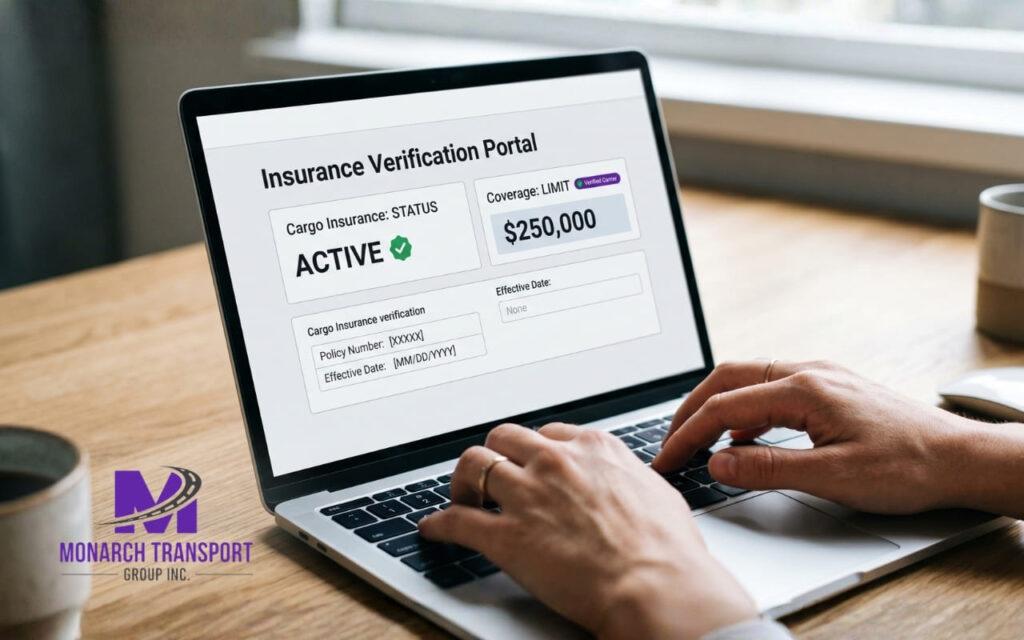
The Sign: They don’t just say they have insurance; they explain the limits of that coverage. For example, a quality carrier usually carries at least $100,000 to $250,000 in cargo insurance. If you are shipping a high-value luxury vehicle, a green-flag company will discuss whether their standard policy covers the full value of your car or if an umbrella policy is needed.
3. They Explain the Broker/Carrier Relationship Clearly
Transparency about business models is the hallmark of an industry leader. If a company tells you, “We are a broker, and here is how we vet the carriers we hire for you,” they are showing a level of honesty that most competitors lack.
The Sign: They explain the value they add. A good broker isn’t just a middleman; they are your insurance policy against bad drivers. They verify the carrier’s safety records and insurance status so you don’t have to. Companies like Monarch, for instance, act as a bridge, ensuring that every independent carrier they work with meets strict internal safety standards before your vehicle is ever loaded.
4. Responsive Communication Before You Pay Anything
Pay attention to how a company handles your initial inquiries. Are they answering the phone? Do they provide detailed, written answers to your emails? If a company is hard to reach when they are trying to win your business, they will be impossible to find if your car is delayed or damaged.
The Sign: A reliable company welcomes “difficult” questions. They will explain their damage claim process, their cancellation policy, and what happens if the driver is delayed by weather. They prioritize education over sales.
5. Clear Contract With Fixed Price and Damage Policy
A professional contract should be easy to read and free of “legal traps.” It should clearly state the total price, the deposit amount, and the terms of service.
The Sign: Look for a specific section on the Bill of Lading(BOL). A green-flag company will emphasize that the BOL is your most important document – the inspection report that happens at both pickup and delivery. If they don’t emphasize the importance of the inspection, they aren’t looking out for your interests.
6. Verified Reviews Across Multiple Platforms
Reliability isn’t found in a single 5-star review; it’s found in a consistent track record across Google, the BBB, and specialized sites like TransportReviews.com.
The Sign: Look for how the company handles the occasional 1-star review. A company that responds professionally to a complaint and tries to resolve the issue is far more trustworthy than one with 500 “perfect” reviews and no interaction. It shows they are an active, accountable business.
7. They Ask YOU the Right Questions
A scammer only cares about your credit card number. A professional logistics expert cares about the logistics.
The Sign: They will ask if the car is operable (can it roll, brake, and steer?), if there are modifications like a roof rack or a lift kit, and if the pickup location is accessible by a 75-foot tractor-trailer. These questions prove they are actually planning the transport, not just collecting a lead.
Broker vs. Carrier – Which Is Better for You?
One of the most common points of confusion for first-time shippers is deciding whether to work with a broker or a carrier. Most “advice” online is biased, usually written by someone trying to sell you one or the other. Here is the objective reality.
The Broker
The Carrier
The Hybrid Model: The Best of Both Worlds
Some companies, such as Monarch, provide a hybrid approach. They operate with the accountability of a carrier but maintain a massive, vetted network of partner carriers. This means they take full responsibility for the shipment. If they don’t move it on their own equipment, they use their broker license to find a partner that they have personally interviewed and verified. This eliminates the “blind” dispatching that makes traditional brokers risky.
How to Verify a Company in 10 Minutes
Do not take a salesperson’s word for it. Use this checklist to verify any auto transport company before signing a contract or paying a dime.
Questions to Ask Before You Book
You have vetted the company’s background, checked their reviews, and understand how they operate. Now it is time to get them on the phone. Do not let a sales rep control the conversation. Treat this call like an interview. Ask these specific questions, and listen closely to how they answer:
Conclusion
Choosing an auto transport company does not have to be a gamble. While the industry is full of questionable operators, vetting a company takes less than 30 minutes if you know exactly what to look for.
Most people who fall victim to auto transport scams make one of two critical mistakes: they blindly choose the absolute cheapest quote, or they skip the FMCSA verification process. By understanding the difference between a broker and a carrier, identifying upfront payment traps, and holding companies accountable to their DOT numbers, you eliminate 99% of the risk. Remember, you are handing over the keys to a vehicle worth tens of thousands of dollars – do not let a flashy website or a high-pressure sales tactic rush your decision.
If you are looking for a logistics partner that operates with integrity, skip the guesswork. Contact Monarch for your next shipment. We operate with FMCSA-verified credentials, transparent market-rate pricing, and a strict no-upfront-surprises policy.
Ready to see what your route actually costs? Get an instant quote with our free calculator – no commitment, no pressure, just a real number for your specific move.
FAQ
A carrier owns the trucks and physically moves your vehicle. A broker is a logistics coordinator who negotiates with a network of carriers to find a truck for your specific route. Some companies operate as both, providing the accountability of a carrier with the wide reach of a broker.
Ask for their Motor Carrier (MC) or USDOT number. Enter that number on the official Federal Motor Carrier Safety Administration (FMCSA) website to verify that their operating status is “Authorized” and that they have active insurance on file.
It is safe to pay a small deposit (typically $100–$200) with a credit card, but usually only after a carrier has been assigned to your vehicle. It is never safe to pay the full shipping amount upfront via wire transfer or apps like Zelle.
Significantly cheaper quotes are usually a “bait-and-switch” tactic used by predatory brokers. They give you an artificially low price to get you to sign a contract, but no actual trucker will accept the job for that rate. Weeks later, the broker will demand more money to finally move your car.
A legitimate contract should clearly outline the total fixed price, the deposit amount, the accepted payment methods for the remaining balance, the cancellation policy, and the specific procedures for filing a damage claim.
You must inspect the vehicle at delivery alongside the driver. Write down every detail of the damage on the Bill of Lading (BOL) and have the driver sign it. Take clear photos. You will then use this signed BOL to file a claim directly with the carrier’s cargo insurance.
If you signed a contract with a guaranteed rate, the price should not change. However, if you signed a contract with a predatory broker who included clauses like “subject to carrier availability,” they can and will increase the price after booking. Always secure a locked-in rate.
Central Dispatch is the national load board where brokers post vehicles for independent carriers to bid on. The price a broker lists directly determines how fast a driver accepts your load. If your broker quoted you an artificially low rate to win your business, no carrier will accept the job at that price – and your car will sit unassigned for days or weeks. This is why the cheapest quote almost never results in the fastest pickup.
Related articles

10 Best Platforms to Buy or Sell Used Cars Online in 2026
IN THIS ARTICLE: Platform Comparison at a Glance Safety: How to Protect Yourself on Any Platform The Bottom Line: Choosing Your 2026 Auto Platform FAQ Buying or selling a used

Car Shipping by Train: Costs, Process & What to Expect in 2026
IN THIS ARTICLE: The Two Faces of Rail Transport: Consumer vs. Commercial Why Choose the Tracks? (The Human Perspective) Dimensions and Constraints: Will Your Car Fit? The “Hidden” Logic of

Complete Guide to RV Shipping in 2026
IN THIS ARTICLE: Introduction: The Freedom of the Road, Delivered by Professionals Understanding the Fleet: Classes and Types of RVs Methods of Transport: How We Get Your RV Home Measuring

Cross-Country Car Shipping: How to Save Money Safely
IN THIS ARTICLE: Why “Cheap” Doesn’t Have to Mean “Dangerous” 1. Open Transport: The Industry Gold Standard for Savings 2. The Power of “Terminal-to-Terminal” Shipping 3. Timing the Market: The

Complete Guide to Car Shipping in 2026
The landscape of American mobility has shifted, making vehicle logistics more accessible and seamless than ever before. Understanding this new norm is the first step toward a stress-free relocation that
Enclosed Car Shipping: The Gold Standard for Luxury and Exotic Vehicle Transport
IN THIS ARTICLE: Why “Standard” Transport Doesn’t Cut It for Masterpieces The Anatomy of Protection: Hard-Sided vs. Soft-Sided Trailers The Low-Clearance Nightmare: Why Hydraulic Lifts Matter Beyond the Walls: The

How Much Does It Cost to Ship a Car Between States?
IN THIS ARTICLE: Average Cost Breakdown by Distance Primary Factors Influencing Your Shipping Quote Geographic Influence on Pricing Understanding the Quote Structure The Impact of Seasonality on Auto Transport Rates

How State-to-State Car Transport Works: From Pickup to Delivery
IN THIS ARTICLE: Understanding the Auto Transport Ecosystem Choose Your Transport Type The Process of Shipping Calculating the Cost and Timeline of State-to-State Car Transport The 2026 EV Transport Protocol