
IN THIS ARTICLE:
- Why Summer Is the Most Demanding Season for Auto Transport
- The Price Reality: How Much More Does Summer Shipping Cost?
- The Heat Problem – What Open Trailers Do to Your Car in Summer
- Hurricane Season and the Routes It Shuts Down
- Summer Shipping Preparation Checklist
- Open vs. Enclosed in Summer – When Heat Changes the Equation
- How to Save Money on Summer Shipping Without Sacrificing Service
- Conclusion
- FAQ
Summer is undeniably the peak season for auto transport. Between May and September, more vehicles are moving across the country than at any other time of the year. Families are relocating before the new school year, college students are sending cars home, and “snowbirds” are making their annual migration north. Consequently, the demand for transport trailers reaches its absolute maximum.
However, shipping a car in the summer is not just a matter of paying higher rates and waiting longer for a driver. The season introduces specific, physical risks to your vehicle that most transport companies fail to mention. If your car is sitting on an open trailer traveling through the Nevada desert or navigating the Gulf Coast during hurricane season, it is exposed to extreme elements.
Those who understand the logistics of summer shipping plan intelligently. They know exactly what to remove from the cabin, how to check their battery health, and when to book to avoid the holiday price spikes. Those who don’t prepare usually learn these lessons the hard way, often paying premium rates for delayed service. This guide breaks down exactly what you need to know before shipping a car during the hottest, busiest time of the year.
Why Summer Is the Most Demanding Season for Auto Transport
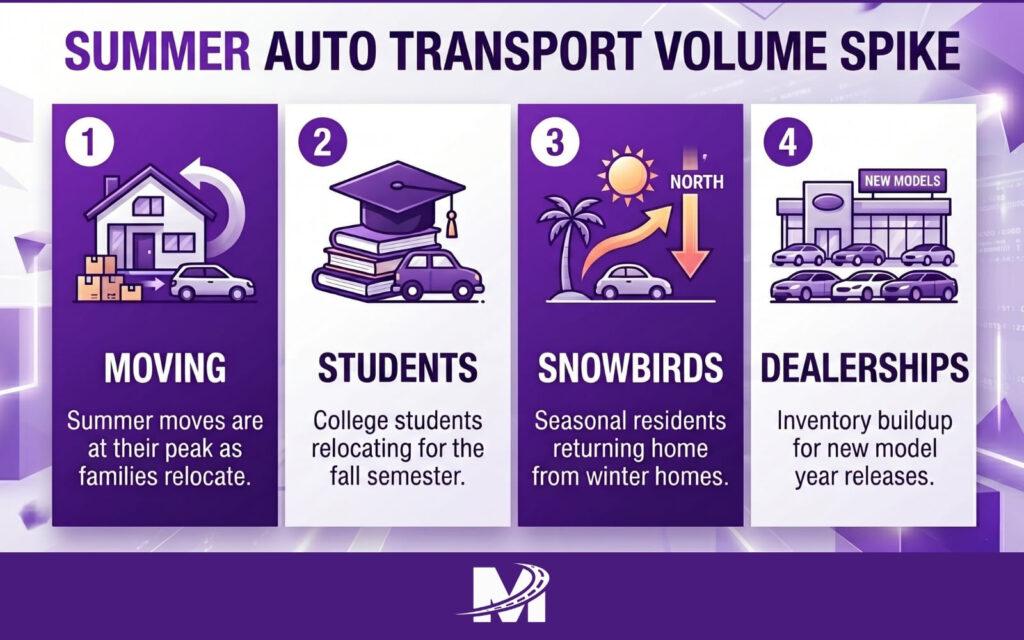
Most people assume summer shipping is busy simply because the weather is nice. The reality is rooted in strict logistical patterns. The auto transport industry experiences a 15% to 30% spike in volume during the summer due to four overlapping events:
The result is a severe bottleneck. More cars are waiting for transport than there are trucks available to move them, which directly impacts how much you pay.
See how Monarch Auto Transport handles summer demand
The Price Reality: How Much More Does Summer Shipping Cost?
Many generic guides will warn you that summer is “more expensive,” but they fail to provide the actual numbers. Because independent drivers run the routes, pricing is dictated purely by supply and demand.
The Baseline Increase: Consider a standard 1,500-mile route on an open trailer. In the dead of winter (excluding the holidays), this route might cost between $800 and $900. During the peak summer months, that exact same route will cost between $1,000 and $1,200. You are looking at a realistic 15% to 30% markup simply due to the season.
The Holiday Spikes: Not all summer weeks are priced equally. The absolute most expensive times to ship are Memorial Day weekend, the week of July 4th, and Labor Day weekend. During these windows, many truck drivers take time off to be with their families, further reducing the supply of trailers. Shipping during these weeks can add another 20% to 30% to your quote.
The Summer Sweet Spots: If you want to save money without sacrificing service, aim for mid-June or mid-July. These periods fall right between the massive college student migrations and avoid the major holiday weekends, causing demand – and prices – to slightly stabilize.
The Booking Rule: To avoid expedited fees, you must book your shipment 3 to 4 weeks in advance during the summer. If you try to book transport with only a week’s notice in July, you will either wait 10+ days for an available driver or be forced to pay a 30% to 40% premium to jump to the front of the line.
Get your summer shipping quote
The Heat Problem – What Open Trailers Do to Your Car in Summer
The biggest misconception about summer auto transport is that clear skies mean safe shipping. While you won’t have to worry about snow and road salt, extreme heat is a silent threat for vehicles on an open trailer.
Interior Temperature Buildup
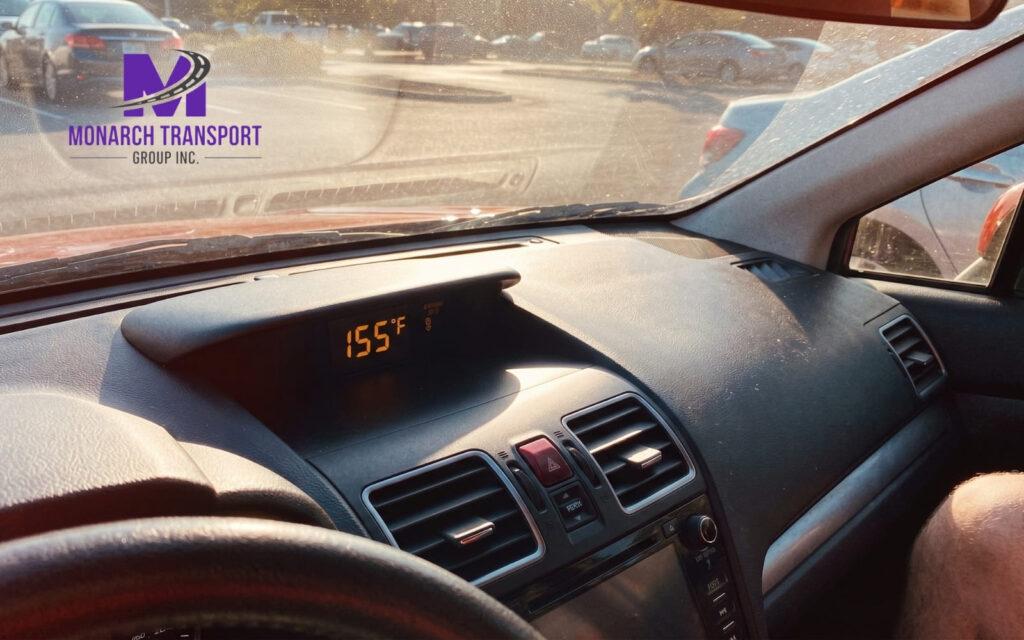
When your car is parked on an open trailer under direct sunlight, it is essentially a rolling greenhouse. Even while moving at 65 mph, the closed cabin has zero ventilation. Interior temperatures can easily skyrocket to 150°F to 160°F (65°C to 70°C). This extreme heat poses an immediate threat to:
The rule is simple: strip the cabin. Remove absolutely anything that can melt, explode, or degrade in an oven-like environment, paying special attention to sunscreen, medications, aerosol cans, and electronic devices.
Ship your car safely this summer with Monarch Auto Transport
Battery Stress
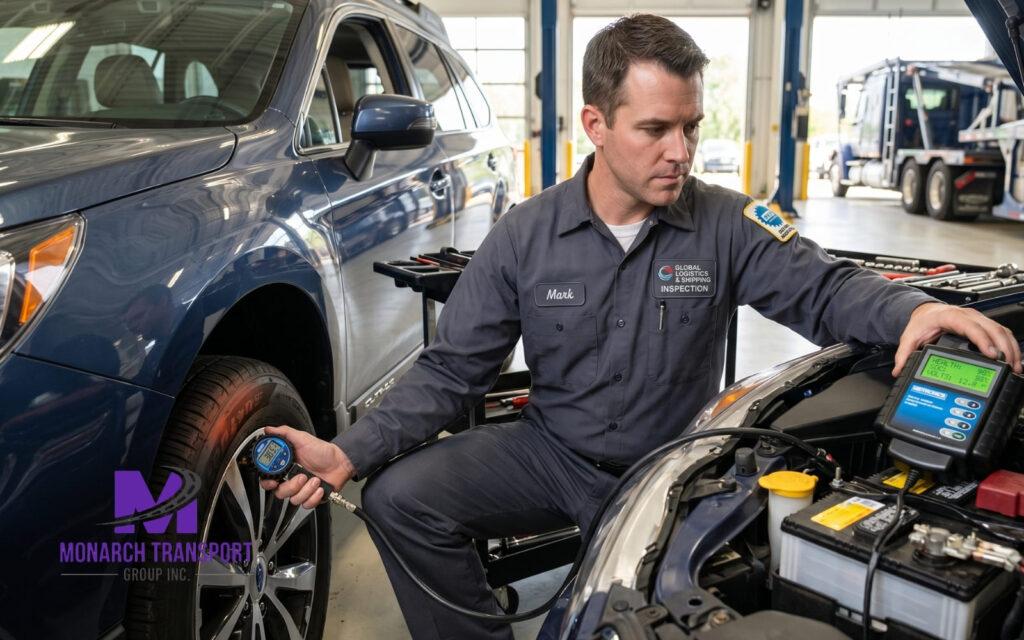
Most drivers think winter is the hardest season on a car battery, but extreme heat is actually worse. At temperatures above 95°F (35°C), the fluid inside a lead-acid battery evaporates much faster, and internal corrosion accelerates. When your car sits strapped to a trailer for days in the blistering sun without the alternator running, a weak battery will discharge completely.
If your car is in transit for more than a few days on an open trailer, have your battery tested before pickup, especially if it is more than three years old. If you are utilizing enclosed transport, ask your carrier about connecting the vehicle to a battery tender.
Tire Pressure Expansion
A hot highway combined with direct sunlight causes the air inside your tires to expand rapidly. Tires that were inflated to the correct PSI in the cool morning can become dangerously over-inflated by mid-afternoon on a scorching asphalt interstate. Because the car is sitting static with its full weight pressing down on the tires for days, severe over-inflation increases the risk of tire deformation. Always check your tire pressure before pickup and adjust it to the lower end of the manufacturer’s recommended range to account for heat expansion.
Fluid Considerations
Extreme, prolonged heat accelerates the evaporation of vital engine fluids, particularly coolant and brake fluid. While a static car on a trailer isn’t running its engine, evaporation is still a factor on long-haul routes through desert climates like Arizona, Nevada, or Texas in August. Check your coolant reservoir before handing the keys over to the driver to ensure the vehicle is stabilized for the journey.
Hurricane Season and the Routes It Shuts Down
While heat is a constant factor, summer also brings a highly unpredictable geographical threat: hurricane season. Officially running from June 1st to November 30th, the season’s absolute peak between August and October directly overlaps with the late-summer shipping rush.
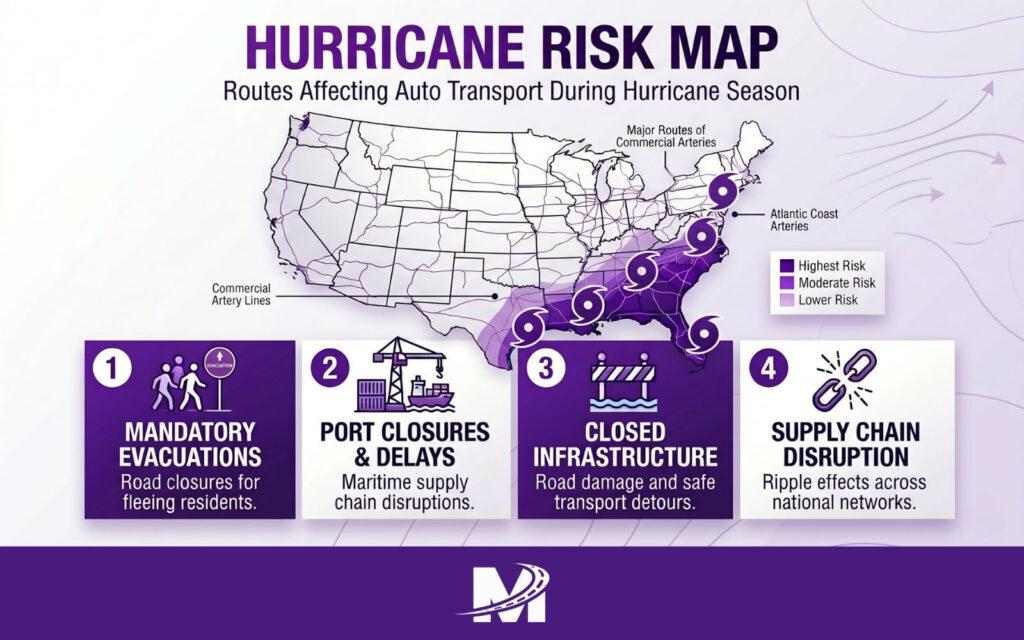
If your vehicle is traveling anywhere near the southeastern United States or the Gulf Coast, extreme weather is not just a possibility; it is a logistical probability that will affect your delivery timeline.
The Most Affected Logistical Corridors:
The Practical Consequences for Your Shipment:
When a hurricane warning is issued, state troopers shut down highways, sometimes for 24 to 72 hours. An auto transport driver hauling a multi-level trailer with nine vehicles cannot “power through” high winds without risking a catastrophic rollover. By law and basic safety protocols, the driver must pull over and wait out the storm at a secure terminal or rest stop.
Furthermore, standard carrier cargo insurance policies typically contain “force majeure” clauses. This means if a hurricane severely delays your shipment, the carrier is not financially liable for your rental car costs or hotel stays. If your vehicle is already in transit and a storm blocks the primary highway, the driver will have to reroute, which changes the delivery order and pushes your drop-off back by days.
The Rule: If your car is traveling through the southeastern corridor between June and October, you must build a 3 to 5-day buffer into your personal schedule. Before handing over the keys, ask your broker: “What is your exact protocol and communication process if a hurricane warning is issued along my route?”
Summer Shipping Preparation Checklist
A smooth summer transport experience is won or lost in the weeks before the truck arrives. Waiting until the day before pickup to prep your vehicle guarantees a stressful handoff. Follow this strict timeline to protect your vehicle and lock in your logistics.

2 to 3 Weeks Before Pickup:
2 to 3 Days Before Pickup:
The Day of Pickup:
Open vs. Enclosed in Summer – When Heat Changes the Equation
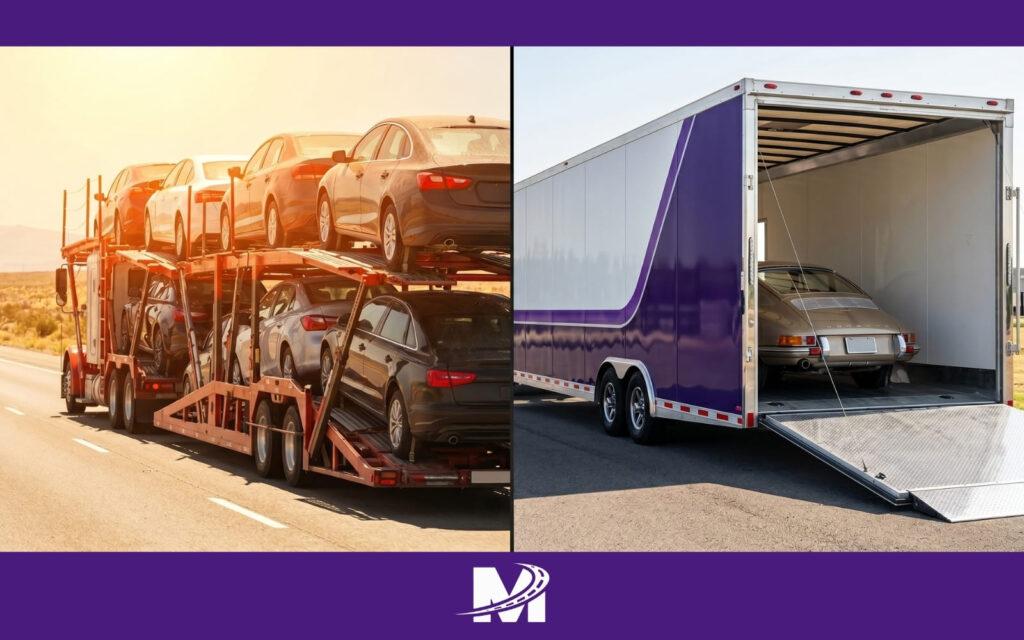
For 80% of standard commuter cars, open transport in the summer is perfectly safe. However, extreme heat changes the risk calculus for specific types of vehicles. You should strongly consider upgrading to enclosed transport during the summer if your car falls into one of these categories:
View our summer car transport options
How to Save Money on Summer Shipping Without Sacrificing Service
Because summer is the most expensive time to ship a car, you need specific strategies to lower your quote without resorting to predatory, lowball brokers.
Calculate your rate before peak season
Conclusion
Shipping a car during the summer is a logistical double-edged sword. On one hand, you completely eliminate the risks of black ice, heavy snowfall, and corrosive road salts destroying your vehicle’s undercarriage. On the other hand, you are entering the most competitive, expensive, and logistically strained season in the auto transport industry.
The idea that summer shipping is inherently “easier” is a myth that costs unprepared vehicle owners hundreds of dollars in expedited fees. The extreme heat of July can warp dashboards and destroy weak batteries, while the unpredictable nature of Atlantic hurricane season can shut down the entire southeastern logistical corridor for days at a time.
Navigating the summer peak season requires proactive planning, not passive waiting. The owners who experience a seamless transport process are the ones who book three to four weeks in advance, strip their cabin of heat-sensitive materials, properly manage their tire pressure, and avoid shipping during the chaotic holiday weekends.
If you want to secure your spot on a trailer before the peak summer rush depletes the available inventory, do not wait until the last minute. Contact Monarch Auto Transport today. We will help you navigate the seasonal price fluctuations, lock in a verified carrier, and ensure your vehicle is safely prepared for summer transit. Book early, lock in your rate, and avoid the peak demand surprises.
FAQ
Yes. Summer is the absolute peak season for the auto transport industry. Driven by a massive surge in corporate relocations, family moves, college students transferring vehicles, and “snowbirds” returning north, demand for trailer space reaches its annual high. Because pricing is dictated by supply and demand, shipping a car between May and August typically costs 15% to 30% more than moving that exact same vehicle on the same route during the winter months.
You should book your summer auto transport a minimum of 3 to 4 weeks in advance. Because trucks fill up much faster in the summer, waiting until a week before your desired pickup date will severely limit your options. If you try to book a last-minute summer shipment, you will either have to wait 10 to 14 days for an available driver, or you will be forced to pay a 30% to 40% “expedited service” premium to jump ahead of other waiting customers.
Yes. A car parked on an open trailer under direct summer sunlight acts like a sealed greenhouse. Interior temperatures can rapidly exceed 150°F (65°C). This extreme, sustained heat can dry out and crack leather upholstery, warp plastic dashboard components, and damage delicate aftermarket electronics. Furthermore, the intense heat accelerates battery fluid evaporation, which can completely kill an older car battery while it sits stationary on the trailer for several days.
You must remove anything from the cabin that can melt, explode, or degrade in 150°F+ temperatures. This strictly includes aerosol cans (like hairspray or deodorant), hand sanitizers, sunscreens, medications, carbonated beverages, and all electronic devices like tablets or dashcams. You should also remove any custom charging cables, sunglasses, and personal documents. Finally, ensure all factory and aftermarket security alarms are completely disabled so the trailer’s vibrations do not trigger them and drain the battery.
Absolutely. Hurricane season (peaking from August to October) heavily disrupts auto transport routes along the East Coast, Florida, and the Gulf Coast. When tropical storms approach, state highway patrols frequently close major interstates. Auto transport drivers are mandated by safety regulations to pull over and secure their multi-level trailers to prevent rollovers in high winds. If your route passes through the southeastern United States during late summer, you should realistically build a 3 to 5-day buffer into your delivery expectations.
If you must ship during the summer, the most cost-effective windows are mid-June and mid-July. These specific weeks represent a slight dip in demand between the massive college student shipments that occur in May and August. Conversely, you should explicitly avoid booking a pickup during the weeks of Memorial Day, the 4th of July, and Labor Day, as driver availability plummets and prices spike by an additional 20% to 30%.
While open transport is safe for most commuter vehicles in the summer, enclosed transport is highly recommended if you have a dark-colored vehicle with a sensitive leather interior, a high-value classic car, or a vehicle packed with custom electronics. Furthermore, if your route takes your vehicle through the desert southwest (Arizona, Nevada, Texas) during August, the enclosed trailer acts as a shield against the intense radiant heat coming off the 150°F asphalt, protecting the paint and interior.
Related articles

10 Best Platforms to Buy or Sell Used Cars Online in 2026
IN THIS ARTICLE: Platform Comparison at a Glance Safety: How to Protect Yourself on Any Platform The Bottom Line: Choosing Your 2026 Auto Platform FAQ Buying or selling a used

Car Shipping by Train: Costs, Process & What to Expect in 2026
IN THIS ARTICLE: The Two Faces of Rail Transport: Consumer vs. Commercial Why Choose the Tracks? (The Human Perspective) Dimensions and Constraints: Will Your Car Fit? The “Hidden” Logic of

Cross-Country Car Shipping: How to Save Money Safely
IN THIS ARTICLE: Why “Cheap” Doesn’t Have to Mean “Dangerous” 1. Open Transport: The Industry Gold Standard for Savings 2. The Power of “Terminal-to-Terminal” Shipping 3. Timing the Market: The

How to Prepare Your Car for Shipping: Step-by-Step Checklist
IN THIS ARTICLE: Why Preparation is not just a Chore Step 1: Selecting Your Logistics Partner Step 2: The Evidence Phase – Cleaning and Documentation Step 3: Protecting the Extravagant

How State-to-State Car Transport Works: From Pickup to Delivery
IN THIS ARTICLE: Understanding the Auto Transport Ecosystem Choose Your Transport Type The Process of Shipping Calculating the Cost and Timeline of State-to-State Car Transport The 2026 EV Transport Protocol

Enclosed Car Shipping: The Gold Standard for Luxury and Exotic Vehicle Transport
IN THIS ARTICLE: Why “Standard” Transport Doesn’t Cut It for Masterpieces The Anatomy of Protection: Hard-Sided vs. Soft-Sided Trailers The Low-Clearance Nightmare: Why Hydraulic Lifts Matter Beyond the Walls: The

Door-to-Door vs. Terminal-to-Terminal: Which Logistics Model Fits You?
IN THIS ARTICLE: Understanding the Two Primary Logistics Models Comparative Analysis: Door-to-Door vs. Terminal-to-Terminal The Financial and Temporal Mechanics of Shipping Models Geographical Impact: Urban vs. Rural Accessibility The Final

How to Spot and Avoid Car Shipping Scams in 2026
IN THIS ARTICLE: The State of Auto Transport Fraud in 2026 Red Flag #1: The “Impossible” Quote (Bait-and-Switch 2.0) The Rise of “Ghost” Brokers and AI-Cloned Websites Payment Red Flags: