
IN THIS ARTICLE:
- Key Takeaways
- Amtrak Auto Train vs. Car Shipping: What’s the Difference?
- Amtrak Auto Train vs. Car Shipping Cost
- Which Is Faster: Amtrak Auto Train or Car Shipping?
- Route Availability and Door-to-Door Convenience
- Which Vehicles Can You Transport?
- Amtrak Auto Train vs. Car Shipping: Which Is Better for Your Situation?
- How to Compare Your Total Car Transport Cost
- Compare Your Car Shipping Cost
- FAQs
Shipping a car by truck is usually the better choice unless you specifically want to ride along with your vehicle on the one route Amtrak serves. The Amtrak Auto Train carries you and your car together between Lorton, Virginia and Sanford, Florida on a fixed daily schedule. A truck carrier moves your car on its own, to and from almost any address, while you travel however you like, or stay put. Which one wins on cost and speed depends less on the sticker price and more on where you actually start, where you need to end up, and how many people are traveling with you.
Key Takeaways
Planning to ship your car instead? Compare the cost of truck transport for your route before deciding. Get a free car shipping estimate from Monarch Transport Group and see how it compares with the full cost of the Amtrak Auto Train.
Amtrak Auto Train vs. Car Shipping: What’s the Difference?
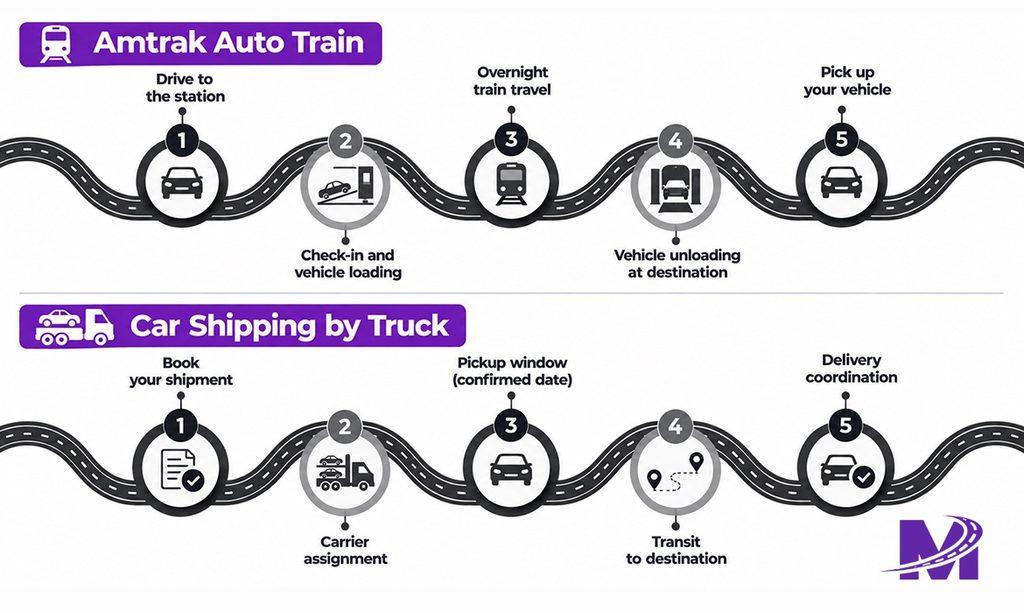
These two services solve different problems. The Auto Train is a passenger train that happens to carry your vehicle in an enclosed rail car behind you. You book a seat (or a sleeper), drive to the station, hand over the car, ride the train, and collect it at the other end. Car shipping is a standalone service: a carrier picks up your vehicle and delivers it, and you’re not part of the trip at all. If you’re weighing rail in general rather than this specific service, our guide to car shipping by train covers how it works and what it costs.
| Factor | Amtrak Auto Train | Car shipping by truck |
| Main route | Lorton, VA → Sanford, FL | Cities across the service area |
| You travel with the car | Yes | No |
| Ship the car without a passenger | No | Yes |
| Delivery to your address | No, you drive to/from the station | Door-to-door available |
| Schedule | Fixed daily departure | Depends on carrier availability |
| Access to the car in transit | No, it’s locked in a sealed railcar | n/a |
| Transport type | Rail | Open or enclosed carrier |
Neither is automatically cheaper or faster. It comes down to your route and who’s going.
Amtrak Auto Train vs. Car Shipping Cost
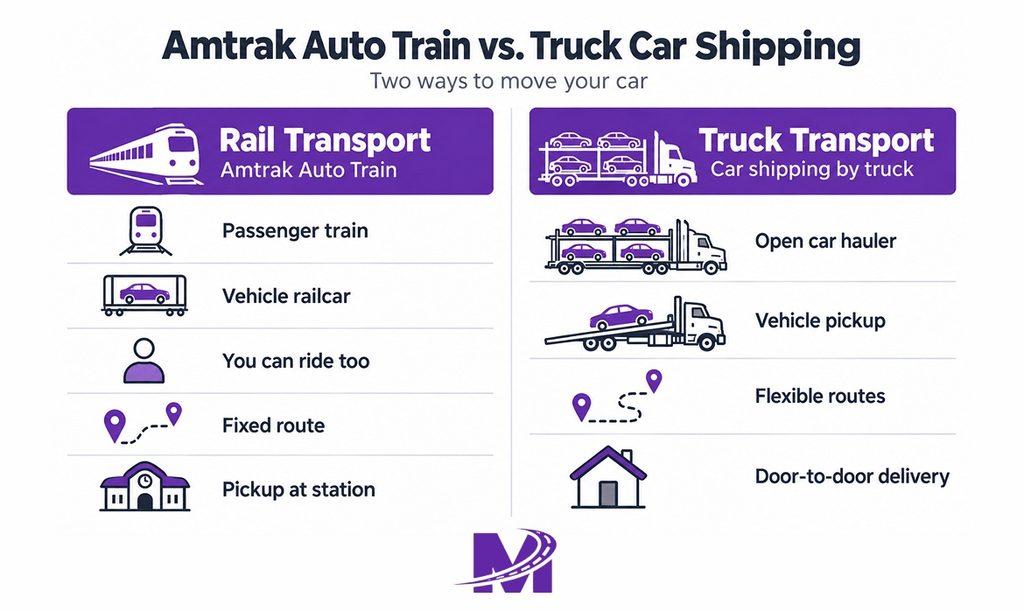
The mistake most people make is comparing the Amtrak vehicle fee to a car shipping quote. That’s not the real comparison, because the vehicle fee is only one line on the Amtrak bill.
How Much Does It Cost to Ship a Car on Amtrak?
Amtrak Auto Train fares start at $95 per passenger, plus a separate vehicle fee, according to Amtrak’s advertised starting price. The total one-way cost depends on your travel date, vehicle type, passenger accommodations, and availability. Coach seating and private rooms have different fares, and private-room reservations include meals. Because prices vary, check Amtrak’s official booking page for a current quote and compare the total with a truck shipping estimate for the same route, including any additional travel costs.
Starting price: $95 per passenger + vehicle fee (as advertised by Amtrak; checked October 2026).
Prices can rise with demand, season, and travel dates. Coach seating and private rooms have different fares, and private-room reservations include meals.
Available discounts: Amtrak advertises 10% off for eligible senior travelers and 50% off the base rail fare for children ages 2–12 traveling with an adult. Restrictions apply, and discounts may not apply to every fare or accommodation charge.
Priority Vehicle Offloading is an optional upgrade that places your vehicle among the first 30 unloaded at arrival. Check Amtrak’s booking page for its current price and availability.
Check current prices: Amtrak Auto Train — official fares and booking.
How Much Does It Cost to Ship a Car by Truck?
A truck quote depends on distance, vehicle size, the season, carrier availability, and whether you choose open or enclosed transport. For the Virginia-to-Florida corridor, open transport typically lands in the $700-1,050 range, with enclosed running higher. Open is the standard choice and the same method dealerships use for new inventory. Whichever carrier you use, you can confirm its operating authority and insurance through the FMCSA, the federal agency that regulates interstate carriers. You pay once, for the car, and nothing for a passenger.
Hidden Costs Most People Forget to Include
The Auto Train fare stops at the station, not your front door. Build in:
Once those land on the bill, a trip that looked cheaper on the vehicle fee alone often isn’t.
| Cost line | Amtrak Auto Train | Car shipping (open) |
| Vehicle transport | Vehicle fee | Full quote |
| Passenger(s) | Fare per person | $0 |
| Overnight comfort | Roomette/bedroom (optional) | n/a |
| Getting to the start | Drive to Lorton | Pickup near your address |
| Getting to the end | Drive from Sanford | Delivery near your address |
| Separate travel | n/a | Your own flight/plans |
Run the same route, same date, same vehicle through both columns before you decide.
Which Is Faster: Amtrak Auto Train or Car Shipping?
To compare speed fairly, look at two separate things: how long the vehicle is actually moving, and the total time from booking to having the car ready to drive.
Amtrak Auto Train Travel Time
As a moving vehicle, the train is quick on its one route: it covers the roughly 900-mile run overnight in about 17–18 hours, boarding in the afternoon and arriving the next morning. But the total time is fixed to the schedule. You travel on the day the train departs, after check-in ahead of boarding, and you wait for your vehicle to be offloaded on arrival. Amtrak lays out the boarding windows and onboard timing on its official Auto Train experience page.
Car Shipping Transit Time
A truck’s moving time for the same Virginia-to-Florida corridor is usually about 2–4 days once the car is loaded. The total time adds the pickup window before that, the days between booking and a carrier being assigned and arriving to collect the car. Booking a week or two ahead shortens that first stretch.
What If You Need Your Car by a Specific Date?
Measured end to end, the two are closer than the overnight-train headline suggests, and neither gives a guaranteed handoff time. With the Auto Train, you’re locked to a departure day and the offload queue; with a truck, you’re waiting on carrier assignment and then transit. Either way, give yourself a buffer before a job start or a move-in date rather than counting on the earliest possible day. Expedited scheduling can tighten the truck timeline when the date is firm.
Route Availability and Door-to-Door Convenience
This is where the two services separate most clearly.
Where Does the Amtrak Auto Train Run?
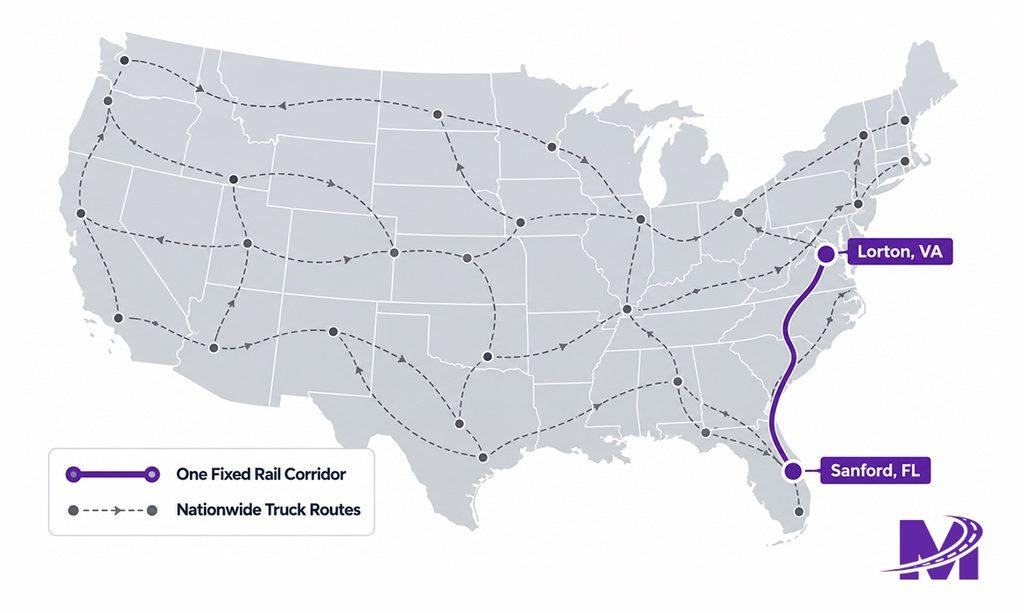
One corridor, two stations: Lorton, Virginia, near Washington, D.C., and Sanford, Florida, near Orlando. There are no stops in between. If you’re starting in Boston or ending in Miami, the distance from the station is part of your trip, and your cost.
Can You Ship a Car to Any State?
Truck transport isn’t tied to a single line. Carriers run routes across the country, so your pickup and delivery points can sit far from any rail terminal. For anyone outside the narrow Virginia-Florida lane, that flexibility usually settles the decision — Monarch’s state-to-state car shipping covers routes nationwide.
Door-to-Door vs. Terminal-to-Terminal Logistics
The Auto Train is terminal-to-terminal by design: you bring the car to the station and collect it at the other end. Car shipping is commonly door-to-door, with the carrier picking up and dropping off as close to your address as a full-size truck can safely reach. If a street is too tight, you’ll agree on a nearby spot like a large parking lot.
Which Vehicles Can You Transport?
Amtrak Auto Train Vehicle Restrictions
Amtrak accepts standard vehicles up to 192 inches (16 feet) long, 85 inches tall, and 84 inches wide, including mirrors, with at least 4 inches of ground clearance. Extended vehicles, including trucks, vans, and three-row SUVs, can be up to 216 inches (18 feet) long, with the same height, width, and clearance limits. Vehicles over 18 feet long, including certain Ford F-150s, Ford Excursions, Chevrolet Silverados, and Chevrolet Suburbans, require special arrangements for a second vehicle space and additional payment by phone. Dual-wheel, gull-wing-door, and scissor-door vehicles are not accepted.
Two-wheeled motorcycles can be up to 102 inches long, 72 inches tall, and 51 inches wide, with at least 5 inches of ground clearance. Factory-installed roof racks are allowed only when empty; temporary roof-mounted luggage and bicycle racks are prohibited. Rear-mounted bicycle racks are permitted with a signed loss-or-damage waiver, and the rack counts toward the vehicle’s size limits.
You may leave personal items in your vehicle, but they remain your responsibility, and Amtrak advises against leaving valuables inside. You cannot access the vehicle during the journey. Review Amtrak’s official vehicle requirements and confirm your vehicle’s eligibility before booking.
Vehicle Options for Truck Transport
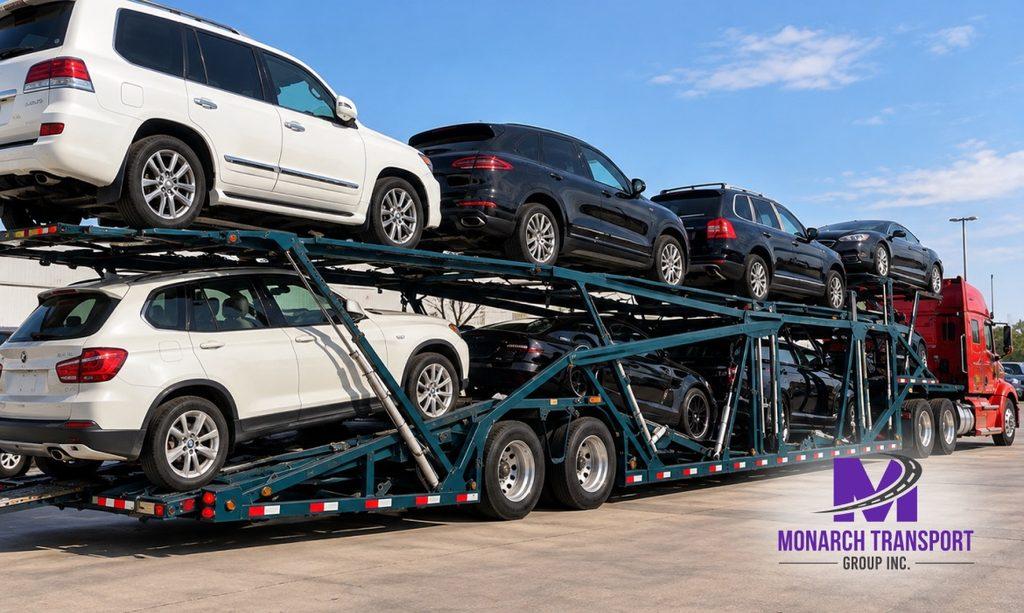
Truck carriers handle a wider range of vehicles. You can choose open transport for a daily driver or enclosed transport for a valuable vehicle, and many non-running cars can still be shipped with the right equipment when arranged in advance. With Monarch Transport Group, you may be able to place up to 100 pounds of personal items in the trunk at no extra charge, with prior approval. However, we recommend removing personal belongings before pickup because they are not covered by the carrier’s insurance, and damage caused by those items is not covered either. Always disclose any modified or inoperable vehicle when requesting a quote, and confirm loading requirements and personal-item policies before booking.
Amtrak Auto Train vs. Car Shipping: Which Is Better for Your Situation?
Moving From the Northeast to Florida
If you’re already passing through the D.C. area and want the car with you, the Auto Train can fit neatly. If you’re starting well north of Lorton or ending far from Orlando, the extra driving often cancels out the appeal, and shipping the car direct is cleaner.
Snowbirds Spending Winter in Florida
Snowbirds who enjoy the train ride and don’t mind the station drives sometimes prefer the Auto Train as part of the trip. Those who’d rather fly down and have the car waiting tend to ship it ahead for the season instead, and avoid the overnight entirely.
Relocating for Work or Moving Long-Distance
When a start date is fixed, and you want the least moving logistics, shipping the car and traveling on your own schedule keeps the two decisions separate. You’re not tied to one departure day or one corridor.
Shipping a Car Without Traveling With It
This is the clearest case of all. The Auto Train requires you to be a passenger. If you can’t or don’t want to ride along, it’s off the table, and truck transport is the only option that works.
How to Compare Your Total Car Transport Cost
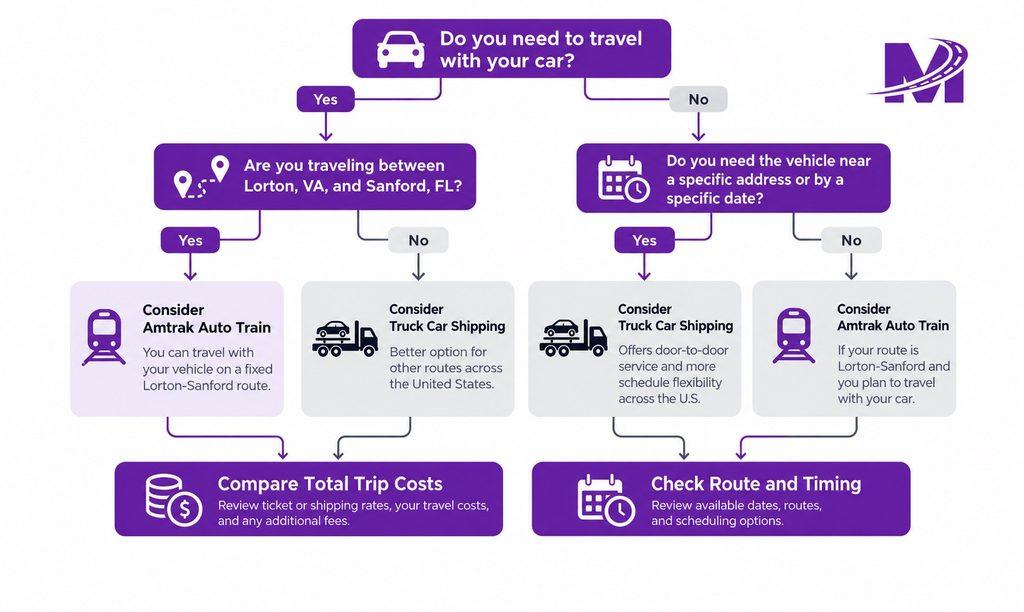
Before you book either one, add up:
Lay those numbers side by side and the right choice usually becomes obvious for your specific move.
Compare Your Car Shipping Cost
Not sure whether truck transport makes more sense than the Amtrak Auto Train for your move? Compare a car shipping quote with the full cost of traveling by train, including passenger fares, station drives, and other trip expenses.
Monarch Transport Group helps you weigh your vehicle shipping options for your route, budget, and timeline.
Get a Free Car Shipping Quote — no obligation, get an estimate for your vehicle and route before deciding.
FAQs
Amtrak Auto Train fares start at $95 per passenger, plus the cost of transporting your vehicle, according to Amtrak’s official website. The final one-way price depends on your travel date, passenger accommodations, vehicle type, and availability. Check Amtrak’s official booking page for a current quote, since the total fare can change with demand and travel dates.
It depends on the headcount and the route. For a single traveler in Coach on the Virginia-Florida line it can be close; add passengers, a sleeper, or distance from the stations and truck shipping often comes out ahead on total cost.
The train covers the route overnight, but you’re fixed to one daily departure and the offload wait. Measured from booking to a car you can drive, truck transport over the same corridor is often comparable once you count the pickup window and transit.
No. Amtrak’s Auto Train requires you to bring your vehicle to the Lorton, VA, or Sanford, FL, station yourself and check it in before the deadline. Check-in starts at 11:30 a.m. on departure day and closes at 2:30 p.m. for standard and extended vehicles, or 2:00 p.m. for motorcycles, oversized vehicles, trailers, and vehicles with Priority Offloading. You must also travel on the same train as your vehicle. If you want your car picked up at or near your home without driving it to a station or traveling with it, door-to-door truck transport is the better option.
No. It runs only between those two stations, with no stops in between.
Door-to-door car shipping can be worth it if it saves you a long drive to and from a rail station. Whether it’s the better value depends on your route, the shipping quote, and how much time and money the station transfers would add.
Yes. A truck carrier moves the car on its own, so you’re free to fly or travel whenever suits you.
Related articles
Snowbird Car Shipping – How to Send Your Car to Florida for Winter
IN THIS ARTICLE: What Is Snowbird Car Shipping and How Does It Work? When to Book Snowbird Auto Transport to Florida How Much Does Snowbird Car Shipping to Florida Cost?
Popular State-to-State Car Shipping Routes: Costs & Transit Times Compared (2026)
IN THIS ARTICLE: State-to-State Car Shipping Routes: Cost & Transit Time What factors influence the cost of shipping cars from one state to another? How long does transport between states
Open vs. Enclosed Auto Transport: Which Should You Choose?
IN THIS ARTICLE: The Reality of the Road: What is Open Car Shipping? Where Open Transport Makes Perfect Sense Comparison Table: Open Transport Quick Glance The Practitioner Tip: The Myth

How to Ship Your Electric Vehicle (EV) Safely in 2026
IN THIS ARTICLE: The Reality of EV Logistics in 2026 Why EVs Change the Math: The Weight Factor The “50% Rule”: Battery Safety and State of Charge (SoC) Vetting the

How State-to-State Car Transport Works: From Pickup to Delivery
IN THIS ARTICLE: Understanding the Auto Transport Ecosystem Choose Your Transport Type The Process of Shipping Calculating the Cost and Timeline of State-to-State Car Transport The 2026 EV Transport Protocol
How Much Does It Cost to Ship a Car Between States?
IN THIS ARTICLE: Average Cost Breakdown by Distance Primary Factors Influencing Your Shipping Quote Geographic Influence on Pricing Understanding the Quote Structure The Impact of Seasonality on Auto Transport Rates

How Much Does Expedited Car Shipping Cost? 2026 Guide
IN THIS ARTICLE: Key Takeaways Ready to Ship Your Car? How Much Does Expedited Car Shipping Cost in 2026? What Determines the Price of Expedited Car Shipping? Expedited vs. Standard
Cross-Country Car Shipping: How to Save Money Safely
IN THIS ARTICLE: Why “Cheap” Doesn’t Have to Mean “Dangerous” 1. Open Transport: The Industry Gold Standard for Savings 2. The Power of “Terminal-to-Terminal” Shipping 3. Timing the Market: The
