
IN THIS ARTICLE:
- The Three Ways to Get a Motorcycle Home
- Buying at a Salvage Auction (Copart, IAA) – What’s Different
- Buying from a Private Seller Out of State – The Checklist
- How to Load and Strap Down a Motorcycle Yourself
- Taxes, Registration, and the Paperwork Trail
- Final Word
- FAQ About Buying a Motorcycle Out of State or at Auction
You won the bid. Or you finally found the exact year, color, and mileage you’d been hunting for on CycleTrader, and it’s sitting in a driveway – or a Copart yard – eight states away. The thrill of the win lasts about ten minutes, and then the real question kicks in: how does this thing actually get to you?
There are three ways to bring a motorcycle home after an out-of-state or auction purchase: ride it back yourself on a temporary permit, haul it behind your own truck or a rented trailer, or hand the job to a professional motorcycle transport company. Which one makes sense depends on whether the bike runs, how far it has to travel, what kind of vehicle you’re driving, and how much of your weekend you’re willing to spend on the road. This guide walks through all three, plus the auction-specific wrinkles (Copart and IAA pickup windows, gate passes, salvage titles) that most “how to buy a motorcycle out of state” articles skip entirely.
The Three Ways to Get a Motorcycle Home
Each method trades cost against convenience and risk in a different way, so the right pick depends less on what’s cheapest and more on whether your bike actually runs, how far it has to go, and how much hassle you’re willing to take on yourself. Here’s how the three options stack up before we walk through each one in detail.
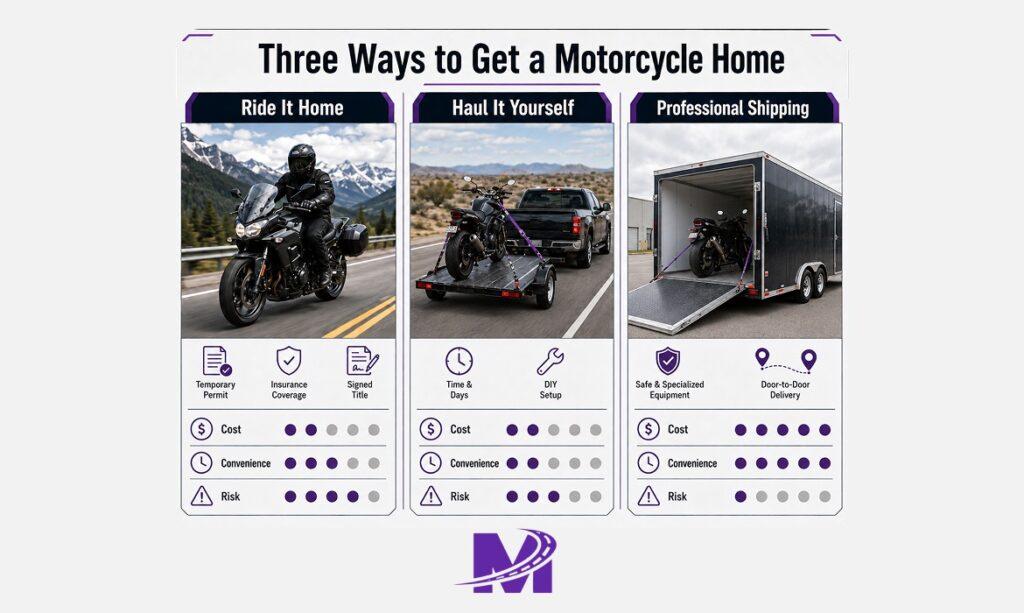
| Method | Typical Cost | Best For | Watch Out For |
| Ride it home | Permit + insurance only, often under $50 | Running bikes, short-to-medium trips, licensed riders | Weather, fatigue, no recourse if something fails mechanically en route |
| Haul it yourself | $30–$50/day local trailer rental, more for one-way or multi-day | Non-running bikes, short-to-medium distance, DIY-comfortable owners | Tow rating limits, in-town-only trailer return rules, your own time and fuel |
| Professional shipping | $300–$600 regional, $700–$1,300 coast-to-coast | Long distance, auction pickups, non-running or high-value bikes | Budget carriers without motorcycle-specific equipment |
Option 1: Ride It Home Yourself
If the bike runs, you have a valid motorcycle endorsement, and the distance is reasonable, riding it home is the cheapest option on paper – and the one with the most variables that can go wrong.
Before you can legally turn a wheel, you need three things in hand: a temporary permit (sometimes called a trip permit, transit permit, or 30-day permit), proof of motorcycle insurance, and the signed title or a notarized bill of sale. Skip any one of these, and you’re riding on a bike that isn’t legally yours yet, in a state that isn’t your home state, with zero recourse if something goes wrong.
Temporary permits vary wildly by state. Almost every state wants proof of liability insurance before they’ll issue one – which means step one is actually a phone call to your insurer, not a DMV visit. A few examples to set expectations:
| State | Permit Type | Duration | Typical Cost |
| Texas | One-Trip Permit | 15 days | Under $10 |
| Texas | 30-Day Permit | 30 days | About $30 |
| Washington | Trip Permit | 3 days | $36 flat |
| Virginia | Standard Trip Permit | 3 days (from bill-of-sale date) | Low fixed fee |
| Oregon | Trip Permit | Up to 21 days | About $33 |
The pattern across all of them: short permits are common, fees are modest, and your home state’s rules may differ from where you’re picking the bike up – always confirm with the seller’s local DMV, since that’s usually where you apply.
Get the insurance binder before you leave home, not after you arrive. Call your current provider (or shop for a new policy if this is your first bike), give them the VIN, and ask for an insurance binder or ID card for the specific bike. Most states won’t issue a temporary permit without it, and showing up at a DMV counter without proof of coverage is the single most common reason people get stuck for an extra day in a town they didn’t plan to visit.
Never ride away on a promise. “I’ll mail you the title” is not a contingency plan; it’s a gamble. Insist on the signed-over title (or, for a dealer purchase, the paperwork they provide on the spot) and a bill of sale with the VIN, price, and odometer reading before you start the engine. If the seller still owes money on the bike, you need a lien release letter from their lender – otherwise, you’re riding home on a motorcycle that the bank could still claim.
If the weather, the distance, or your comfort level make riding a bad idea, that’s a legitimate reason to ship it instead – not a reason to white-knuckle it home anyway.
Option 2: Haul It Yourself (Truck or Trailer)
This is the right call when the bike doesn’t run, the distance is short to medium, the weather is bad, or you simply don’t want the wear and tear of a long highway ride on a machine you haven’t fully vetted yet.
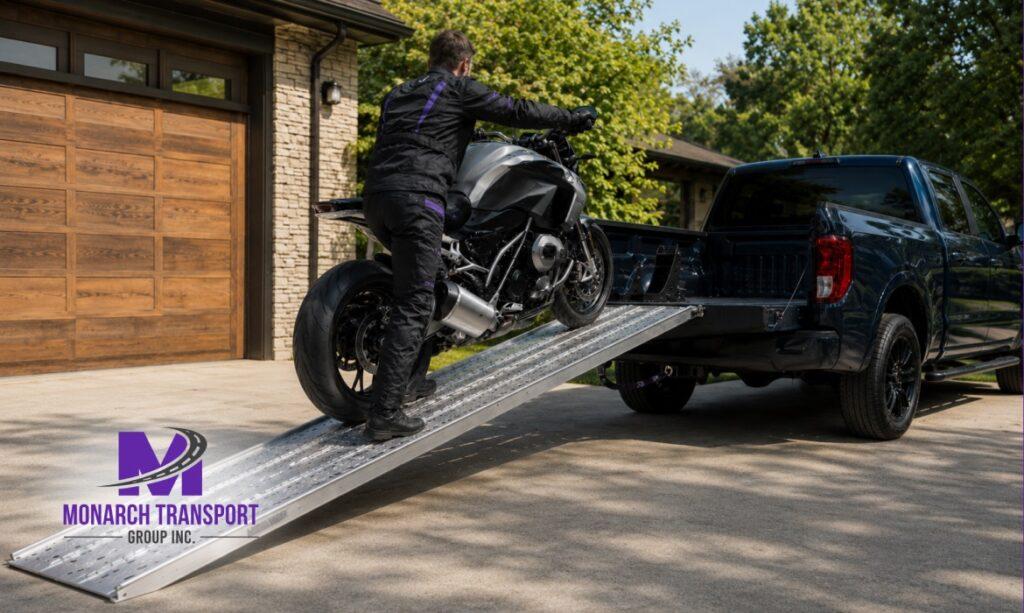
Pickup truck bed. You’ll need a long, sturdy aluminum ramp – ideally arched, so the bike’s belly doesn’t bottom out as it crests the tailgate – and at minimum two ratchet or cam-buckle tie-down straps rated for well over the bike’s weight. Load with the front wheel forward, wedge it into the front corner of the bed or a wheel chock, and run your front straps to the lower triple clamp or fork tubes at roughly a 45-degree angle, compressing the front suspension by about half its travel. That compression is what keeps the bike from bouncing the straps loose over highway bumps; it will not damage your fork seals at normal tension, even over a multi-day haul. Secure the rear with a second pair of straps through the swingarm or around the subframe so a strap failure up front doesn’t mean the whole bike goes down. If you’re loading solo, a second narrow ramp set 18 inches apart from the bike’s ramp gives you somewhere to walk up alongside it instead of straddling the bike on the way in.
Rent a trailer. U-Haul’s dedicated motorcycle trailer starts around $15 a day and comes with a built-in wheel chock, a low deck, and an integrated ramp – genuinely one of the better deals in the entire towing world. The catch that trips people up: U-Haul’s motorcycle trailer is an in-town rental, meaning you have to return it to the same location where you picked it up. It is not built for one-way, cross-country moves. If you’re hauling the bike a long distance and won’t be driving back through the same town, you’ll need U-Haul’s 5×9 open ramp trailer (which does support one-way rentals) or a different rental company entirely. Either way, confirm your vehicle’s actual tow rating – not just what the hitch looks like it can handle – before you book.
What the cost actually looks like. A one-day local trailer rental runs $30–$50 once you add the optional damage waiver and tax. For a genuine cross-country pull, budget for the trailer or truck rental, fuel for the extra weight, and – if it’s more than a day’s drive – a hotel and meals. People often assume hauling it themselves is automatically the cheapest option; for short hops, it usually is, but for a 1,500+ mile trip, the math gets a lot closer to professional shipping once you add up gas, lodging, and your own time off work. Run the numbers on your specific route before committing to a multi-day haul.
Option 3: Hire a Professional Motorcycle Transport Company
For genuinely long-distance purchases – cross-country auction wins, a bike you found three time zones away – shipping is frequently both cheaper and safer than flying out, renting a truck, and burning two or three vacation days on the road. Here’s the full breakdown of how motorcycle shipping works if you want more detail than this guide covers.
Direct haul vs. crating. A direct-haul carrier loads the bike onto a dedicated trailer (open or enclosed) and drives it straight to your address, door to door. Crating services instead pack the motorcycle onto a pallet or into a wooden crate and move it via standard freight – a method more common for international shipments or when a bike needs to go somewhere a car-hauler truck physically can’t reach. For a domestic move, direct haul with a licensed carrier is almost always the simpler, faster choice.
Open vs. enclosed. Open transport – the bike strapped to a multi-vehicle trailer alongside cars and other motorcycles – is the standard, most affordable option and works fine for the vast majority of standard production bikes. Enclosed transport keeps the bike fully shielded from weather, road debris, and prying eyes at truck stops; it costs more but is worth it for vintage machines, anything with custom paint or chrome, and any bike where resale value justifies the extra protection. Monarch’s motorcycle transport service offers both, and you can see our full comparison of open vs. enclosed transport if you’re still weighing which one fits your bike.
What it actually costs. Industry-wide, motorcycle shipping in 2026 runs roughly $0.30–$0.70 per mile, with shorter hops costing more per mile and long cross-country routes costing less per mile but more in total. As a rough guide: a regional move under 500 miles often lands in the $300–$600 range, while a genuine coast-to-coast shipment typically falls between $700 and $1,300 depending on whether you choose open or enclosed service. Get an instant estimate for your specific route rather than relying on a flat number – pickup zip code, drop-off zip code, bike size, and the time of year all move the price.
Why “budget” general freight is a false economy. A carrier that doesn’t specialize in motorcycles may show up with standard ratchet straps clamped straight onto the handlebars instead of soft-tie loops on the fork tubes – a setup that can blow fork seals or crack fairings on a long haul. A dedicated motorcycle hauler uses soft-tie technology, proper wheel chocks, and understands how much front-end compression is appropriate versus excessive. The $100 you save by going with the cheapest possible quote rarely covers the cost of a blown fork seal.
Buying at a Salvage Auction (Copart, IAA) – What’s Different
If your bike came from Copart or IAA rather than a private seller or dealer, the logistics have an extra layer most general “buying out of state” guides never mention – and the clock starts the moment the auction ends, not when you’re ready.
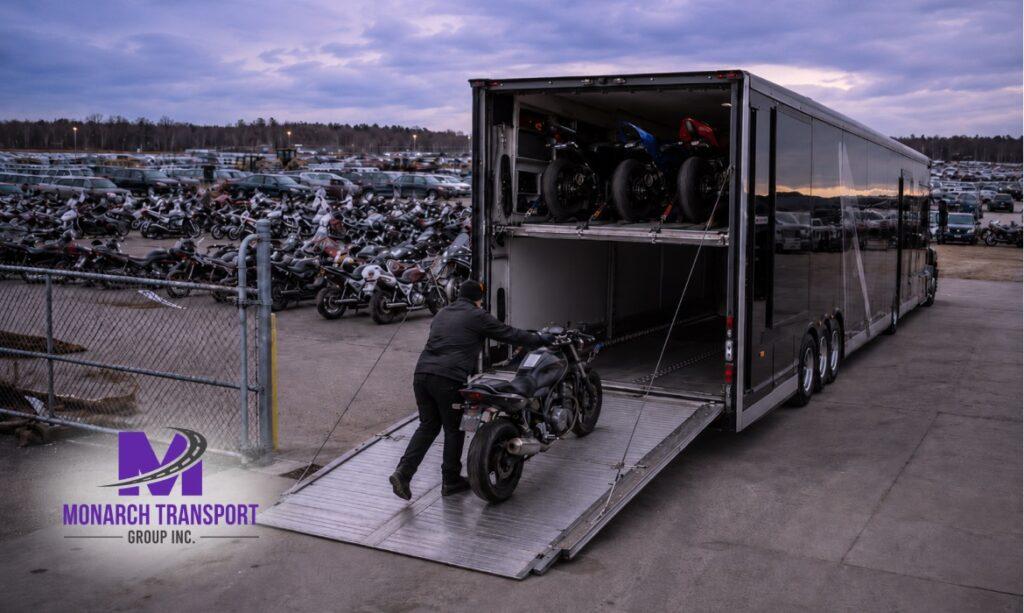
You have a tight pickup window, and it’s not flexible. Copart gives winning bidders three days from the auction date to remove the vehicle before storage fees start accruing – and those fees are per day, per vehicle, so a salvage Triumph that cost you $1,250 at the hammer can rack up real money sitting in the yard while you figure out logistics. IAA’s standard window is two business days for U.S. domestic buyers (four business days for international buyers) before storage charges kick in. The practical takeaway: line up your transport – whether that’s a trailer you’re driving yourself or a carrier you’ve already gotten a quote from – before you place your final bid, not after you’ve won.
You’ll need a gate pass and PIN, not just a title. Auction yards don’t release a vehicle on a handshake. You (or your transport company) need the gate pass and buyer PIN for the auction issues at checkout. If you’re hiring a carrier to handle the pickup directly from the auction lot, confirm in advance that they have experience with auction releases – it’s a different process than a residential pickup, and a driver who shows up without the right paperwork gets turned away at the gate just like anyone else.
Salvage titles change your options later, not your shipping. A vehicle with a salvage or rebuilt title ships exactly the same way a clean-title bike does – the trailer doesn’t care about the paperwork. What does change is registration: many states require a separate inspection (sometimes a VIN inspection by law enforcement, sometimes a state-specific rebuilt-title process) before a salvage-titled motorcycle can be registered and ridden legally. Some 30-day and one-trip temporary permits explicitly exclude salvage or nonrepairable titles, so if you bought a salvage bike intending to ride it home yourself, check your home state’s rules before you assume that option is even available to you.
Auction bikes are frequently non-running, which rules out the truck-bed-and-ramp method. A bike that doesn’t roll or doesn’t start needs either a trailer with a winch or a carrier whose driver can physically push or roll it into position – a standard ramp setup assumes the bike can move under its own power or be walked up. Mention “non-running” or “inoperable” when you request quotes; a carrier that shows up without winch capability for a dead bike will charge you a “dry run” fee and leave without your motorcycle.
Buying from a Private Seller Out of State – The Checklist
Auctions aside, the most common scenario is a private-party purchase you found on Facebook Marketplace, CycleTrader, or a forum classified – see our breakdown of the best platforms to buy a motorcycle online if you haven’t picked one yet. A few extra steps protect you from what a dealership purchase handles automatically.
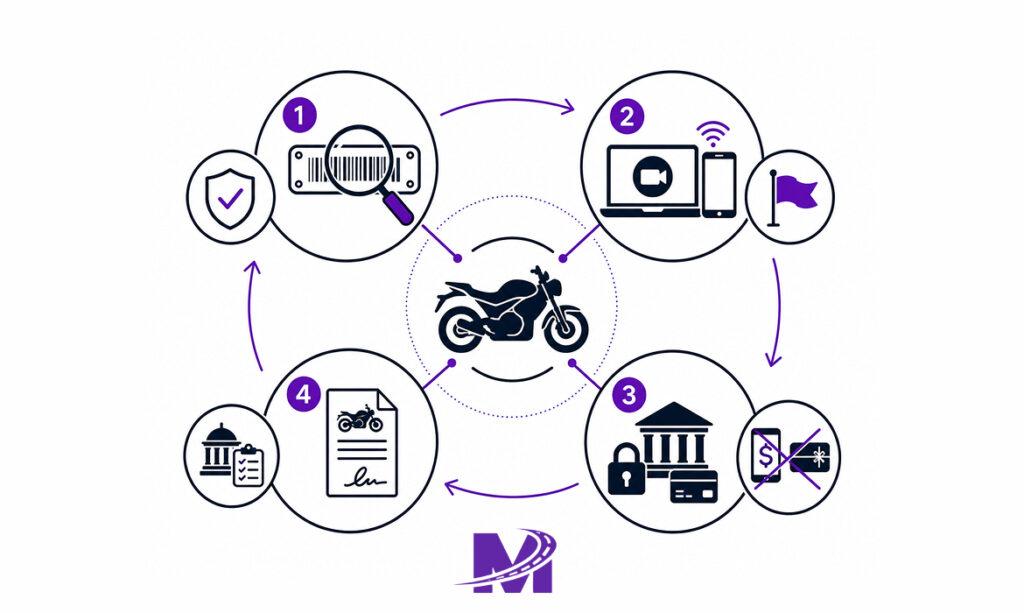
Verify the VIN before you send any money. Run it through the National Insurance Crime Bureau’s free VIN check to confirm the bike isn’t reported stolen, or use a paid service like CycleVIN for a full title-brand history. This is non-negotiable for any purchase you can’t physically inspect in person first.
Insist on a phone or video call, not just text. A seller who refuses to get on a call – or stalls every time you ask for a clearer photo of the VIN plate or a cold-start video – is a red flag worth walking away from. This single step filters out a meaningful share of scam listings before you’ve risked a dollar.
Use a payment method that protects you. A direct bank-to-bank transfer or a verified escrow service (such as Escrow.com) is the safer option for a large remote purchase. Zelle, Venmo, and gift cards offer essentially zero buyer protection and are the preferred tools of scammers for exactly that reason – if a seller insists on one of these for a five-figure motorcycle, that’s the moment to step back.
Confirm registration is your job, not theirs. When you buy from a dealership, they typically handle the registration paperwork. Buy from a private seller, and that responsibility falls entirely on you: contacting your home-state DMV, having the VIN ready, and bringing the signed title, bill of sale, and odometer disclosure when you go to register. Look up your own state’s out-of-state purchase rules before the deal closes, since requirements (notarized signatures, specific transfer forms, smog or safety inspections) vary meaningfully from state to state.
How to Load and Strap Down a Motorcycle Yourself
Whether you’re using your own truck bed, a borrowed trailer, or a rented U-Haul, the core technique is the same, and getting it right is the difference between a bike that arrives exactly as it left and one that’s lying on its side somewhere on I-40.
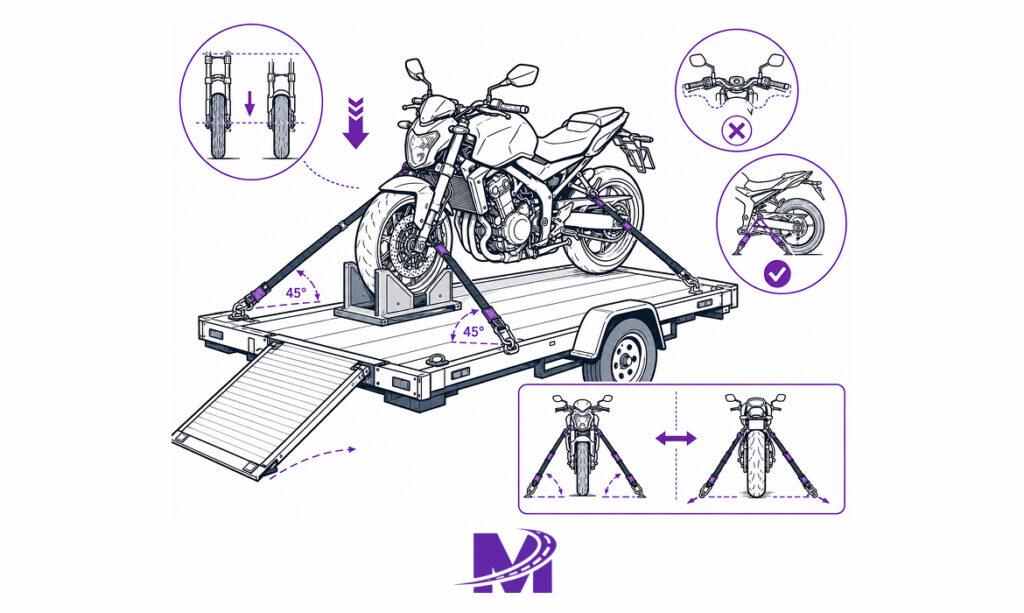
Unloading reverses the process: release straps gradually rather than popping a ratchet buckle all at once (which can make the bike lurch), let it settle onto the kickstand, then walk it down the ramp using mostly the front brake since the rear wheel has no real traction on an incline.
Taxes, Registration, and the Paperwork Trail
Wherever the bike comes from – auction, dealer, or private seller – the finish line is the same: a visit to your home-state DMV.
You pay sales tax where you register, not where you bought. This trips up more buyers than almost anything else on this list. Purchasing from a no-sales-tax state like Oregon or Montana does not exempt you from tax; you’ll owe your home state’s rate when you title and register the bike, calculated off the price on your bill of sale.
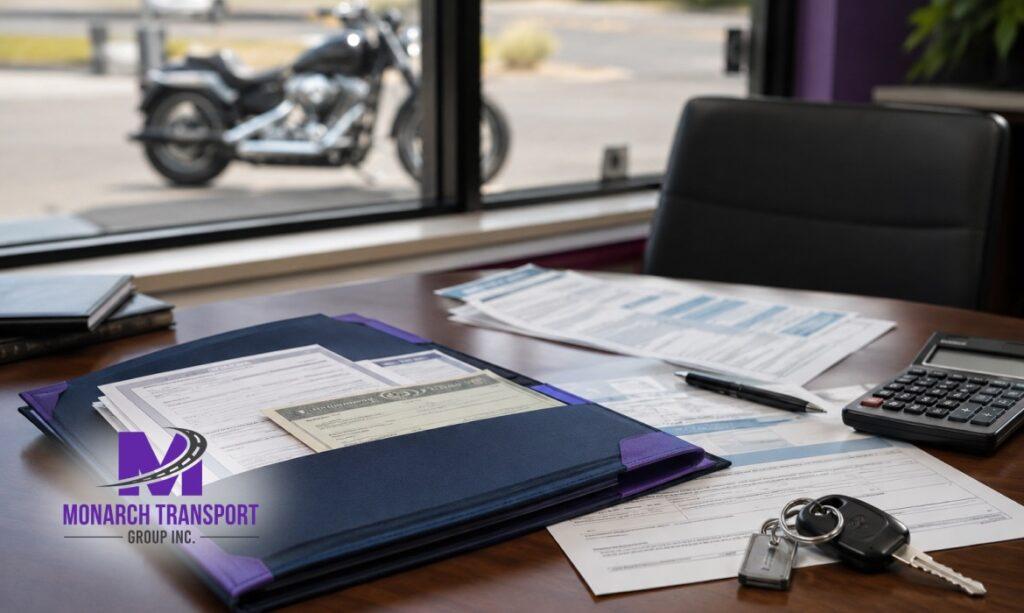
Bring the full paperwork stack. The original signed title (notarized in states that require it), the bill of sale with VIN and odometer reading, proof of your new insurance policy, and – if you rode home on a temporary permit – that permit and its receipt. If the bike was financed and there’s an active lien, you also need the lender’s lien release before the title can transfer cleanly into your name.
Budget for documentation fees if buying from a dealer. Dealerships typically charge a “doc fee” for handling out-of-state title and registration paperwork, commonly $150–$500. Private sellers don’t charge this, but they also won’t help you navigate the DMV – that part is entirely on you either way.
Final Word
There’s no single “right” answer here – only the right answer for your specific bike, distance, and risk tolerance. A running bike, a confident rider, and a 200-mile trip in good weather? Ride it home. A non-running auction finds three states away with a three-day pickup clock ticking? That’s a job for a trailer or a carrier who already knows how the gate-pass process works. When the distance gets long enough that gas, lodging, and your own time start adding up to more than a shipping quote, get a free motorcycle shipping estimate and compare the real numbers side by side before you decide.
FAQ About Buying a Motorcycle Out of State or at Auction
You have three options: ride it home using a temporary permit and valid insurance, haul it yourself in a pickup bed or on a rented trailer, or book a professional motorcycle transport company for door-to-door delivery. The right choice depends on whether the bike runs, the distance involved, and your budget – see the full breakdown above.
It’s legally risky, and most states won’t let you register it. A title proves clean ownership; without one, you can’t prove the bike isn’t stolen or still encumbered by a lien, and many DMVs will refuse registration outright or require a lengthy bonded-title process. If a seller can’t produce a title, ask why before you do anything else – a missing title because the bike is still financed (and the lender holds it) is recoverable with a payoff letter; a missing title with no explanation is a reason to walk away.
Copart gives winning bidders three days from the auction date to remove the vehicle before storage fees start accruing, charged per day, per vehicle. IAA’s standard window is two business days for U.S. domestic buyers, or four business days for international buyers. Line up your transport – whether that’s your own trailer or a carrier quote – before you place your final bid, not after you’ve won, since the clock starts the moment the auction ends.
Not always. Some states’ 30-day and one-trip temporary permits explicitly exclude salvage or nonrepairable titles, even though the bike ships and tows exactly the same way a clean-title bike does. If you bought a salvage bike at auction intending to ride it home yourself, check your home state’s permit rules before you assume that option is available – the registration process, not the transport, is where a salvage title actually changes things.
Motorcycle shipping in 2026 runs roughly $0.30–$0.70 per mile, with shorter routes costing more per mile and long cross-country routes costing less per mile but more in total. A regional move under 500 miles typically falls between $300 and $600, while a genuine coast-to-coast shipment runs $700–$1,300 depending on whether you choose open or enclosed transport. Get an instant estimate for your specific route rather than relying on a flat number, since pickup and drop-off zip codes, bike size, and season all move the price.
Bring the original signed title (notarized in states that require it), a bill of sale with the VIN, price, and odometer reading, proof of your new insurance policy, and – if you rode home on a temporary permit – that permit and its receipt. If the bike was financed and there’s an active lien, you also need the lender’s lien release before the title can transfer into your name. Sales tax is paid where you register the bike, not where you bought it, so budget for your home state’s rate even if you purchased in a no-sales-tax state like Oregon or Montana.
No. The bike travels as cargo on the carrier’s trailer, not as a vehicle operating under its own registration. A bill of sale or temporary registration proving ownership is sufficient for a professional transport company to load and move it; you’ll only need actual plates once you’re ready to ride it on public roads after delivery.
Related articles
How to Prepare Your Car for Shipping: Step-by-Step Checklist
IN THIS ARTICLE: Why Preparation is not just a Chore Step 1: Selecting Your Logistics Partner Step 2: The Evidence Phase – Cleaning and Documentation Step 3: Protecting the Extravagant
Motorcycle Shipping Costs in 2026 – Full Price Breakdown by Route, Method & Bike Type
IN THIS ARTICLE: Why Motorcycle Shipping Prices Vary So Wildly Cost Breakdown by Distance – What Every Route Costs in 2026 Cost Breakdown by Transport Method – Open vs. Enclosed
Open vs. Enclosed Auto Transport: Which Should You Choose?
IN THIS ARTICLE: The Reality of the Road: What is Open Car Shipping? Where Open Transport Makes Perfect Sense Comparison Table: Open Transport Quick Glance The Practitioner Tip: The Myth

Seasonal Car Shipping Tips: What to Know Before Shipping in Summer
IN THIS ARTICLE: Why Summer Is the Most Demanding Season for Auto Transport The Price Reality: How Much More Does Summer Shipping Cost? The Heat Problem – What Open Trailers

Best Places to Buy a Motorcycle Online in the USA
IN THIS ARTICLE: The Digital Shift: Geography No Longer Constrains the Ride Where to Buy: Top 2026 Platforms Analysis Comparison Table: Platform Overview The Facet of Finance: Not Just the
Complete Guide to Car Shipping in 2026
The landscape of American mobility has shifted, making vehicle logistics more accessible and seamless than ever before. Understanding this new norm is the first step toward a stress-free relocation that

Cross-Country Car Shipping: How to Save Money Safely
IN THIS ARTICLE: Why “Cheap” Doesn’t Have to Mean “Dangerous” 1. Open Transport: The Industry Gold Standard for Savings 2. The Power of “Terminal-to-Terminal” Shipping 3. Timing the Market: The
Enclosed Car Shipping: The Gold Standard for Luxury and Exotic Vehicle Transport
IN THIS ARTICLE: Why “Standard” Transport Doesn’t Cut It for Masterpieces The Anatomy of Protection: Hard-Sided vs. Soft-Sided Trailers The Low-Clearance Nightmare: Why Hydraulic Lifts Matter Beyond the Walls: The