

IN THIS ARTICLE:
- Why Shipping a Car Makes More Sense Than Driving During a Job Move
- How Much Does Car Shipping Cost for a Job Relocation?
- Does Your Employer Cover Car Shipping? How Relocation Packages Work
- How to Time Car Shipping Around Your Job Start Date
- Open vs. Enclosed Transport for Job Relocation Shipping
- Relocating With Two Cars: Your Options
- How to Prepare Your Car for Relocation Shipping
- How to Choose a Car Shipping Company for Your Relocation
- 5 Mistakes People Make When Shipping a Car for a Job Relocation
- Final Thoughts on Car Shipping for Job Relocations
- FAQ: Car Shipping for Job Relocation
A job offer in another state comes with a long list of things to coordinate – housing, utilities, schools if you have kids, and the move itself. Somewhere on that list is the question of what to do with your car. Driving it cross-country sounds straightforward until you start doing the math: two or three days of highway, hotel nights, meals, fuel for a 1,500-mile run, and the miles added to a vehicle you plan to keep for years.
Professional car shipping for a job relocation can take much of the driving and travel logistics off your plate. You can travel to your new city separately, start work on time, and your vehicle is transported within an estimated pickup and delivery window.
This guide covers everything that matters for relocation car shipping: how the process works, what it costs, how to time it around your start date, what to do if your employer offers a relocation package, and how to handle the situation if you have more than one vehicle to move.
Why Shipping a Car Makes More Sense Than Driving During a Job Move
The immediate reaction for most people is to drive. It seems cheaper and more straightforward. The reality is more complicated, especially when a job relocation comes with a hard deadline.
The True Cost of a Cross-Country Drive
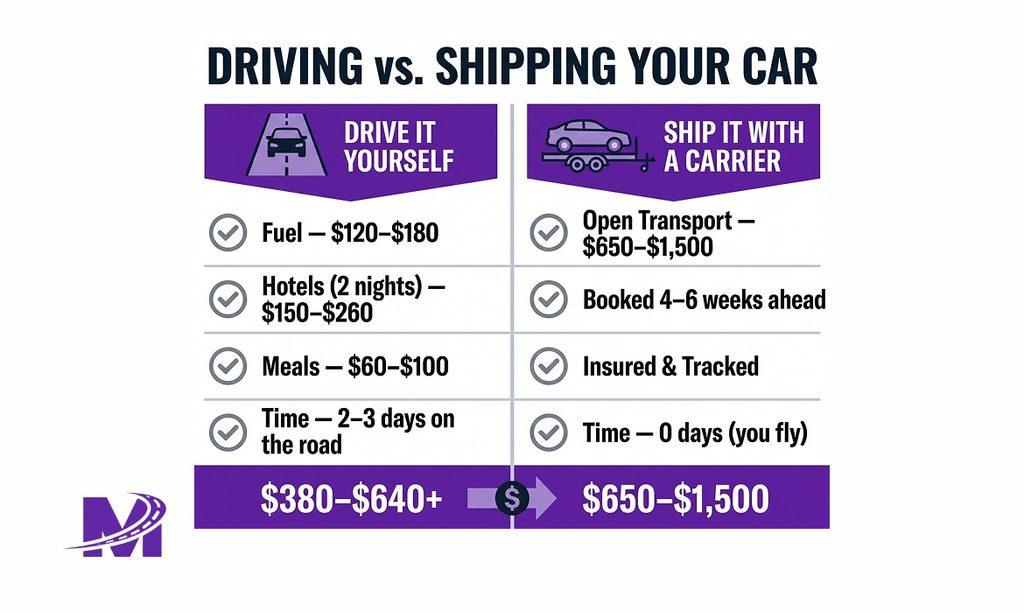
A 1,500-mile relocation drive – say, Chicago to Dallas – involves roughly:
That comes to $380–$640 before accounting for your time. If you are taking time off work or arriving later than planned, the cost compounds. A cross-country route – New York to Los Angeles – pushes the driving cost well past $800–$1,000 for a single vehicle.
Open carrier auto transport on most domestic relocation routes runs $600–$1,400 depending on distance, vehicle size, and timing. On mid-length routes (600–1,200 miles), the gap between driving and shipping is often smaller than people expect – and shipping gives you your time back.
The Start Date Problem
Most job relocations come with a fixed start date. Your new employer is not flexible about when you show up. A two-day driving delay because of traffic, a car issue, or weather is not a risk you want to carry into the first week at a new job.
Shipping your car lets you fly ahead, check into your new place, and be present and rested on day one. The vehicle follows on its own timeline, and if there is a day’s variance in delivery, it does not affect your work schedule.
Multi-Vehicle Households
If your household has two cars and one driver, or two drivers who need to arrive at the same time, driving both vehicles is not realistic without hiring someone or making two trips. Shipping one or both vehicles while the family flies together is almost always the cleaner solution.
How Much Does Car Shipping Cost for a Job Relocation?
Relocation car shipping cost depends on four factors: distance, vehicle size, transport type, and timing. Use the Monarch shipping calculator for a real-time estimate on your specific route.
Cost Estimates by Route (Open Transport, Standard Sedan)
| Route | Distance | Estimated Range |
| New York → Chicago, IL | ~790 mi | $650 – $950 |
| Chicago, IL → Dallas, TX | ~920 mi | $700 – $1,000 |
| Los Angeles, CA → Seattle, WA | ~1,140 mi | $800 – $1,100 |
| New York → Miami, FL | ~1,280 mi | $900 – $1,300 |
| Chicago, IL → Los Angeles, CA | ~2,020 mi | $1,100 – $1,500 |
| New York → Los Angeles, CA | ~2,800 mi | $1,200 – $1,700 |
SUVs, pickup trucks, and larger vehicles cost $100–$250 more than sedans on the same route. Enclosed transport adds 30–50% to open carrier pricing and is worth considering for luxury, classic, or high-value vehicles.
What Affects the Final Price
The price you see in a car shipping quote depends on more than mileage alone. Your route, shipping dates, pickup flexibility, and how quickly you need the vehicle can all affect the final rate.
Does Your Employer Cover Car Shipping? How Relocation Packages Work
This is the section most auto transport guides skip entirely – and it is one of the first questions you should ask your HR department before booking anything – and a good time to get a quote so you know the actual number.
Many employers who offer relocation assistance include vehicle transport as a covered or reimbursable expense. The specifics vary widely by company and package type, but the general categories are:
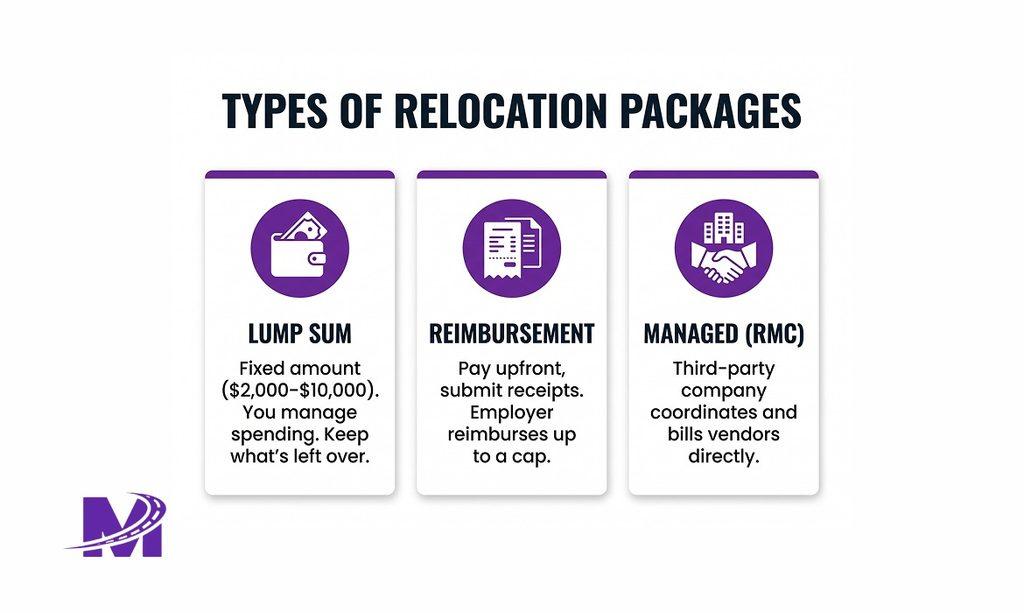
Lump Sum Relocation Packages
One common format is a lump-sum relocation package. Your employer gives you a fixed dollar amount – typically $2,000–$10,000 depending on seniority and distance – to cover all relocation costs. You manage the spending. Car shipping comes out of this pool, and any amount left over is yours to keep. Any amount over is your responsibility.
If you receive a lump sum, get competing quotes early. Use the Monarch calculator so you know how much of the budget to set aside for vehicle transport before you start spending elsewhere.
Reimbursement-Based Packages
Some employers cover specific, documented expenses up to a cap. Auto transport is frequently listed as a covered expense alongside moving van costs, temporary housing, and travel. See what Monarch’s car transport service includes to know what to document for reimbursement.
Key steps if you are on a reimbursement package:
Direct Bill / Managed Relocation
Larger companies sometimes use a third-party relocation management company (RMC) that coordinates all moving services directly. In this case, you may not pay the carrier at all – the RMC handles vendor selection and billing. If your employer uses an RMC, ask whether you can choose your own auto transport provider or whether you are required to use their preferred vendor.
Tax Implications
Tax treatment of employer-paid relocation benefits can vary. Ask your HR or payroll department how your relocation reimbursement will be reported and whether taxes will be withheld, so you are not surprised at tax time.
How to Time Car Shipping Around Your Job Start Date
Timing is the part of relocation car shipping that most people underestimate. The auto transport industry does not work like same-day delivery – there are lead times for dispatch, transit windows, and delivery ranges that you need to build into your plan. Keep in mind that transit time starts after pickup; your total timeline also includes the time needed to assign a carrier and schedule pickup.

The Timeline That Works
A little planning can make car shipping much easier to coordinate with your move and job start date. Use this timeline to see when to request quotes, prepare your vehicle, confirm pickup, and plan for delivery.
| When | What to Do |
| 4–6 weeks before move | Request quotes, compare brokers, confirm insurance. Book as soon as you have a confirmed new address or destination city. |
| 2–3 weeks before move | Confirm pickup window with broker. Arrange for someone at the destination to receive the vehicle if you arrive separately. |
| 1 week before pickup | Prep the vehicle: clean exterior, remove personal items, reduce gas to 1/4 tank, document condition with photos. |
| Pickup day | Review and sign Bill of Lading. Keep your copy. Confirm carrier contact information and estimated delivery window. |
| Transit (3–10 days) | Most brokers provide tracking updates. Contact your broker if you have not received an update by day 5 on a standard route. |
| Delivery | Do a full walk-around before signing. See how to inspect your car at delivery. Compare condition to pickup Bill of Lading. Note any damage before the driver leaves. |
Should Your Car Arrive Before or After You?
Plan for your car to arrive after you do – not before. If the vehicle arrives while you are still in transit or before you have keys to your new place, it creates a delivery coordination problem. Someone needs to be present to receive the vehicle, inspect it, and sign the Bill of Lading at delivery. Learn more about how the pickup and delivery process works.
The practical approach: fly to your destination two to three days before the car is expected. This gives you time to settle in, get keys sorted, and be available for delivery. If you need a vehicle immediately upon arrival, consider renting for the first few days rather than rushing the shipping timeline.
What If Your Start Date Is in Two Weeks?
Short-notice relocations happen. If your timeline is compressed – two weeks or less – you have two options: expedited transport or terminal-to-terminal shipping.
Expedited service prioritizes your vehicle for the next available carrier, often with pickup within 24–48 hours. It costs more (typically 30–50% premium), but it is a real option when time is critical.
Terminal-to-terminal shipping, where you drop the car at a nearby depot, can sometimes move faster than door-to-door because the carrier does not need to coordinate a residential pickup. It is less convenient but worth considering if you are working against a hard deadline.
Open vs. Enclosed Transport for Job Relocation Shipping
For a standard daily driver relocating with you to a new job, open transport is the right call. It is the most widely available, most cost-effective option, and it is what the vast majority of vehicles are shipped on every day. The exposure to weather and road debris is real but minimal – your car is secured, not driven, on the hauler.

Enclosed transport makes sense if:
For a detailed comparison with pricing, see: Open vs. Enclosed Auto Transport: Which Should You Choose?
Relocating With Two Cars: Your Options
Two-car households face a logistics problem that most guides gloss over. Here are the real options:
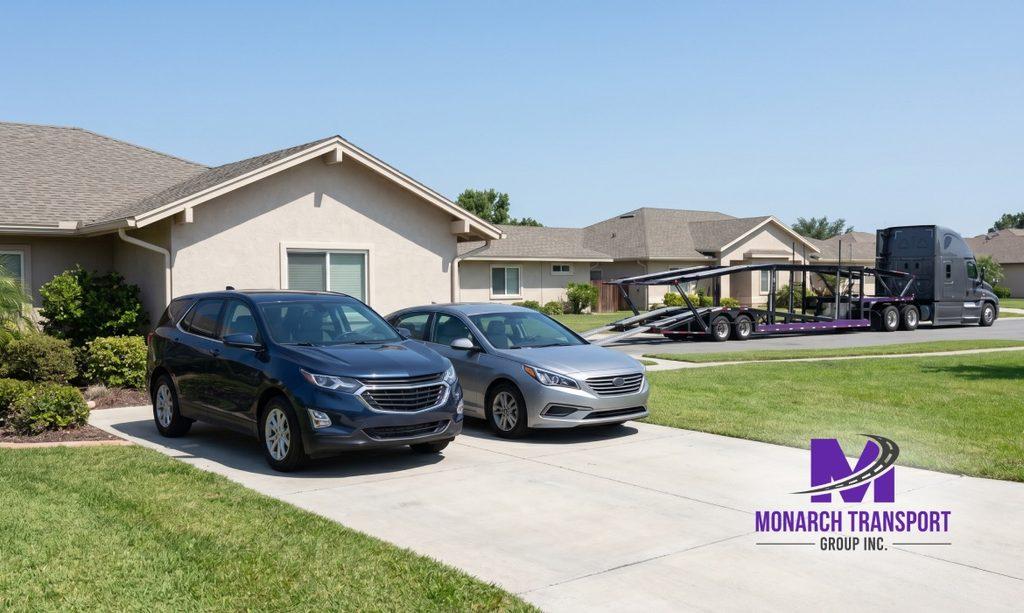
Ship Both Vehicles
The most straightforward solution. Ship both on separate or the same carrier. Some brokers offer a small discount for multiple vehicles on the same order, particularly if they can be loaded on the same hauler. This is the cleanest option if your relocation package covers the cost or if you need both cars at your destination relatively quickly.
Drive One, Ship One
If you have two drivers and a manageable route, driving one vehicle while shipping the other is a common approach. This makes sense if the drive is under 800 miles, the season is not extreme, and you want to reduce total shipping cost. One person drives one vehicle to the new location while the other vehicle is shipped separately.
Sell One Before You Move
If one vehicle is older, high-mileage, or not particularly valuable, selling before the move and buying something at the destination is worth running the numbers on. The cost of shipping an older vehicle twice a year (if this is a recurring situation) or once across the country often approaches or exceeds the vehicle’s trade-in value.
Store One Temporarily
If your new location does not immediately require two vehicles – a dense city with good transit, for example – storing one vehicle at your origin location short-term while you get settled is a practical option. Many people ship the second vehicle one to three months after the initial move once they have a clearer picture of what they actually need.
How to Prepare Your Car for Relocation Shipping
A little preparation before pickup can make the shipping process easier and help prevent problems at delivery. Most of the work takes only a few minutes, but it gives you a clear record of your vehicle’s condition and makes sure the car is ready for transport.
For the complete pre-shipping checklist, see: How to Prepare Your Car for Shipping: Step-by-Step Checklist
How to Choose a Car Shipping Company for Your Relocation
The auto transport industry has legitimate brokers and carriers alongside operators who collect deposits and disappear. A job relocation is not the time to discover you have used one of the latter.
What to Verify Before You Book
For a full checklist of red and green flags, see: How to Choose the Right Auto Transport Company and How to Spot and Avoid Car Shipping Scams in 2026.

5 Mistakes People Make When Shipping a Car for a Job Relocation
Job relocations often come with tight deadlines, which makes it easy to overlook small details when arranging car transport. Avoiding these common mistakes can save you extra costs, scheduling problems, and unnecessary stress during the move.
Final Thoughts on Car Shipping for Job Relocations
A job relocation is one of the most time-pressured moves you can make. You have a start date, a new city, and a list of logistics that all need to land in the right order. Professional car shipping removes one of the most stressful variables from that list.
Book early, give a flexible pickup window, and confirm whether your employer’s relocation package covers any part of the cost before spending out of pocket. On most domestic routes, the gap between driving yourself and shipping professionally is smaller than people expect – and shipping gives you your time, your energy, and your odometer back.
If you have two vehicles, run the numbers on each option before defaulting to shipping both or driving one. And if your timeline is compressed, ask about expedited service – it is more expensive but reliably available.
Ready to get a quote for your relocation route? Use the Monarch instant quote tool to see current rates for your origin and destination. Or explore the full range of car transport services at Monarch Transport Group.
FAQ: Car Shipping for Job Relocation
For a typical domestic relocation, open transport for a standard sedan can range from several hundred dollars to $1,700 or more, depending on the distance and route – see the route estimates above for a closer sense of your corridor. Enclosed transport costs 30–50% more, and rates tend to run higher during a route’s busiest season.
Many employers include auto transport as a covered or reimbursable expense under relocation packages. The specifics depend on whether your package is a lump sum, direct reimbursement, or managed relocation. Ask HR to confirm auto transport is listed as a covered expense and whether you need itemized invoices for reimbursement. Note that employer-paid relocation costs are typically treated as taxable income under current IRS rules.
Book 4 to 6 weeks before your desired pickup date during your route’s busiest season. Outside of that window, 2 to 3 weeks is usually sufficient. If your relocation timeline is compressed – two weeks or less – ask your broker about expedited shipping options, which prioritize your vehicle for the next available carrier at a premium rate.
Plan for your car to arrive after you. Arriving at your new location two to three days before the expected delivery gives you time to collect keys, sort out access to your new address, and be available to receive the vehicle. If you need a car immediately, renting for the first few days is more reliable than trying to synchronize your flight and your car’s delivery to the same day.
Policies vary by carrier, but personal belongings are generally not covered by the carrier’s cargo insurance. Remove valuables, electronics, luggage, and loose items before pickup, and ask the carrier whether any limited items may remain in the vehicle.
A broker is a licensed intermediary who matches your shipment with an available carrier on the load board and manages communication throughout the process. A carrier is the company that physically operates the truck and transports your vehicle. Brokers do not own trucks; carriers do not manage customer logistics. Most people book through brokers because they offer access to a wider network of carriers and often better pricing than booking a single carrier directly.
Coast-to-coast transport (New York to Los Angeles, for example) takes 7 to 10 days in transit after the carrier picks up your vehicle. Mid-length routes of 800 to 1,200 miles typically take 3 to 6 days. Add 1 to 3 days for dispatch – the time between booking and actual carrier pickup. Expedited service can compress the dispatch window to 24 to 48 hours at a higher rate.
Document any new damage on the delivery Bill of Lading before signing, and photograph everything immediately with the driver and trailer in the frame. Do not sign a clean delivery receipt if there is unresolved damage. Contact the carrier or broker as soon as possible and follow the claim instructions provided in your shipping documents. Carrier cargo insurance covers transport-related physical damage, but only if it is properly documented at the point of delivery and was not pre-existing.

Related articles

ATV vs UTV Shipping: Costs, Methods & What to Expect in 2026
IN THIS ARTICLE: The Fundamental Difference: Dimensional Weight and Trailer Space Average Shipping Costs in 2026: What to Budget Best Time to Ship Your ATV or UTV – Seasonal Price

Enclosed Car Shipping: The Gold Standard for Luxury and Exotic Vehicle Transport
IN THIS ARTICLE: Why “Standard” Transport Doesn’t Cut It for Masterpieces The Anatomy of Protection: Hard-Sided vs. Soft-Sided Trailers The Low-Clearance Nightmare: Why Hydraulic Lifts Matter Beyond the Walls: The

How State-to-State Car Transport Works: From Pickup to Delivery
IN THIS ARTICLE: Understanding the Auto Transport Ecosystem Choose Your Transport Type The Process of Shipping Calculating the Cost and Timeline of State-to-State Car Transport The 2026 EV Transport Protocol

How to Ship Your Electric Vehicle (EV) Safely in 2026
IN THIS ARTICLE: The Reality of EV Logistics in 2026 Why EVs Change the Math: The Weight Factor The “50% Rule”: Battery Safety and State of Charge (SoC) Vetting the

Motorcycle Shipping Costs in 2026 – Full Price Breakdown by Route, Method & Bike Type
IN THIS ARTICLE: Why Motorcycle Shipping Prices Vary So Wildly Cost Breakdown by Distance – What Every Route Costs in 2026 Cost Breakdown by Transport Method – Open vs. Enclosed

Snowbird Car Shipping – How to Send Your Car to Florida for Winter
IN THIS ARTICLE: What Is Snowbird Car Shipping and How Does It Work? When to Book Snowbird Auto Transport to Florida How Much Does Snowbird Car Shipping to Florida Cost?

What Documents Do You Need to Ship a Car Across State Lines?
IN THIS ARTICLE: Key Takeaways Quick Reference: Documents by Situation Document 1: Government-Issued Photo ID Document 2: Bill of Lading – The Most Important Document in Car Shipping Documents for

Auto Transport Broker vs. Carrier: Which One Should You Use?
IN THIS ARTICLE: What Is an Auto Transport Broker? What Is an Auto Transport Carrier? The Key Differences Side by Side Does Using a Broker Cost More? What Is “Dual