
IN THIS ARTICLE:
- Key Takeaways
- What to Do If Your Car Arrives Damaged
- How Common Is Car Damage During Transport?
- What Causes Damage During Car Shipping?
- What Types of Car Damage Are Usually Covered?
- Who Is Responsible for Car Damage During Shipping?
- How Does Car Shipping Insurance Work?
- Why the Bill of Lading Matters
- How to File a Car Shipping Damage Claim
- How Long Does a Car Shipping Damage Claim Take?
- How Can I Prove the Damage Happened During Transport?
- Common Mistakes That Can Hurt a Damage Claim
- How to Prevent Car Damage During Transport
- Conclusion
- FAQs About Car Damage During Shipping
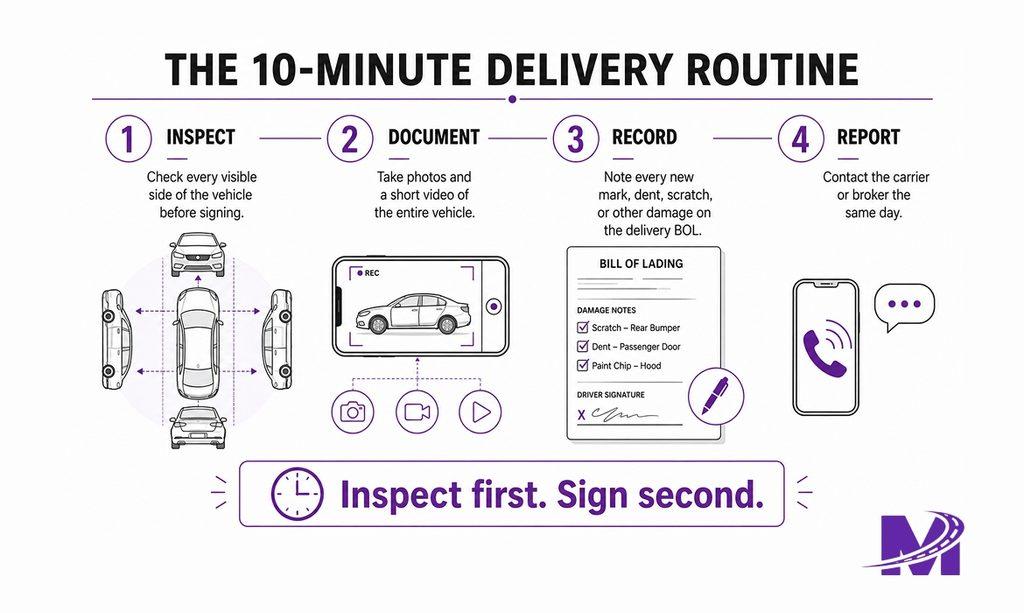
If your car arrives damaged, don’t sign a clean delivery receipt. Inspect the vehicle first, take photos and video, document the damage on the delivery Bill of Lading, and notify the carrier or broker immediately. Those steps create the evidence you’ll need if you end up filing a car shipping damage claim – the rest of this guide walks through why each one matters and what happens next.
Most cars arrive in the same condition they were sent in – carriers move thousands of vehicles a week without incident. But if you’re about to book shipping a vehicle from one state to another, it’s Carriers may carry cargo insurance that covers damage to vehicles in transit, but federal requirements do not mean every auto carrier has the same car fair to want a plan for the rare case something does go wrong. The difference between a smooth claim and a denied one usually comes down to what you do in the ten minutes around delivery, not to luck – and that’s genuinely good news, because it means the outcome is mostly in your hands.
Key Takeaways
- Inspect your car before signing the delivery Bill of Lading.
- Photograph and video any new damage from multiple angles.
- Note every new issue on the delivery BOL and keep a signed copy.
- Report the damage to the carrier as soon as possible and ask for the claim instructions.
- Keep your pickup BOL, delivery BOL, photos, repair estimates, and claim correspondence together.
Want to estimate your transport cost before booking? Use our shipping calculator to check the estimated rate for your route.
What to Do If Your Car Arrives Damaged
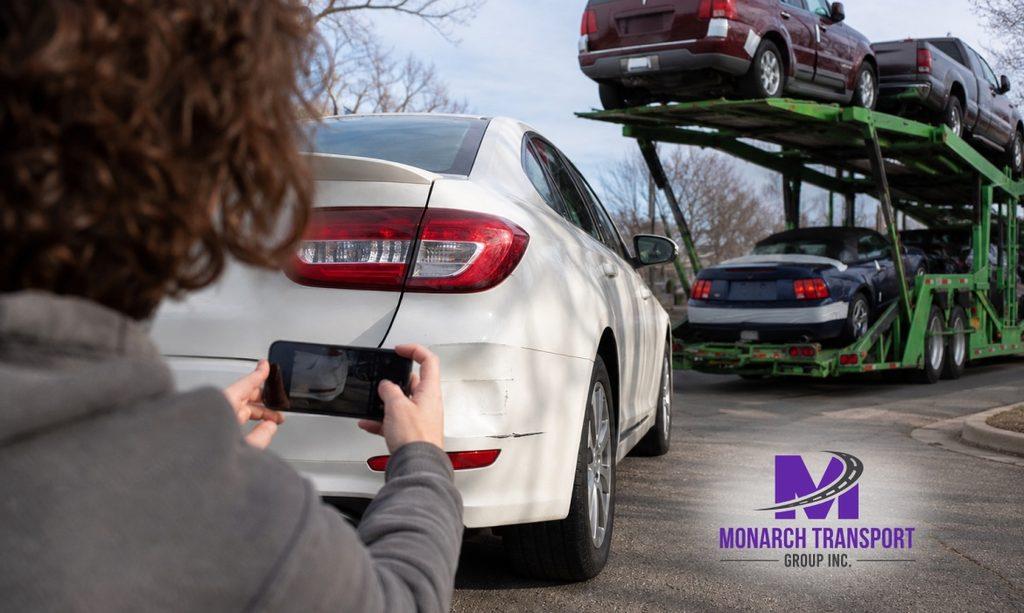
You can’t control every mile of the route once the truck pulls away. What you can control is how carefully you look at the car the moment it comes back. Handle it in this order, before the driver leaves:
Skipping these steps can make a legitimate claim much harder to prove. It isn’t about distrust of the driver – it’s about making sure there’s a paper trail if a dispute happens later, the same way you’d keep a receipt for anything else worth several thousand dollars.
How Common Is Car Damage During Transport?
The short answer: damage is possible, but it isn’t the normal outcome of car shipping. Most vehicles arrive without new damage, and when something does go wrong, it’s far more often a scratch, a paint chip, or a small dent than anything structural or mechanical. There’s no single, universally agreed-upon percentage that applies across every carrier, route, and vehicle type, so treat any exact figure you see quoted online with a healthy dose of skepticism.
The risk isn’t identical for every shipment, either. It shifts with the transport method – an open carrier leaves your car exposed to road debris and weather, while an enclosed trailer removes most of that exposure. It also shifts with the loading process itself, since low-clearance or heavily modified vehicles face different odds than an everyday sedan. We cover both of those in more detail further down.
What matters more than the odds is what happens around the edges of the trip. When a damage claim is disputed, the pickup and delivery records can be critical to establishing when the damage occurred. Once your car is loaded, you don’t get another look at it until delivery, sometimes days later, which is exactly why the pickup inspection matters so much: it’s the only record of the vehicle’s condition before it left your hands, and everything afterward gets measured against it. Understanding your vehicle’s insurance coverage during shipping before you need it is worth the ten minutes it takes.
What Causes Damage During Car Shipping?
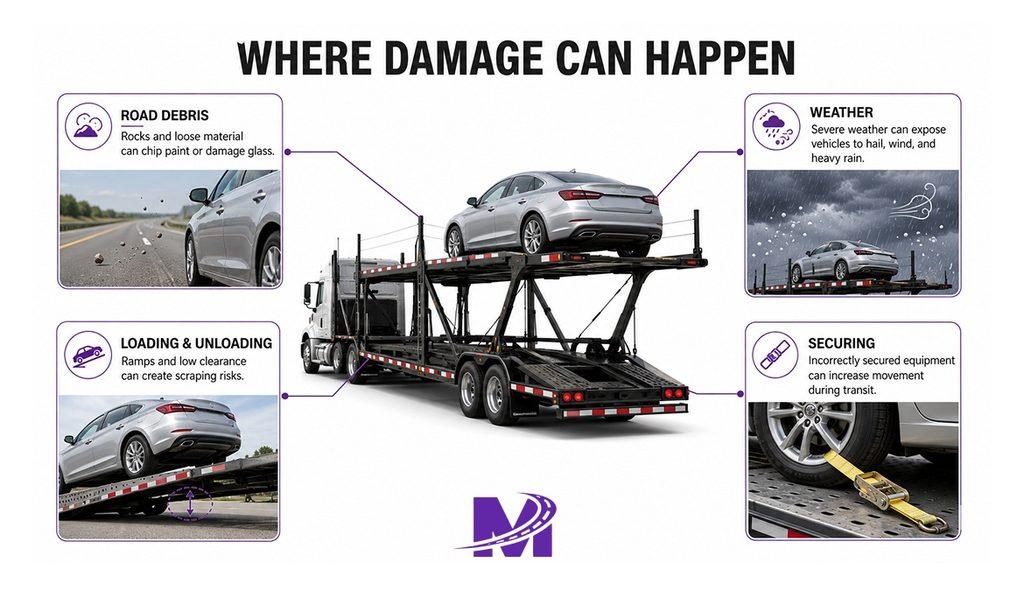
Damage during auto transport traces back to a handful of repeat causes, and none of them are particularly mysterious:
Choosing an experienced auto transport company with trained drivers and well-maintained equipment reduces nearly all of these causes. A lifted truck, a sports car with an aggressive front splitter, or a vintage vehicle with fragile trim all present different loading challenges – mentioning any unusual features when you book gives the carrier a chance to plan for it instead of discovering it in your driveway.
What Types of Car Damage Are Usually Covered?
Not every mark on your car after delivery qualifies as a transport-related claim, and that distinction trips people up more than anything else in this process. A claim generally needs to be new damage – something that wasn’t present at pickup and is documented at delivery – rather than a pre-existing scratch that went unnoticed the first time around.
| Damage Type | Usually Covered? | What Matters |
|---|---|---|
| Light scratches or paint chips | Yes, if documented at delivery | Common on open transport |
| Small dents | Depends on evidence and timing | Must be noted on the delivery BOL |
| Mechanical or electrical issues | Rarely | Cargo insurance typically excludes mechanical failure unless caused by an accident |
| Undercarriage/scraping damage | Case-by-case | Ground clearance and modifications affect the outcome |
| Severe accident damage | Yes, but rare | Handled under the carrier’s cargo liability policy |
Who Is Responsible for Car Damage During Shipping?
A covered transport-damage claim is generally handled through the carrier’s applicable cargo or liability coverage, depending on the circumstances and the carrier’s policy. Your personal auto insurance may or may not provide additional coverage, so check your policy before shipping.
If you booked through an auto transport broker, the broker typically coordinates the shipment but does not take possession of your vehicle. A damage claim is generally filed with the motor carrier responsible for transporting the vehicle. The broker may still help you contact the carrier and organize the claim paperwork.
How Does Car Shipping Insurance Work?
Carriers may carry cargo insurance that covers damage to vehicles in transit, but federal requirements do not mean every auto carrier has the same cargo coverage or limits. Before booking, verify the carrier’s insurance coverage, policy limits, and any exclusions that apply to your vehicle.
| Typically Covered | Typically Excluded |
|---|---|
| Damage during loading/unloading | Pre-existing wear and tear |
| Damage caused by driver handling | Mechanical or electrical failure unrelated to an accident |
| Accident-related damage | Personal items left inside the vehicle |
| Damage properly noted on the delivery BOL | Undisclosed modifications affecting risk |
The phrase “fully insured” does not tell you what types of damage are covered or how much coverage applies. Before booking, ask directly what the policy covers and what the deductible is, the same way you’d ask about expected delivery times for car shipping or any other detail that affects your shipment.
Why the Bill of Lading Matters
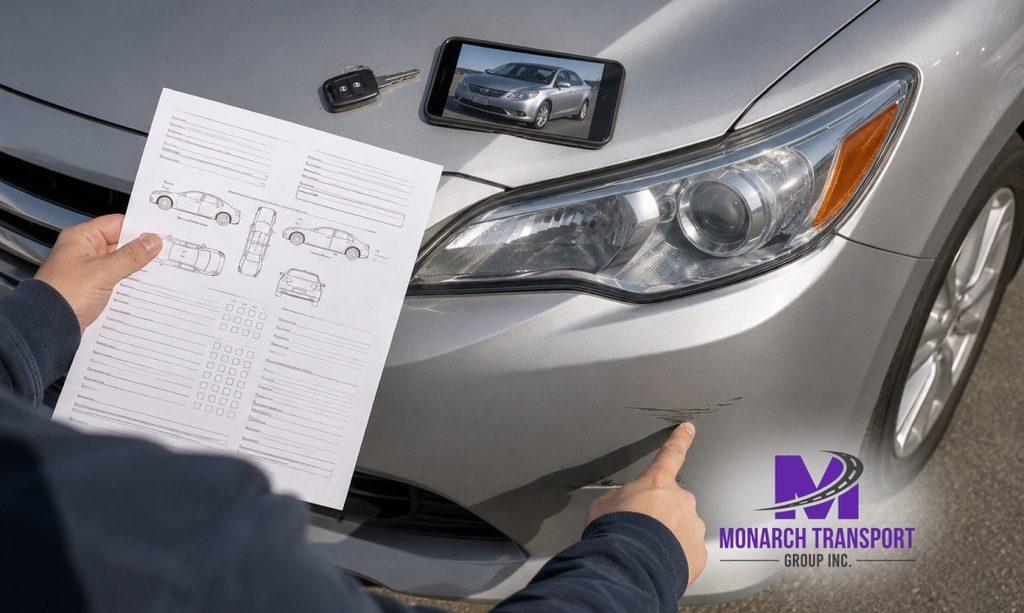
Think of the Bill of Lading as the before-and-after record for your vehicle. The driver fills it out at pickup, and it becomes the baseline everything else gets compared against. Damage that isn’t documented at delivery can be much harder to prove later – not impossible, but a lot more of an uphill argument – which is exactly why a rushed signature at either end is worth avoiding.
A few things worth doing at both pickup and delivery:
At delivery, you use the same document again – this time to compare the vehicle’s condition with what you recorded at pickup. For a full rundown of what to prepare in advance, our guide on preparing your vehicle for shipping covers the details.
How to File a Car Shipping Damage Claim
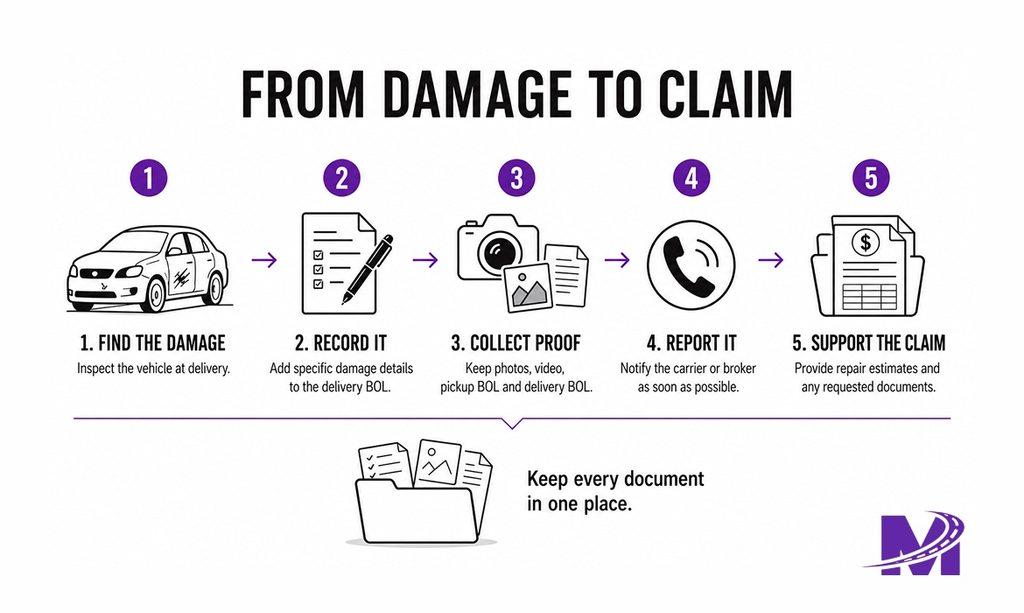
Once you’ve documented the damage at delivery, the next step is turning that evidence into a formal claim. The carrier or broker will typically tell you where to send it and which insurer is handling the case, so you’re not left guessing. Don’t worry about having every repair detail nailed down on day one – start with the documents that prove the vehicle’s condition and the damage you found, and build from there. The process generally looks like this:
Most delays trace back to missing paperwork rather than the carrier dragging its feet. If you kept your pickup BOL, your delivery BOL, and clear photos, you’re already in a stronger position than most people who end up filing a claim.
How Long Does a Car Shipping Damage Claim Take?
Timelines depend heavily on the complexity of the damage and how complete your documentation is when you file, so it’s best to think in ranges rather than expect a fixed number of days.
| Damage Severity | General Timeline | Why |
|---|---|---|
| Minor cosmetic (scratches, small dents) | Fastest to resolve | Straightforward repair estimates, clear liability |
| Moderate (multiple panels, disputed condition) | Takes longer | May need added photos or a third-party estimate |
| Severe/total loss | Longest | Deeper investigation, higher payout, more back-and-forth |
Well-documented claims consistently move faster than ones missing a signature, a photo, or a timestamp. If a claim feels stalled, a quick follow-up with the carrier or broker asking exactly what’s outstanding usually gets it moving again.
How Can I Prove the Damage Happened During Transport?
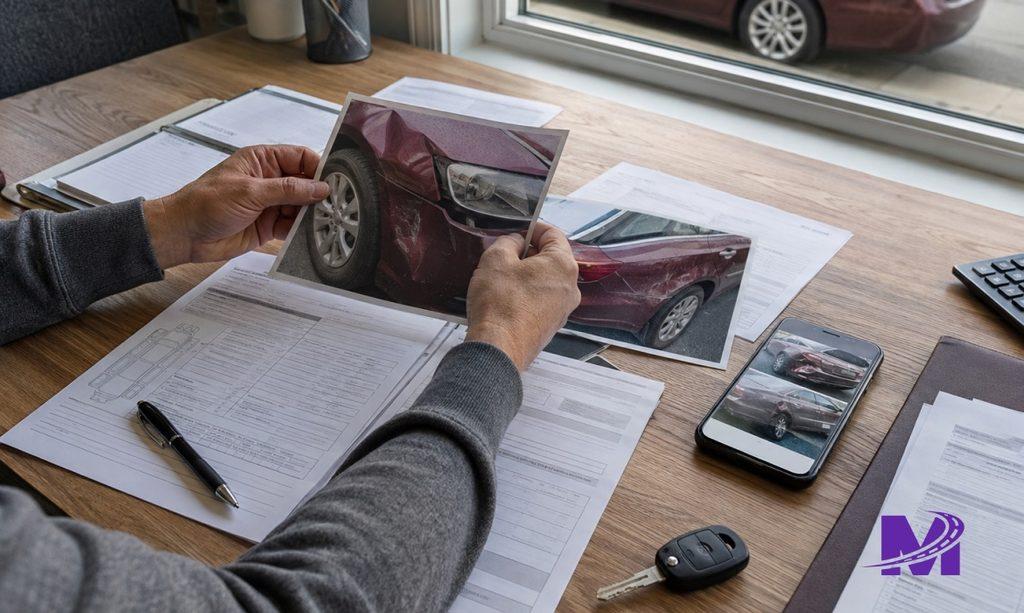
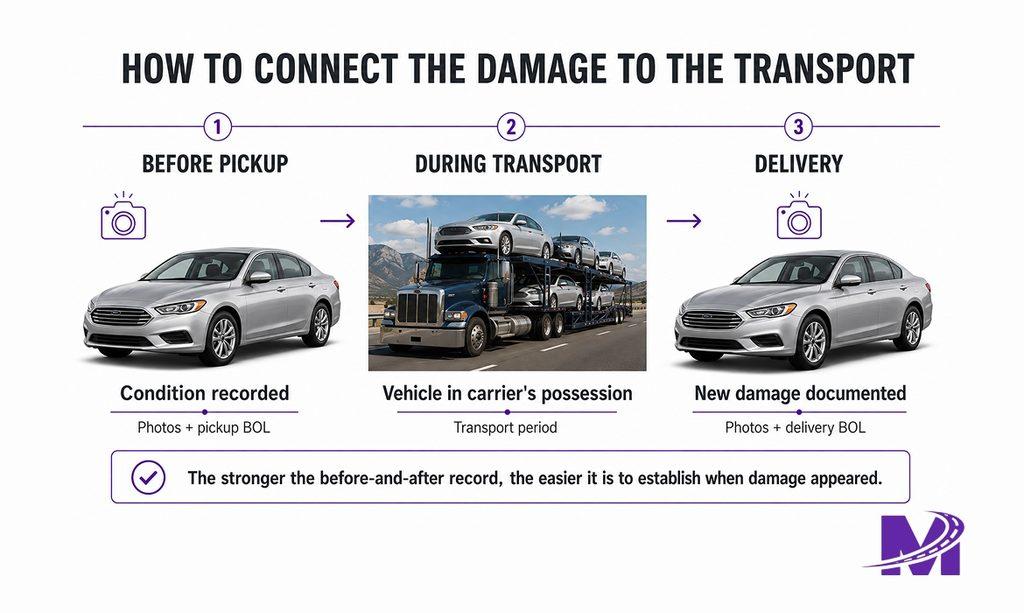
Proof comes down to timing and documentation, not opinion. Your best evidence is a pickup BOL showing the vehicle’s condition before it left, a delivery BOL noting the damage, and photos taken the moment the car was handed back to you – ideally timestamped, so there’s no ambiguity about when the damage was visible.
Without a documented “before” state, it becomes your word against the carrier’s, which is a hard position to argue from. That’s why walking the car carefully at pickup, even when you’re in a hurry and the driver is waiting, pays off later if anything goes wrong.
Common Mistakes That Can Hurt a Damage Claim
Even when the damage is completely legitimate, a simple misstep along the way can quietly undermine the claim. These are the ones we see most often:
| Mistake | Why It Hurts the Claim |
|---|---|
| Signing a “clean” Bill of Lading | No written proof the damage occurred during transport |
| Driving away before inspecting the car | Carrier can argue the damage happened afterward |
| Assuming “insured” means everything is covered | Mechanical issues and pre-existing wear are usually excluded |
| Waiting too long to report damage | Many carriers require notice within a short, defined window |
| Not disclosing modifications or low clearance upfront | Coverage may exclude damage tied to undisclosed changes |
Missing one of these steps can make it harder to establish when and how the damage occurred. Reading this list before your car ships, not after, is the difference between having options and having none.
How to Prevent Car Damage During Transport
Preventing damage starts with choosing the right transport option for your vehicle. Open transport works well for most everyday cars and is generally the more economical choice. Enclosed transport provides additional protection from road debris and weather, making it worth considering for classic, luxury, exotic, or low-clearance vehicles.
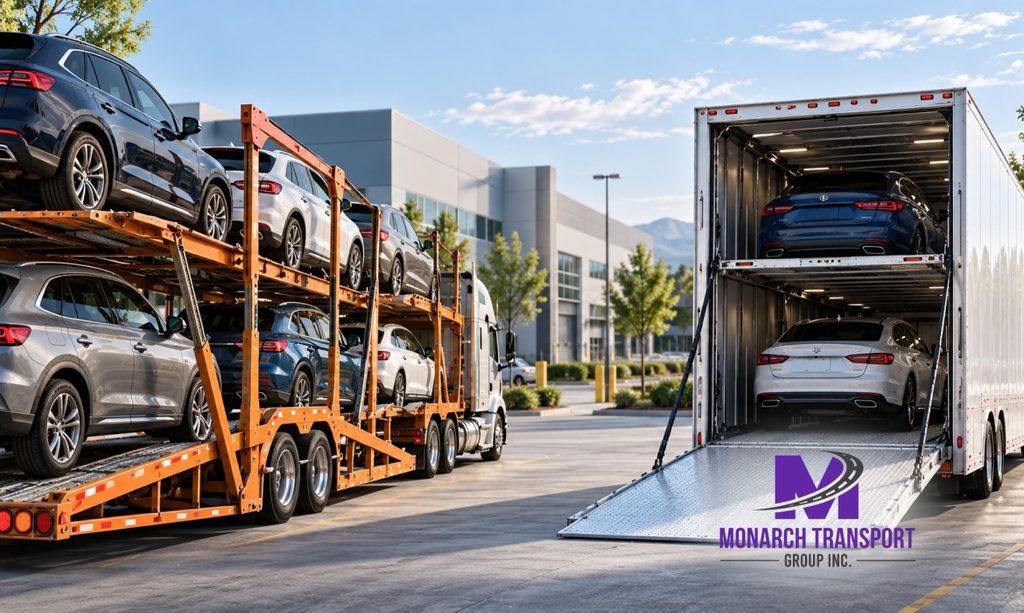
Your preparation matters, too. Remove personal and loose items from the vehicle, secure anything that could come loose during transit, and take clear photos of the car before pickup. Be sure to point out low ground clearance, aftermarket parts, or other modifications when booking so the carrier can plan for them.
The carrier you choose also matters. Working with an experienced car transport company can help reduce handling risks, especially when your vehicle requires special loading or unloading considerations. Before pickup, make sure you understand the inspection process and have a clear record of the vehicle’s condition.
If you’re planning a shipment, you can use Monarch’s shipping calculator to get an estimate for your route and compare the expected cost before booking.
Conclusion
Car damage during shipping can happen, but careful preparation and thorough documentation can make the process much easier if something goes wrong. Inspect the vehicle at pickup and delivery, take photos of its condition, and make sure any new damage is recorded on the delivery Bill of Lading before you sign.
Keeping a clear record is an important part of the car shipping process. Keep your pickup and delivery documents, photos, repair estimates, and communication with the carrier together until the shipment is fully resolved. Taking a few extra minutes at each stage gives you the evidence you may need if you have to file a damage claim.
FAQs About Car Damage During Shipping
No method can guarantee zero risk, but enclosed transport removes most of the exposure that causes damage on open trailers – road debris and weather chief among them. That’s why it’s the preferred option for classic, luxury, and low-clearance vehicles. The remaining risk mostly comes down to loading and unloading, which is why the driver’s experience still matters even inside a covered trailer.
Usually not. Most personal auto policies don’t cover a car while it’s in the hands of a commercial carrier – that’s what the carrier’s cargo insurance is for. Some comprehensive personal policies offer limited coverage for certain events, so it’s worth a quick call to your insurance agent before shipping to confirm whether yours applies. Don’t assume you’re covered without checking.
It’s much harder. Once you sign a BOL without noting damage, the vehicle is considered delivered in the condition you signed off on. Disputing it afterward is difficult without additional evidence, such as timestamped photos taken before you left. It isn’t automatically impossible, but the burden shifts to you to prove otherwise – which is why a careful inspection before signing is worth the extra few minutes, no matter how rushed the driver seems.
The window varies by carrier, but many want notice within a few days of delivery. Check your carrier’s policy, and if you’re in doubt, report it the same day you notice it. The longer you wait, the easier it is for a carrier to argue the damage happened after the car left their hands. If you’re unsure of the deadline, ask your broker or the carrier directly rather than guessing.
Generally: your signed pickup BOL, the signed delivery BOL noting the damage, photo and video evidence, and a repair estimate if you already have one. Missing any of these tends to slow the claim down. Keeping a written record of your communications with the carrier or broker also helps if there’s ever a dispute about timing.
Common exclusions include pre-existing damage, normal wear and tear, mechanical or electrical failure not caused by an accident, and damage linked to undisclosed modifications. Personal items left inside the vehicle also generally aren’t covered. If your vehicle has aftermarket parts or unusual clearance, mention it upfront to avoid coverage disputes later.
If a claim is disputed, documentation is what resolves it – the BOLs, photos, and any correspondence with the carrier. A broker can sometimes help escalate or mediate, but a well-documented claim rarely reaches that point. If it still can’t be resolved, some customers pursue mediation or, in rarer cases, legal action, though that’s usually a last resort.
Yes. Photographing your vehicle from multiple angles before pickup gives you an independent record of its condition, separate from whatever the driver writes on the BOL. Shoot in good lighting and get close-ups of any existing marks so there’s no ambiguity about what was already there, and store the photos somewhere easy to find so you’re not searching for them under pressure later.
Related articles
Auto Transport Broker vs. Carrier: Which One Should You Use?
IN THIS ARTICLE: What Is an Auto Transport Broker? What Is an Auto Transport Carrier? The Key Differences Side by Side Does Using a Broker Cost More? What Is “Dual

How Long Does It Take to Ship a Car? Realistic Timelines by Route & Season
IN THIS ARTICLE: The Two Timelines Nobody Separates (But Should) Realistic Transit Times by Route Distance Dispatch Time by Season: The Variable Nobody Controls How Route Type Affects Your Timeline

Cross-Country Car Shipping: How to Save Money Safely
IN THIS ARTICLE: Why “Cheap” Doesn’t Have to Mean “Dangerous” 1. Open Transport: The Industry Gold Standard for Savings 2. The Power of “Terminal-to-Terminal” Shipping 3. Timing the Market: The

Door-to-Door vs. Terminal-to-Terminal: Which Logistics Model Fits You?
IN THIS ARTICLE: Understanding the Two Primary Logistics Models Comparative Analysis: Door-to-Door vs. Terminal-to-Terminal The Financial and Temporal Mechanics of Shipping Models Geographical Impact: Urban vs. Rural Accessibility The Final

How State-to-State Car Transport Works: From Pickup to Delivery
IN THIS ARTICLE: Understanding the Auto Transport Ecosystem Choose Your Transport Type The Process of Shipping Calculating the Cost and Timeline of State-to-State Car Transport The 2026 EV Transport Protocol

10 Best Platforms to Buy or Sell Used Cars Online in 2026
IN THIS ARTICLE: Platform Comparison at a Glance Safety: How to Protect Yourself on Any Platform The Bottom Line: Choosing Your 2026 Auto Platform FAQ Buying or selling a used

Car Shipping by Train: Costs, Process & What to Expect in 2026
IN THIS ARTICLE: The Two Faces of Rail Transport: Consumer vs. Commercial Why Choose the Tracks? (The Human Perspective) Dimensions and Constraints: Will Your Car Fit? The “Hidden” Logic of
Car Shipping Deposit Explained – Why Brokers Ask for It and When You Pay
IN THIS ARTICLE: How the Auto Transport Payment Structure Works What the Car Shipping Deposit Actually Pays For How Much Should a Car Shipping Deposit Be? Broker Deposit vs. Carrier