
How Dealerships Ship Cars from Auto Auctions – Costs, Timeline & What to Expect
Calculate Shipping Cost
IN THIS ARTICLE:
- Auto Auction Transport at a Glance
- Why Auction Transport Is Different from Standard Car Shipping
- Auto Auction Transport Costs: What Dealerships Can Expect
- Auction-by-Auction Pickup Rules: What Carriers Must Know
- The Full Timeline: From Winning Bid to Dealer Lot
- How Dealerships Book Auction Transport: Options Compared
- Required Documentation for Auction Vehicle Pickup
- Multi-Vehicle Auction Loads: How Dealers Move Volume Efficiently
- 5 Mistakes Dealerships Make with Auction Transport (And How to Avoid Them)
- How Monarch Transport Group Supports Dealership Auction Transport
- Final Thoughts
- FAQ About Auto Auction Transport
Auto auctions are one of the most efficient ways for dealerships to acquire inventory – but winning the bid is only half the job. Getting the vehicle from the auction yard to your lot quickly and cost-effectively is where most dealers lose time, money, and margin.
Whether you’re sourcing from Manheim, Copart, or IAAI (IAA), the logistics that follow a winning bid are just as important as the purchase itself. Storage fees accumulate fast. Pickup windows are short. And carriers who don’t know auction-specific procedures can cause costly delays.
This guide walks through exactly how dealerships ship cars from auto auctions – covering costs, timelines, documentation, carrier options, and how to avoid the most common mistakes.
Auto Auction Transport at a Glance
Why Auction Transport Is Different from Standard Car Shipping
Shipping a vehicle from an auto auction isn’t the same as arranging consumer transport. Auction yards operate on strict timelines with specific documentation requirements, app-based entry systems, and limited flexibility for late arrivals.
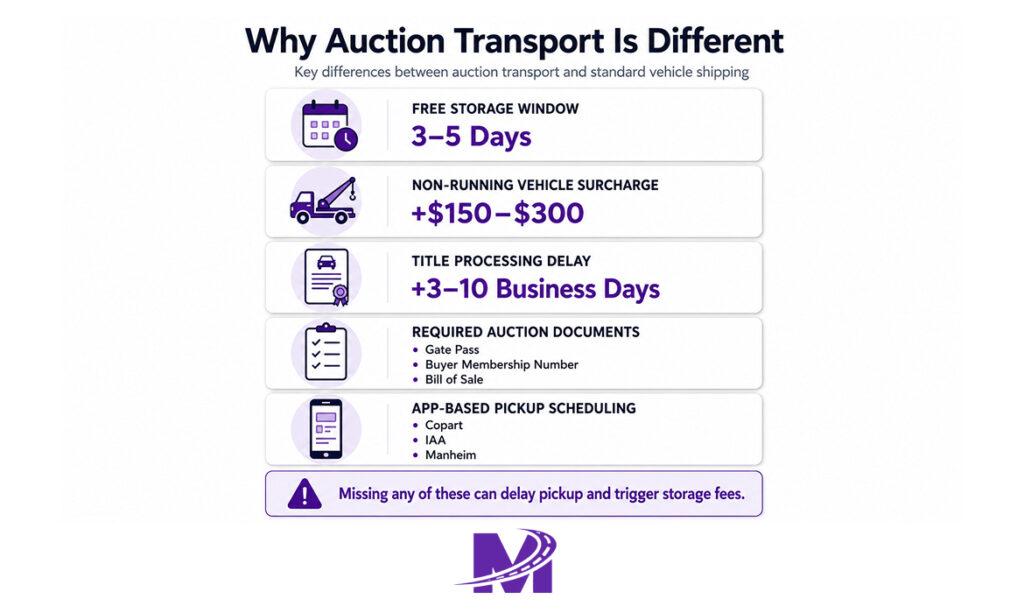
Key differences dealerships need to understand:
Understanding these variables before you book transport is the difference between a clean pickup and a surprise invoice.
Auto Auction Transport Costs: What Dealerships Can Expect
Shipping costs for auction vehicles fluctuate based on distance, vehicle condition, carrier type, and season. Below is a realistic breakdown for dealerships planning their transport budget.
Cost by Distance
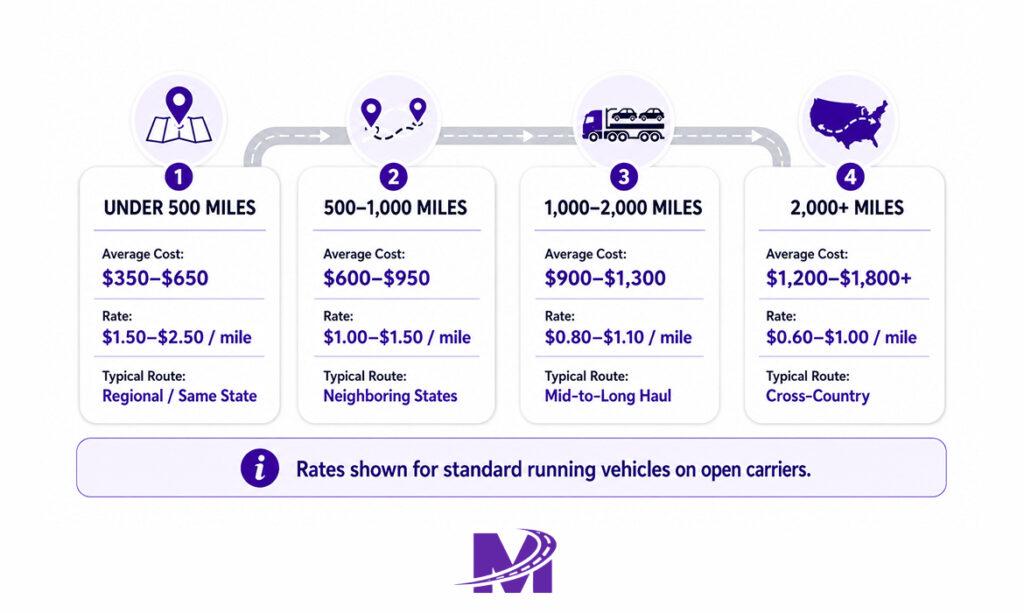
Distance is the single largest cost driver in auto auction transport. Rates per mile decrease as distance increases, but total cost rises significantly on long hauls.
| Distance | Avg. Cost | Rate per Mile | Typical Route |
| Under 500 mi | $350 – $650 | $1.50 – $2.50 | Regional / Same State |
| 500 – 1,000 mi | $600 – $950 | $1.00 – $1.50 | Neighboring States |
| 1,000 – 2,000 mi | $900 – $1,300 | $0.80 – $1.10 | Mid-to-Long Haul |
| 2,000+ mi (Cross-Country) | $1,200 – $1,800+ | $0.60 – $1.00 | Coast-to-Coast |
*Rates are market estimates for standard vehicles in good running condition on open carriers. Non-running vehicles, oversized units, or peak-season routes may cost more. For a quote tailored to your auction location and vehicle type, visit our auction auto transport service page.
Open vs. Enclosed Transport
For most auction buys – standard used vehicles, fleet units, off-lease inventory – open transport is the practical and cost-efficient default. Enclosed transport is reserved for high-value, exotic, or classic vehicles where cosmetic risk justifies the premium.
| Factor | Open Transport | Enclosed Transport | Best For |
| Cost | Standard rate | +30–40% premium | Volume buys: Open |
| Capacity | 7–10 vehicles/load | 2–6 vehicles/load | Auction bulk: Open |
| Protection | Standard | Full weatherproof | Luxury/Classic: Enclosed |
| Speed | Faster, more carriers | Slower to book | Urgent moves: Open |
| Best For | Standard inventory | High-value units | – |
For more information on choosing between these options, see our guide on Open vs. Enclosed Auto Transport.
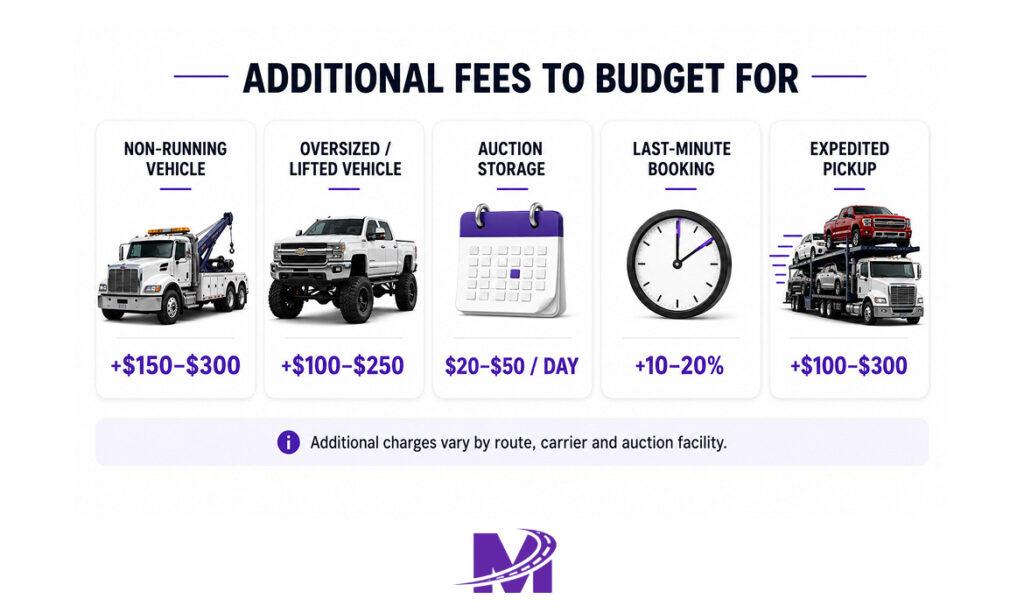
Additional Fees to Budget For
Auction-by-Auction Pickup Rules: What Carriers Must Know
Each major auction chain has its own system for vehicle release. Before booking transport, confirm the specific procedures for the yard where your vehicle is located.
| Auction | Free Storage | Daily Fee After | Carrier App | Gate Pass Required |
| Manheim | 3 days | $20–$40/day | Manheim Express | Yes |
| Copart | 3 days | $25–$50/day | Copart App / PIN | Yes + Buyer ID |
| IAAI (IAA) | 5 days | $20–$45/day | IAA Transport | Yes |
| ADESA | 2–5 days* | $25–$50/day | Varies by site | Yes |
| SmartAuction | Varies | Varies | N/A | Confirm with site |
* ADESA free storage windows vary by location and sale type. Confirm with the individual yard before booking.
For questions about FMCSA carrier licensing requirements or verifying a carrier’s USDOT status, use the official Federal Motor Carrier Safety Administration lookup tool.
The Full Timeline: From Winning Bid to Dealer Lot
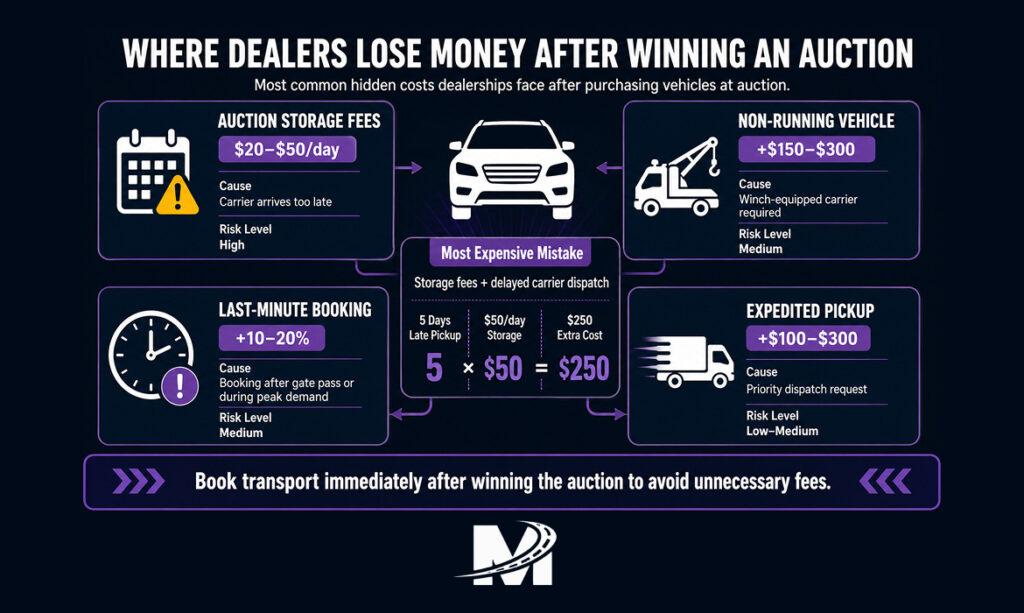
The total time from auction win to vehicle arrival on your lot typically runs 5–14 days, depending on route distance and how quickly documentation is processed.
| Stage | Timeframe | Who Handles It | Risk If Delayed |
| Payment & Clearance | Same day – 24 hrs | Dealer / Auction | Clock starts for storage |
| Gate Pass & Release Docs | 1–3 days | Auction Admin | Storage fees begin |
| Carrier Booking | Same day as win | Dealer / Broker | Missed pickup window |
| Carrier Pickup | 1–5 days | Carrier | Late fees, no-shows |
| Transit | 1–14 days by route | Carrier | Customer delays |
| Delivery & Inspection | Same day as arrival | Dealer / Staff | Unrecorded damage |
The critical window is the first 24–48 hours after your bid clears. Book transport immediately – before title paperwork is finalized – to ensure a carrier is lined up when the gate pass is issued.
How Dealerships Book Auction Transport: Options Compared
Dealerships have several options for arranging transport after an auction purchase. Each comes with different trade-offs in cost, control, and speed.
Option 1: Auction-Organized Shipping
Major auctions like Manheim and IAAI offer in-house transport coordination. It’s convenient – one click or call handles everything. The downside: convenience comes at a premium. You pay above-market rates and have limited visibility into which carrier actually moves your vehicle. Best for dealers who buy low volumes and prioritize simplicity over margin.
Option 2: Direct Carrier Relationships
Dealers who move consistent volume often build direct relationships with regional carriers. This provides pricing stability and reliable service – but requires time to vet and manage those relationships, and gaps in coverage emerge for routes outside a carrier’s network.
Option 3: Auto Transport Broker
An experienced broker accesses a vetted network of carriers and handles coordination on your behalf – including auction-specific requirements like gate passes and pickup scheduling. The broker markup (typically 15–20%) is offset by faster dispatch, compliance expertise, and the ability to coordinate multi-vehicle loads.
For dealerships buying from multiple auction locations or moving 5+ vehicles at a time, a broker provides consistency that’s difficult to replicate in-house. Monarch Transport Group specializes in exactly this – coordinating dealership auto transport with full auction facility familiarity.
Option 4: Load Boards
Load boards let you post shipments and receive carrier bids. Rates can be competitive, but vetting is entirely your responsibility. This works for experienced logistics teams, but adds friction for dealerships without dedicated transport staff.
Required Documentation for Auction Vehicle Pickup
Missing or incomplete paperwork is one of the most common causes of delayed pickup – and delayed pickup means storage fees. Here is what your carrier typically needs to present at the auction gate:
For salvage titles – common with Copart and IAAI vehicles – the title reassignment process may add 3–10 business days before the vehicle can be released. Plan transport around this window rather than assuming immediate availability.
For guidance on title transfer regulations, the NHTSA vehicle title resources provide state-by-state information on documentation requirements.
Multi-Vehicle Auction Loads: How Dealers Move Volume Efficiently
For dealerships acquiring multiple vehicles per auction cycle, coordinating individual shipments is both expensive and time-consuming. Multi-vehicle loads – typically 5 to 10 units per carrier run – reduce per-unit costs significantly and streamline the logistics process.
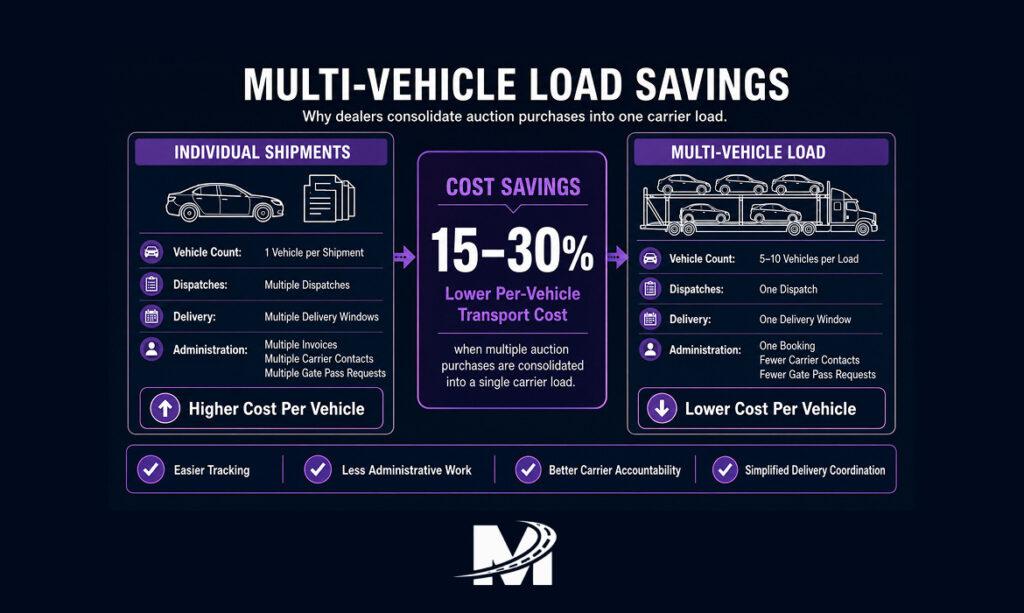
Key advantages of consolidated auction transport:
This approach works particularly well for dealer groups acquiring inventory across multiple auction sites and consolidating delivery to a central lot or regional distribution point.
For rental companies or fleet operators moving similar volumes, we also coordinate rental fleet auto transport with the same multi-load efficiency.
5 Mistakes Dealerships Make with Auction Transport (And How to Avoid Them)
1. Waiting Until the Gate Pass Is Ready to Book Transport
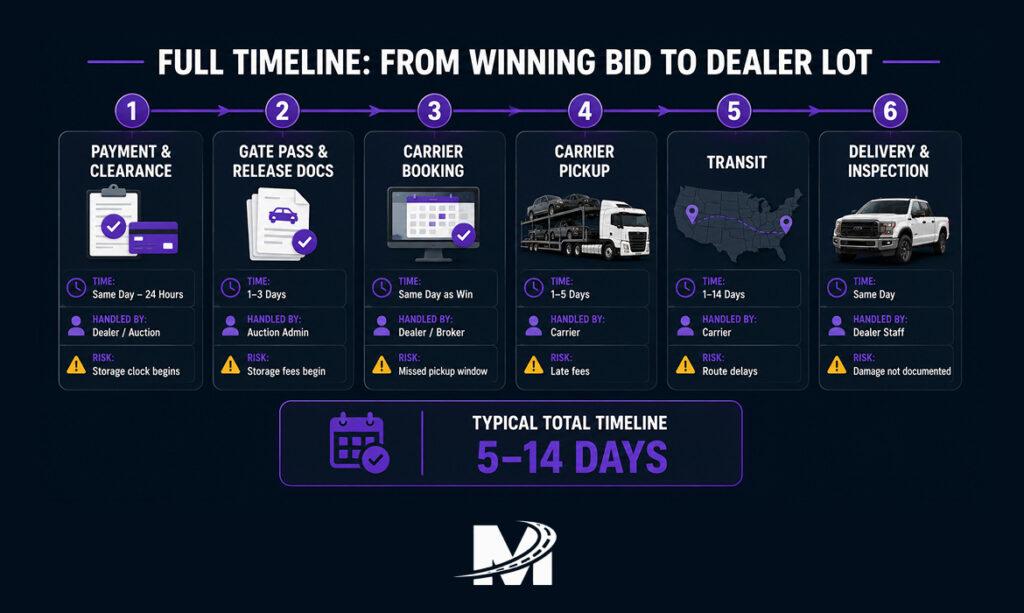
The gate pass and carrier booking should run in parallel, not in sequence. By the time your gate pass is issued, your carrier should already be confirmed. Waiting to book until paperwork clears wastes 1–3 days of your free storage window.
2. Choosing the Lowest Bid Without Vetting the Carrier
A carrier who quotes $200 below market and then fails to show up – or arrives without proper auction credentials – costs far more than the original savings. Verify USDOT number, cargo insurance, and familiarity with the specific auction’s check-in process.
Our guide on how to choose an auto transport company covers exactly what to verify before committing.
3. Assuming All Auctions Have the Same Procedures
Copart requires a PIN-based gate system. Manheim uses its own carrier portal. Municipal impounds may require cash payment on-site. Each location has different rules, and a carrier unfamiliar with the system will be turned away – or worse, accepted and delayed.
4. Underestimating Non-Running Vehicle Costs
If your auction purchase doesn’t run, doesn’t roll, or won’t brake, your carrier must be winch-equipped. Not all carriers are. Failing to disclose vehicle condition at booking results in last-minute cancellations, rebooking delays, and additional fees.
5. Skipping the Delivery Inspection
Always complete a condition report – photos and written notes – at both pickup and delivery. This is your only documentation for any damage claims. Carriers are not liable for pre-existing damage, so a clear pre-transport inspection record protects both sides.
For tips on preparing vehicles before transport, see our step-by-step car shipping checklist.
How Monarch Transport Group Supports Dealership Auction Transport
Monarch Transport Group coordinates auction vehicle transport for dealerships and dealer groups across the United States. Our team is familiar with the pickup procedures, documentation requirements, and time constraints at major auction facilities, including Manheim, Copart, IAAI, and ADESA.
We handle:
For high-volume dealership transport needs, including dealer-to-dealer transfers and acquisition logistics, see our dealership auto transport services.
To discuss your auction transport needs or get a quote, contact our team or use our shipping calculator for an estimate.
Final Thoughts
Auction transport is a time-sensitive, process-specific part of dealership operations that directly affects inventory velocity and per-unit margin. Getting it right means booking early, using experienced carriers, understanding the rules at each auction facility, and having a clear documentation process in place.
Whether you’re moving one vehicle or a full load from Manheim every week, the logistics behind auction pickup deserve the same attention as the purchase decision itself.
Monarch Transport Group is ready to support your dealership’s auction transport needs – with the process knowledge, carrier network, and B2B logistics experience to keep your inventory moving. Get in touch with our team today.
FAQ About Auto Auction Transport
Auto auction transport typically costs between $350 and $1,800+, depending on the shipping distance, vehicle condition, trailer type, and season. Non-running, oversized, or expedited shipments may incur additional charges.
With a confirmed booking and gate pass in hand, most carriers can schedule pickup within 1–3 business days. During peak season or on high-demand routes, allow 3–5 days. Book immediately after your bid clears – don’t wait for paperwork.
Yes, but the carrier must be equipped with a winch or forklift-compatible loading system. You must disclose non-running status at the time of booking. Expect an additional $150–$300 fee.
The carrier typically needs the gate pass, their USDOT/MC number, proof of cargo insurance, and the vehicle release authorization. For Copart and IAAI, carriers also need to pre-register through the auction’s proprietary carrier app.
Carriers are required to carry cargo insurance, but coverage limits and deductibles vary. Before booking, confirm the carrier’s insurance certificate and understand what’s covered in transit versus at the auction yard. Monarch’s shipping manager can walk you through coverage details before your shipment is booked.
A carrier owns the trucks and employs the drivers. A broker coordinates logistics on your behalf, accessing a network of carriers and handling documentation. For most dealerships, an experienced broker saves time and reduces operational risk – especially for auction-specific logistics.
Yes. We coordinate multi-vehicle loads of 5–10 units per shipment with consolidated routing, which reduces per-unit cost and simplifies scheduling. This is particularly effective for dealer groups buying regularly at auction. For similar multi-load services for fleet operators, see our auction auto transport page.
The best way to avoid storage fees is to book transport as soon as your auction payment is confirmed. Most major auctions offer only 3–5 days of free storage, after which daily charges apply until the vehicle is picked up.
Yes. Dealers can consolidate vehicles from multiple auction locations into multi-vehicle shipments when routing and timing allow. This approach helps reduce per-unit shipping costs and simplifies logistics for high-volume buyers.
Related articles
Why Is Car Shipping So Expensive? (And 7 Ways to Pay Less)
IN THIS ARTICLE: The Real Reason Summer Prices Spike (It’s Not What You Think) The 5 Factors That Push Summer Prices Up Which Summer Month Is Actually the Most Expensive?
Snowbird Return – How to Ship Your Car Back North
IN THIS ARTICLE: Why the Return Trip North Is Actually Easier to Ship When to Book Your Northbound Shipment (June Timeline) Most Popular Snowbird Return Routes How to Prepare Your

Seasonal Car Shipping Tips: What to Know Before Shipping in Summer
IN THIS ARTICLE: Why Summer Is the Most Demanding Season for Auto Transport The Price Reality: How Much More Does Summer Shipping Cost? The Heat Problem – What Open Trailers

Motorcycle Shipping Costs in 2026 – Full Price Breakdown by Route, Method & Bike Type
IN THIS ARTICLE: Why Motorcycle Shipping Prices Vary So Wildly Cost Breakdown by Distance – What Every Route Costs in 2026 Cost Breakdown by Transport Method – Open vs. Enclosed

How to Ship Your Electric Vehicle (EV) Safely in 2026
IN THIS ARTICLE: The Reality of EV Logistics in 2026 Why EVs Change the Math: The Weight Factor The “50% Rule”: Battery Safety and State of Charge (SoC) Vetting the

How to Prepare Your Car for Shipping: Step-by-Step Checklist
IN THIS ARTICLE: Why Preparation is not just a Chore Step 1: Selecting Your Logistics Partner Step 2: The Evidence Phase – Cleaning and Documentation Step 3: Protecting the Extravagant

How to Ship a Car You Just Bought Online
IN THIS ARTICLE: Step 1: Get Quotes Before the Deal Closes Step 2: Choose Open or Enclosed Transport Step 3: Coordinate Pickup with the Seller Step 4: Inspect and Sign

How State-to-State Car Transport Works: From Pickup to Delivery
IN THIS ARTICLE: Understanding the Auto Transport Ecosystem Choose Your Transport Type The Process of Shipping Calculating the Cost and Timeline of State-to-State Car Transport The 2026 EV Transport Protocol