
IN THIS ARTICLE:
- Key Takeaways
- What Is a Car Carrier Truck?
- How Does a Car Carrier Truck Work?
- Single-Car vs. Multi-Car Carrier: What Is the Difference?
- How Multi-Car Carriers Work
- Open vs. Enclosed Car Carriers
- How Are Cars Secured on a Car Carrier?
- What Types of Vehicles Can Car Carriers Transport?
- Where Can a Car Carrier Truck Pick Up and Deliver a Vehicle?
- How Much Does Car Carrier Shipping Cost?
- Single-Car vs. Multi-Car Carrier: Which Setup Fits Your Shipment?
- FAQs About Car Carrier Trucks
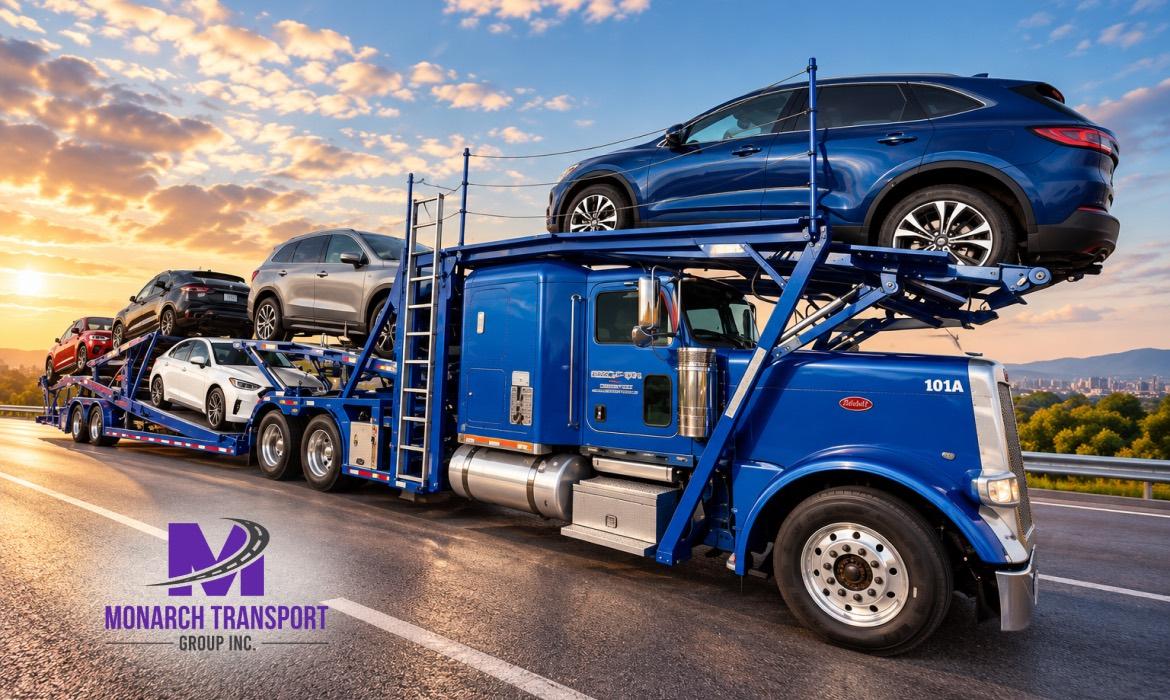
A car carrier truck, also called a car hauler or auto transport truck, is a truck-and-trailer combination designed to move vehicles over the road using ramps, hydraulic decks, and tie-down systems. Most haul several vehicles per trip, while single-car rigs move just one, which is why shipments are described as multi-car or single-car transport. The right setup depends on the vehicle’s size, whether it runs, where it is picked up, and how much protection it needs.
This guide covers how car carrier trucks are loaded, how vehicles are placed and secured, the differences between single-car and multi-car rigs, and when each option is the right choice.
Key Takeaways
Need to Ship a Vehicle?
Whether you’re transporting a standard car, an oversized vehicle, or an RV, Monarch Transport Group can help you find the right transport option for your needs. Get a free auto transport quote to estimate your shipping cost and plan your move.
Call 855-516-9757 to discuss your transport needs.
What Is a Car Carrier Truck?
A car carrier truck is a tractor-trailer combination designed to transport vehicles over the road. It uses ramps or hydraulic decks to lift cars into position, then fastens each one to the trailer so it cannot shift in transit. Most car carriers haul several vehicles at a time, and single-car rigs are built to move one.
Car Carrier vs. Car Hauler vs. Auto Transport Truck
These terms describe the same kind of rig. “Car carrier,” “car hauler,” “auto transport truck,” and “vehicle transport truck” are used interchangeably, and “car transporter” appears in regulations and industry documents. In shipping, “carrier” can also mean the trucking company that owns the rig, a role that differs from the broker’s, as explained in the difference between an auto transport broker and a carrier.
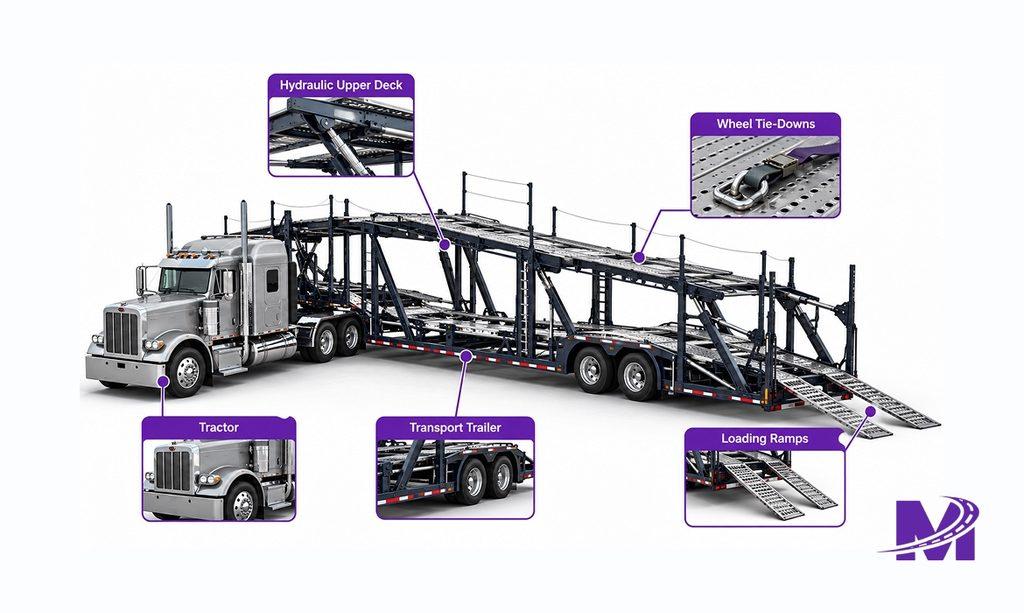
What Parts Make Up a Car Carrier?
A typical rig is built from a handful of components:
Federal highway rules treat these rigs as specialized equipment. Under the FAST Act, states may not impose a length limit of less than 80 feet on certain automobile transporters, which allows the long combinations these rigs use.
How Does a Car Carrier Truck Work?
A car carrier truck loads vehicles onto a special trailer, arranges them to balance the weight, and secures each one with approved tie-downs before transport. Depending on the trailer, cars are loaded using ramps, hydraulic decks, lift gates, or a winch. Unloading is done in the reverse order. Here’s what happens at each step.
1. Preparing the Carrier for Loading
Before loading, the driver checks the rig’s decks, ramps, hydraulic controls, and straps. The driver also makes sure the pickup spot has enough space, overhead clearance, and level ground, since a long rig can’t load safely just anywhere.
Next, the driver plans the load. They look at each vehicle’s size and weight and decide the drop-off order, so they don’t have to move several cars just to unload the first one.
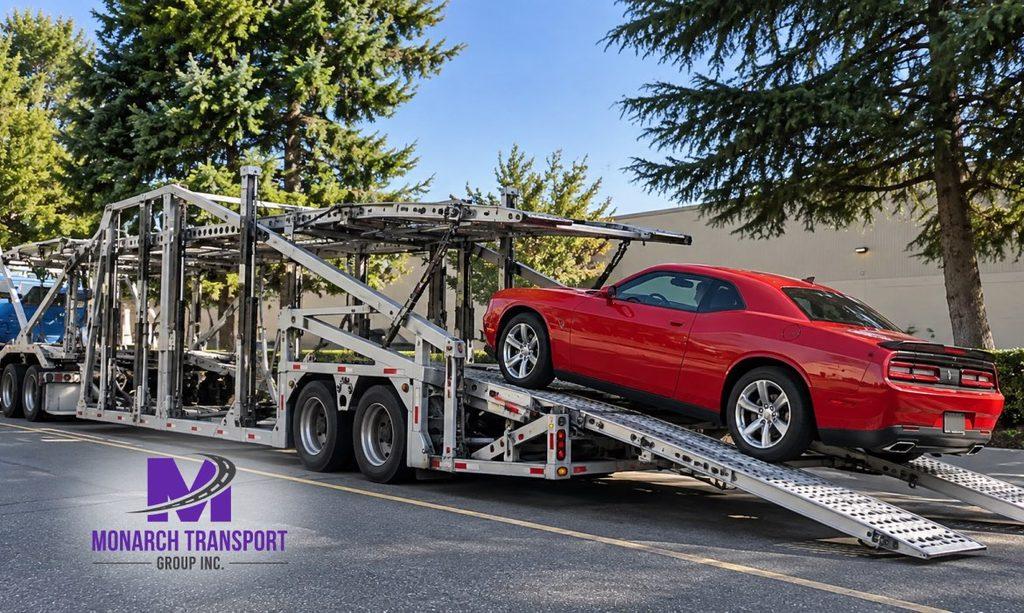
2. Loading Vehicles onto the Carrier
The loading method depends on the vehicle and the rig:
3. Positioning Vehicles on the Trailer
Where a car goes on the trailer is a planning decision, not a matter of parking it wherever there is space. Drivers weigh vehicle dimensions, deck clearance, and weight distribution over the axles, and they leave enough space between vehicles for straps and for people to move around them.
A tall SUV or heavy pickup needs a spot that matches the deck height and load rating. Low sports cars may need a gentler ramp angle. That’s why it’s important to give the exact year, make, and model when you ask for a quote.
4. Securing Cars for Transport
Once a vehicle is in position, it is fastened to the trailer with straps at its wheels or other approved attachment points, tensioned, and checked again before the truck moves. The securement process has its own section below.
5. Unloading the Vehicles
Unloading runs in reverse: straps come off, decks lower, and cars are driven or pulled off. The order depends on how the vehicles were placed and on the delivery stops. At delivery, the driver and vehicle owner compare the car’s condition against the inspection report made at pickup.
Single-Car vs. Multi-Car Carrier: What Is the Difference?
A single-car carrier moves one vehicle per trip using dedicated equipment. A multi-car carrier moves several vehicles on one trailer. Neither option is always better; each fits different shipping needs.
| Feature | Single-Car Carrier | Multi-Car Carrier |
| Vehicles per trip | 1 | Several |
| Typical equipment | Flatbed, tilt or enclosed trailer | Open or enclosed multi-car trailer |
| Loading | Direct and often specialized | Multi-level loading with hydraulic decks |
| Access | Needs room for a flatbed or specialized trailer | Requires more room to maneuver |
| Common uses | RVs, motorhomes and other oversized vehicles | Standard vehicle shipping, dealership deliveries |
| Cost per vehicle | Considerably higher | Lower |
How Single-Car Carriers Work
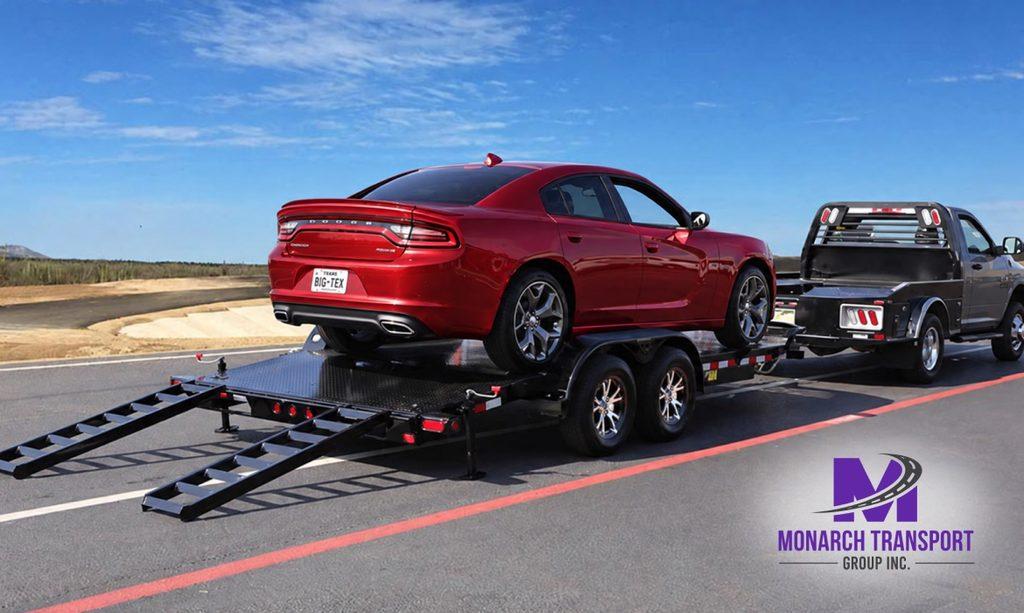
A single-car carrier is a truck and trailer setup that hauls one vehicle, so the equipment and the trip are dedicated to a single shipment. Because the full cost of the trip falls on one vehicle, this setup is rarely practical for a regular car. Monarch’s standard service uses multi-car car haulers, and solo transport on a trailer is mainly used for RVs and other oversized vehicles.
How Is a Vehicle Loaded onto a Single-Car Carrier?
The method depends on the vehicle and the trailer. A flatbed or low-deck trailer is typically loaded by ramp or tilting deck, and the vehicle is then secured for the trip. With only one vehicle on board, the driver does not have to plan around other cargo, and securing it is a single, focused job.
When Is a Single-Car Carrier Used?
Solo transport usually comes up when a vehicle doesn’t fit a standard multi-car hauler:
For regular cars, SUVs, and pickups, a multi-car hauler is the standard option.
Does Single-Car Transport Cost More?
Yes. Because the equipment and the trip serve one vehicle instead of being shared across several, single-vehicle transport costs considerably more than shipping on a multi-car hauler. That’s why it’s mainly used for vehicles that can’t go on a standard car hauler. The exact price depends on distance, vehicle size and weight, equipment, access at pickup and delivery, urgency, and route. The best way to know your cost is to get a quote.
How Multi-Car Carriers Work
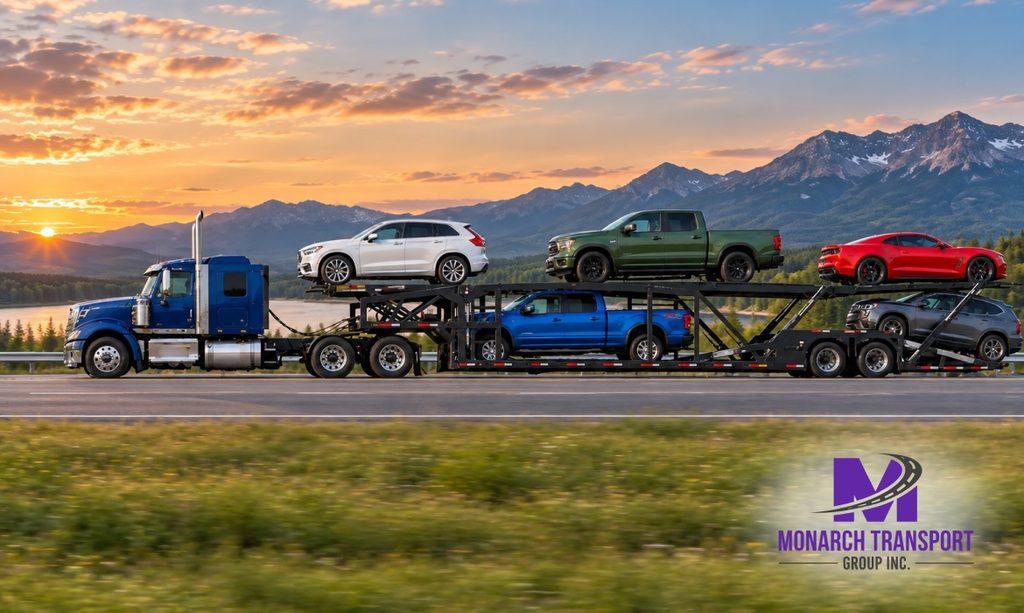
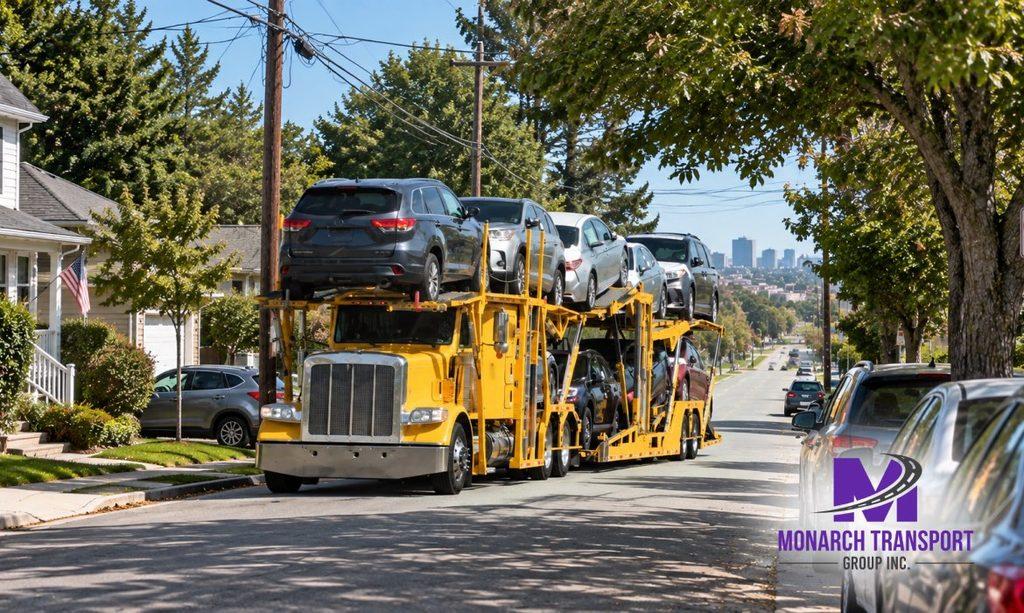
A multi-car carrier is a trailer with two decks or several loading positions that transports multiple vehicles in a single trip. It is the standard rig for most vehicle shipping, and it is what people usually picture when they think of a car hauler on the highway.
How Many Cars Can a Car Carrier Hold?
A large open car carrier can move several passenger vehicles on two levels, but the exact number depends on the trailer design and the size of the vehicles. Enclosed trailers usually carry fewer vehicles, and flatbeds often carry just one or two. If the load has large SUVs or trucks, it holds fewer vehicles than a load of compact cars. There isn’t one number that fits every truck.
How Are Cars Loaded onto a Multi-Car Carrier?
On many open trailers, the process follows a similar order:
The exact order depends on the trailer design and on the planned drop-off sequence.
Why Does Loading and Unloading Order Matter?
Vehicles are loaded so that the ones leaving first are not blocked by the ones staying on board, and so that weight is spread across the trailer. On multi-stop routes, the driver plans this before the first car goes on.
Open vs. Enclosed Car Carriers
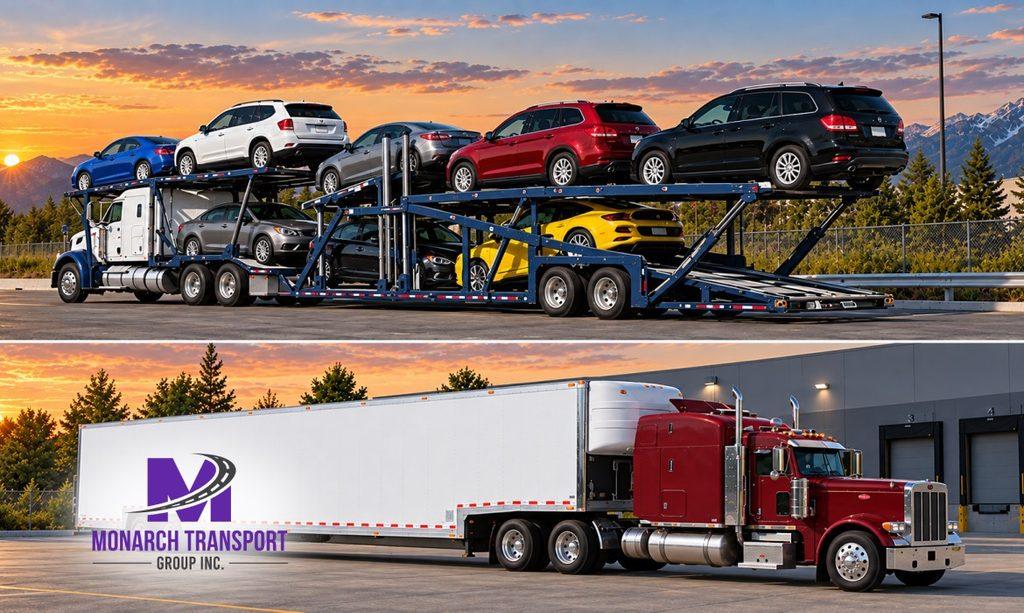
Open and enclosed car carriers load vehicles in similar ways, but they protect them differently. Open carriers have exposed decks, while enclosed carriers have walls and a roof that surround the vehicles. The choice affects protection, capacity, and price.
How Open Car Carriers Work
Open trailers usually have two levels, open sides, and hydraulic decks. Because they hold more vehicles, the trip cost is shared across more shipments, which is why open transport is generally the more affordable option. The trade-off is exposure to weather and road debris. Monarch’s comparison of open vs. enclosed auto transport explains how to decide.
How Enclosed Car Carriers Work
Enclosed trailers have walls and a roof, and they load through a hydraulic lift gate or ramp. In many configurations, they carry fewer vehicles than an open trailer, and the equipment is less common, which is part of why enclosed transport generally costs more.
Open vs. Enclosed: What Changes for the Shipment?
| Factor | Open Trailer | Enclosed Trailer |
| Protection | Exposed to weather and road debris | Covered on all sides |
| Capacity | Generally more vehicles per trip | Generally fewer vehicles per trip |
| Typical vehicles | Everyday cars, SUVs and trucks | Luxury, classic, exotic and high-value cars |
| Availability | Widely available | More limited |
| Price | Generally lower | Generally higher |
How Are Cars Secured on a Car Carrier?
Cars are secured on a car carrier with straps or other approved tie-downs that hold each vehicle to the trailer at several points. The straps are tightened so the car does not move during braking, turning, or road bumps. The driver checks the straps again before leaving.
Federal rules apply to this step. The FMCSA’s cargo securement rules cover commercial vehicles operating in interstate commerce and include specific requirements for automobiles, light trucks, and vans weighing 10,000 pounds or less.
Wheel Straps and Tie-Down Systems
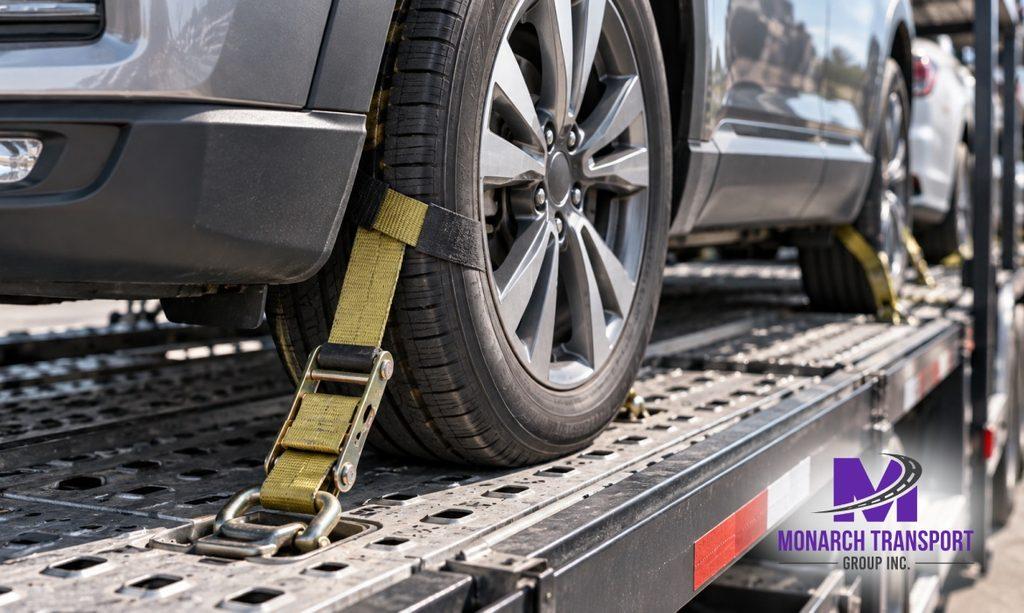
Most cars are held with straps that wrap over the tires or attach to the vehicle’s frame or other approved attachment points, then anchor to the trailer. Which method is used depends on the vehicle, its suspension, and its design. FMCSA requires that each tie-down be attached and secured so it cannot loosen, unfasten, or release while the vehicle is in transit.
Where Are the Straps Attached?
Many passenger vehicles are secured at four wheel positions, although the exact method depends on the vehicle and the trailer. Lowered cars, vehicles with unusual wheels, and electric vehicles may need different attachment points, which is another reason to describe the vehicle accurately when you request a quote.
How Does Weight Distribution Affect Transport?
Straps keep a car in place, but where each vehicle sits affects how the trailer drives. If a heavy pickup and a light compact are in the wrong spots, the trailer can be unbalanced. Drivers plan the loading order to balance the weight and adjust it for each stop along the route.
Can Cars Move During Transport?
Proper securement is designed to prevent movement, and drivers check it before departure. Even so, a vehicle on a trailer is exposed to road vibration for the whole trip. If you notice anything at delivery, note it on the inspection report before you sign, then follow the steps in what to do if your car is damaged during shipping.
What Types of Vehicles Can Car Carriers Transport?
A standard multi-car carrier is built for ordinary passenger vehicles that can be driven or winched onto a trailer. Vehicles outside that range, such as oversized or non-running ones, may need different equipment. A standard multi-car rig is not a universal vehicle transporter.
Standard Passenger Cars, SUVs and Pickup Trucks
Sedans, hatchbacks, crossovers, SUVs and light pickup trucks make up most of what car carriers haul. Larger vehicles take up more trailer space and add weight, so they can affect both the loading plan and the price.
Luxury, Classic and Exotic Cars
High-value and low-clearance vehicles regularly ship on enclosed trailers, where they are protected from weather and road debris and the driver can plan the ramp angle and strap points with more care.
What Happens If a Car Cannot Drive onto the Carrier?
A vehicle that does not run can often still be shipped, but it may need equipment a standard rig doesn’t have. The exact method depends on what is wrong with the car:
Always tell the shipping company the vehicle’s exact condition when you request a quote. That lets it send a truck with the right equipment, and it avoids a failed pickup on the day.
Oversized Vehicles and When a Different Trailer Is Needed
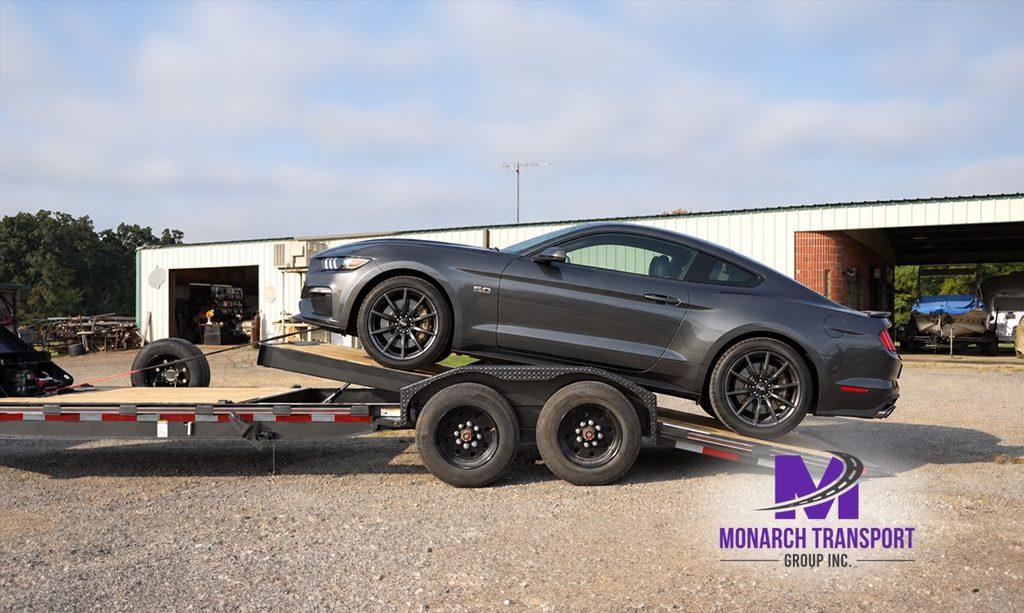
RVs, buses, commercial trucks, and other oversized or heavy vehicles usually cannot go on a standard multi-car trailer. They are moved on flatbed, lowboy, or other specialized trailers, which carry one or two vehicles at a time.
Where Can a Car Carrier Truck Pick Up and Deliver a Vehicle?
A car carrier truck can usually pick up and deliver at most public road addresses, as long as there’s enough space to enter, stop, load, and leave safely. If not, the driver will arrange a nearby spot that works. Common obstacles include:
If your street has any of these, the usual solution is to meet the driver at a large parking lot or another spacious area nearby, where your car can be loaded or unloaded away from traffic. Your shipping company will normally discuss the meeting point before the pickup. Monarch explains how this works in its guide to door-to-door auto transport.
How Much Does Car Carrier Shipping Cost?
The cost of car carrier shipping depends on the route and the equipment, not on a single rate. The same vehicle can be quoted very differently depending on how far it goes, what type of trailer it needs, and how easy it is to reach. For longer moves between states, see Monarch’s state-to-state car shipping service.
Factors That Affect Car Carrier Shipping Cost
If you need your vehicle picked up sooner, expedited car shipping may help prioritize your shipment, depending on driver availability and route conditions. For more ways to reduce long-distance shipping costs, see Monarch’s guide to cross-country car shipping costs and savings. To see an estimate for your own route and vehicle, use the shipping calculator.
Single-Car vs. Multi-Car Carrier: Which Setup Fits Your Shipment?
The best setup is the one that matches your vehicle and pickup situation, not just the one with the most space or the lowest price. Use this as a guide to help you decide, rather than a ranking.
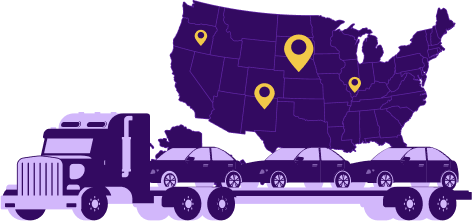
A single-car setup is normally used when:
A multi-car setup is the standard option when:
If you are unsure, describe the vehicle, its condition, and both addresses when you request a quote, and let the shipping company confirm the equipment. Before you book, it is also worth checking the company’s federal record with FMCSA’s SAFER Company Snapshot.
FAQs About Car Carrier Trucks
It depends on the trailer design, the vehicle sizes, and the number of decks. A large open car carrier can transport several passenger vehicles on two levels, enclosed trailers usually carry fewer, and flatbed setups typically carry one or two. Larger SUVs and trucks reduce the count, so there is no single number that fits every truck.
Running cars drive up ramps or hydraulic decks, and non-running cars are pulled on with a winch. The driver positions each vehicle to balance the load and secures it before departure.
Each vehicle is fastened with straps or other approved tie-down equipment at several points, tensioned and checked before the truck moves. Federal cargo securement rules set requirements for how commercial vehicles secure cargo, including automobiles.
Full-size car carriers are far longer than a passenger vehicle, and some designs can reach roughly 80 feet in overall length, depending on the configuration and the rules on the route. Exact dimensions vary by tractor and trailer design.
Yes, if the truck has the right equipment, such as a winch or lift. Tell the shipping company the vehicle’s condition up front so they send the right rig.
Often, but not always. If the street is too narrow, has clearance problems, or has vehicle restrictions, you will usually meet the driver at a nearby large parking lot.
A multi-car carrier has decks built for several passenger vehicles. A flatbed is a single-level platform used mainly for oversized, heavy, or unusual vehicles, and it usually carries one or two at a time.
Enclosed carriers protect vehicles from direct exposure to rain, snow, road debris, and other outdoor conditions. They don’t eliminate every transport risk, and the right option depends on the vehicle and shipment requirements.
Yes, considerably. The trip and equipment serve one vehicle instead of being shared across several, which is why solo transport is mainly used for RVs and other oversized vehicles rather than regular cars. The actual price depends on route, equipment, vehicle condition, and availability.
It varies by rig, vehicle, and pickup location. The driver also inspects the car and completes the inspection report, so the handoff takes longer than the loading itself. Ask the shipping company for the pickup window instead of planning around a fixed number.
Related articles
Auto Transport Trailer Types – Which One Carries Your Car?
IN THIS ARTICLE: Auto Transport Trailer Types at a Glance Open Auto Transport Carriers Enclosed Auto Transport Trailers Specialized Transport Trailers Top Load vs. Bottom Load – What’s the Difference?

How Much Does Expedited Car Shipping Cost? 2026 Guide
IN THIS ARTICLE: Key Takeaways Ready to Ship Your Car? How Much Does Expedited Car Shipping Cost in 2026? What Determines the Price of Expedited Car Shipping? Expedited vs. Standard

How Long Does It Take to Ship a Car? Realistic Timelines by Route & Season
IN THIS ARTICLE: The Two Timelines Nobody Separates (But Should) Realistic Transit Times by Route Distance Dispatch Time by Season: The Variable Nobody Controls How Route Type Affects Your Timeline

Complete Guide to Car Shipping in 2026
The landscape of American mobility has shifted, making vehicle logistics more accessible and seamless than ever before. Understanding this new norm is the first step toward a stress-free relocation that

Car Shipping by Train: Costs, Process & What to Expect in 2026
IN THIS ARTICLE: The Two Faces of Rail Transport: Consumer vs. Commercial Why Choose the Tracks? (The Human Perspective) Dimensions and Constraints: Will Your Car Fit? The “Hidden” Logic of

How Much Does It Cost to Ship a Car Between States?
IN THIS ARTICLE: Average Cost Breakdown by Distance Primary Factors Influencing Your Shipping Quote Geographic Influence on Pricing Understanding the Quote Structure The Impact of Seasonality on Auto Transport Rates
Cross-Country Car Shipping: How to Save Money Safely
IN THIS ARTICLE: Why “Cheap” Doesn’t Have to Mean “Dangerous” 1. Open Transport: The Industry Gold Standard for Savings 2. The Power of “Terminal-to-Terminal” Shipping 3. Timing the Market: The

Enclosed Car Shipping: The Gold Standard for Luxury and Exotic Vehicle Transport
IN THIS ARTICLE: Why “Standard” Transport Doesn’t Cut It for Masterpieces The Anatomy of Protection: Hard-Sided vs. Soft-Sided Trailers The Low-Clearance Nightmare: Why Hydraulic Lifts Matter Beyond the Walls: The